Authors #
Martin Small, Martin Small Consulting Pty Ltd
Dr Hafez Alavi, HA Consulting Pty Ltd
Reviewers #
Dr Prerana Arora Singh, Nirwan University Jaipur
Dr Alina F. Burlacu, World Bank
Nicole Downing, Department of Transport and Main Roads Queensland
Patricia Gerald, Department of Transport and Main Roads Queensland
Abstract #
Road safety management comprises a combination of functions, systems and processes designed to significantly reduce road deaths and serious injuries. It emphasises a continuous improvement approach and a focus on results, which drives the development, implementation and monitoring of effective injury prevention strategies. Effective road safety management practice is capable of steering every element and setting of the road transport system within a professional’s or organisation’s remit towards safer outcomes and achieving road safety targets (for example 50% reduction in deaths and serious injuries by 2030 and Zero by 2050).
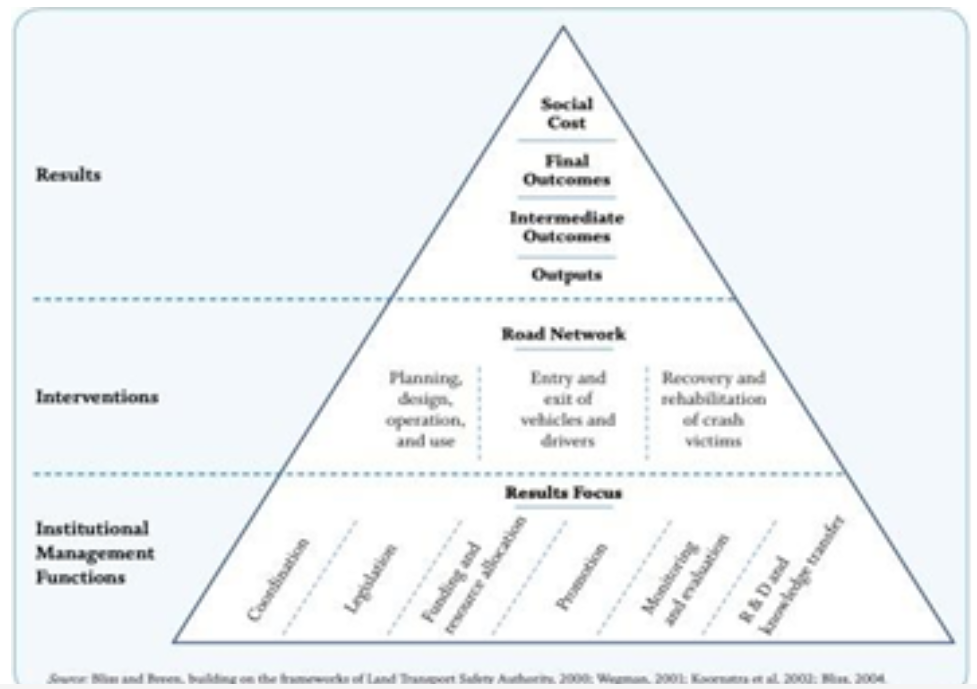
Road safety management systems comprise institutional management functions which produce interventions, that in turn produce results. A systematic review of literature identified ten elements of road safety management practice:
- Focus on outcomes and continuous improvement
- Leadership, accountability and governance
- Engagement, collaboration and organisational culture
- Strengthening legislative frameworks
- Principle, evidence and data-driven action
- Risk assessment and mitigation
- Sustained funding and resource allocation
- Monitoring, evaluation and reporting
- Understanding interactions and interdependencies
- Safe System implementation and integration.
Three case studies illustrate these elements as they apply in different national and organisational contexts. They are described and illustrated through questions which can be asked and actions which can be considered. An increasing number of management models which can assist diagnosis and response are discussed. Different professions and organisations face different levels of complexity, and different types of accountability and responsibility for the safety of the road transport system. Each needs to draw on key road safety management concepts and principles to be effective.
1. Introduction #
There is no one path or formula to sustained road safety success, in any context, but business as usual and incremental improvements are less likely to be successful, and more likely to fall short of our ambitious 2030 and 2050 targets (International Transport Forum [ITF], 2016). Transformative change is required to counter increased exposure to risk (through increases in population, motor vehicles, and traffic, for example) and drive real numbers of fatalities and serious injuries down.
The most significant transformation required is the various management systems and processes that develop and deliver systemic, cost-effective interventions into an unsafe environment. Without transforming and continuously improving road transport management systems, mindsets and processes in favour of safety, history suggests that safety activity often diverts to ad hoc, random, and one-off initiatives.
A lot is known about specific actions that are able to systematically improve results – lowering motor vehicle speeds, for example – but insufficient focus and resources have been spent on more basic issues such as accountability for, and management of, safety in road transport systems. A course correction towards a safe road transport system still requires the application and adaption of safety management systems and processes by people and organisations with road safety responsibilities within the road transport system. A growing body of knowledge and evidence illustrates the issues that need to be addressed and some primary actions that will be required.
This chapter describes the essential aspects of road safety management and sets out ten key elements of road safety management practice, drawn from a systematic review of the literature. These elements are introduced in general terms so that they could be applied to a variety of international, national and local settings across the different organisational contexts associated with public agencies, private corporations and not-for-profit entities. Three case studies further illustrate these elements, and a brief introduction is provided to an increasing number of models that can assist management diagnosis and delivery.
2. What is road safety management? #
Road safety management comprises a combination of functions, systems and processes designed to significantly reduce road deaths and serious injuries. It emphasises a systematic and comprehensive continuous improvement approach and a focus on results, which drives the development, implementation and improvement of injury prevention strategies. Effective road safety management helps every part of the transport system contribute to safety outcomes, including meeting timebound safety targets and realising the ultimate goal of eliminating deaths and serious injuries on the road. It brings management disciplines to bear on designing and delivering effective interventions to deliver improved results.
Results are not confined to numbers of fatalities and serious injuries. These numbers can be subject to significant variation, for many different reasons (for example, the immediate impact of pandemic lockdowns on road traffic volumes). Intermediate results, relating to safety performance indicators, shine a light on the underlying level of safety across key issues such as infrastructure safety and vehicle safety, or drink driving and speeding (European Road Safety Observatory, 2023). Finally, results can be assessed in terms of simple delivery – for example, the number of hours for which police are undertaking on-road enforcement activities, the kilometres of speed limits being reduced or safe footpaths being built by the road authority.
This overriding focus on results helps connect all parts of a road safety management system. Good quality strategy and planning, for example, focuses on delivery of projects and programs that will improve safety performance indicators, which are known to have a direct bearing on the numbers of deaths and serious injuries that will occur. This necessitates leadership and decision-making associated with setting the vision, developing robust strategies and action plans, funding road safety programs, communication and engagement activities, and performance monitoring and evaluation, among other matters.
There are very good examples of road safety management practice, and very poor examples, in many different contexts, judged by results. In some contexts, such as rapidly motorising low- and middle-income countries, high quality practices may lead to a reduction in the rate of increase in trauma, or perhaps a levelling out in trauma suffered by the community. In more mature road transport systems, a sustained levelling out of results may suggest insufficient attention has been given to the pipeline of safety reform, or to the road safety management activity which is critical in achieving significant reform. In organisational contexts, poor safety results often reflect poor management systems as a whole, which affect long term prosperity.
3. Why is road safety management important? #
Simply delivering more and better road safety interventions will be insufficient to achieve our public policy goals of significantly reducing road deaths and serious injuries, as part of the UN’s Sustainable Development Goals (SDGs) and Decade of Action for Road Safety 2021-2030. A much stronger focus is needed on how the road transport system is being managed and transformed (Austroads, 2025). In the safest transport modes, and in workplaces, a much stronger focus is given to safety management that assists in creating greater accountability for results.
Road safety management practice fosters greater accountability within organisations (for example, through clear leadership responsibilities, management systems, and performance monitoring) and across organisations (through coordination and shared governance among system designers and delivery partners) (Austroads, 2025). By coordinating efforts across various levels and responsibilities of government, business and the community, and consistently applying well tested safety principles, road safety management provides the driving force for creating a safe road transport system.
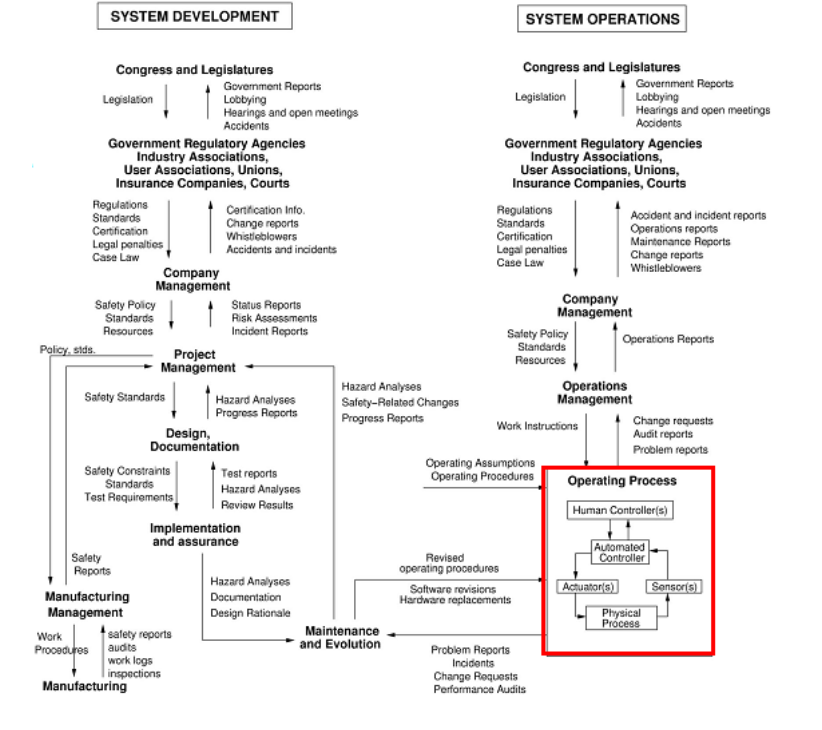
Road transport safety has suffered from very loose accountability arrangements. In a classic study from the end of the twentieth century, Rasmussen (1997) conceptualised road safety management as a complex control issue within a socio-technical system. He argued that traditional safety approaches, which typically targeted operator mistakes or isolated technical failures, fall short in today’s interconnected transportation landscape. Effective road safety management requires continuous feedback loops and adaptive mechanisms, enabling the system to respond to evolving conditions and uphold safe operations.
Rasmussen advocated for a systems-oriented methodology, emphasising the establishment of hierarchical control structures, where safety objectives are set at the highest levels (such as government regulations) and subsequently implemented as operational controls at progressively lower levels (such as company management). Thus, while road users must comply with the rules, they cannot carry the burden of responsibility for safety. Today, influenced by Vision Zero, safety professionals increasingly refer to “system designers” – such as road authorities, policymakers, top management in organisations, vehicle manufacturers and other suppliers – who must ensure that the transport system incorporates multiple layers of protection of injury (Björnberg, 2019). An Australasian College of Road Safety Policy Position Statement illustrates how Rasmussen’s socio-technical control view is explicitly informing systems-thinking in road safety and clarifying discussion of accountability for and control of road trauma risk (Australasian College of Road Safety, 2024).
At the highest levels of accountability, in Rasmussen’s reckoning, governments have the means at their disposal to significantly reduce serious road trauma, but there are a lot of variables to manage. This is the same at an organisational level. The road transport system is impacted upon by various legal, financial, and commercial imperatives. Road safety activity must support much broader social, environmental and economic goals within society, and can expect to benefit from activity in these other areas. Given the highly dispersed nature of the road traffic system, and the many different accountabilities and responsibilities for safety, good governance is essential.
Within government, this requires two responses (Austroads, 2025). First, a formal inter-agency governance framework to manage the responsibilities and accountabilities of elected officials and their associated ministries, departments, and agencies. Second, a dedicated work group, or lead agency, to lead and coordinate road safety initiatives within government and the wider community (Peden et al., 2004). Similar expectations can be made within organisational settings, with clear governance mechanisms backed up by a responsible person (International Organisation of Standardisation [IOS], 2012).
Governance committees and meetings which are focused on road safety results are essential, but not sufficient. Delivering road safety results is a complex responsibility within a complex system, and there are increasingly sophisticated methods and approaches referenced below as the key elements of road safety management are addressed. At the highest level, at least some control needs to be applied to how the system is being managed, and how the safety of the system will be significantly improved. Typically, in safe industrial processes, this is achieved through regulation of infrastructure, product or service providers. Safety regulation in the road transport system is largely defined by the absence of such regulatory features – consider for example the lack of regulatory requirements placed on public authorities to deliver a safe road environment.
Addressing these major issues – prioritising safety management over intervention delivery, recognising the different levels of authority, responsibility and accountability for safety, and putting governance and accountability systems in place to address these matters – is complex. It is also essential and requires understanding and engagement by all road safety professionals.
These issues can be generalized to some extent or other throughout the world’s road transport systems which is one major reason why over one million people are estimated to be killed and tens of millions more injured in road traffic crashes each year (WHO, 2023). The issues are further compounded in low and middle-income countries where the injury burden is the highest (grossly disproportionate injury compared to the global motor vehicle fleet), but road transport governance capacity, compliance resources, and data systems are the weakest (WHO, 2023).
4. What are the key elements of road safety management and how can they be applied? #
A systematic review of literature on road safety management was undertaken by Austroads (2025), Australia and New Zealand’s road standards body, from which 10 key elements of road safety management were identified. These are described below and followed by questions and possible options for practitioners to consider.
It is intended to complement and build upon established road safety management frameworks, based on subsequent research evidence, most notably the Global Road Safety Facility framework, which identified seven institutional management functions, which drive interventions and deliver results (Bliss & Breen, 2013). It is not intended to provide a comprehensive list of things to do. Rather it provides those people and organisations who hold safety responsibilities with a series of things they can consider as they develop, implement, evaluate and improve their road safety management systems. Finally, national and local context is particularly important within low and middle-income countries where consideration must be given to practical steps toward a more mature road safety management system, rather than meeting strict specifications (Small et al., 2023).
4.1 Focus on outcomes and continuous improvement #
A results and outcomes focus puts fatalities and serious injuries (FSIs) at the centre of the system (Bliss & Breen, 2013). It anchors the system in time-stamped FSI reduction targets, for example a 50% reduction in FSIs by 2030, and focuses all actions on meeting those targets. The ultimate result is the elimination of serious trauma. Continuous improvement requires a set of management systems and processes to drive regular monitoring and reviewing of targets and safety performance indicators (SPIs) and other critical data within a “plan–do–check–act” cycle to keep progress on-track.
4.1.1 Some questions to ask #
- Do we have a clearly articulated long-term vision with quantified, time-bound outcome targets that are endorsed by key decision makers and stakeholders?
- Have we agreed a set of Safety Performance Indicators (SPIs) that focuses attention on delivery of high-quality interventions and monitors progress towards these targets?
- Do we have a formal management system in place where delivery of road safety strategies and plans is routinely reviewed and improved against SPIs and trauma outcomes?
4.1.2 Some actions to consider #
- Set an ambitious vision and interim targets, and apply a “management by objectives” approach:
- define final outcome targets – for example deaths, injuries, crashes
- define a set of SPIs that will help achieve those targets.
- Choose SPIs that are backed by evidence, can be collected, and you can influence (such as speeding, restraint/helmet use, infrastructure safety or vehicle safety), and use these indicators to prepare delivery plans and budgets.
- Use robust road safety strategy development approaches (see, for example, Turner et al., 2025 and Job et al., 2025) to connect what you want to achieve (“end-state”) with your current situation, through gap analysis, Countermeasure selection, and activity monitoring.
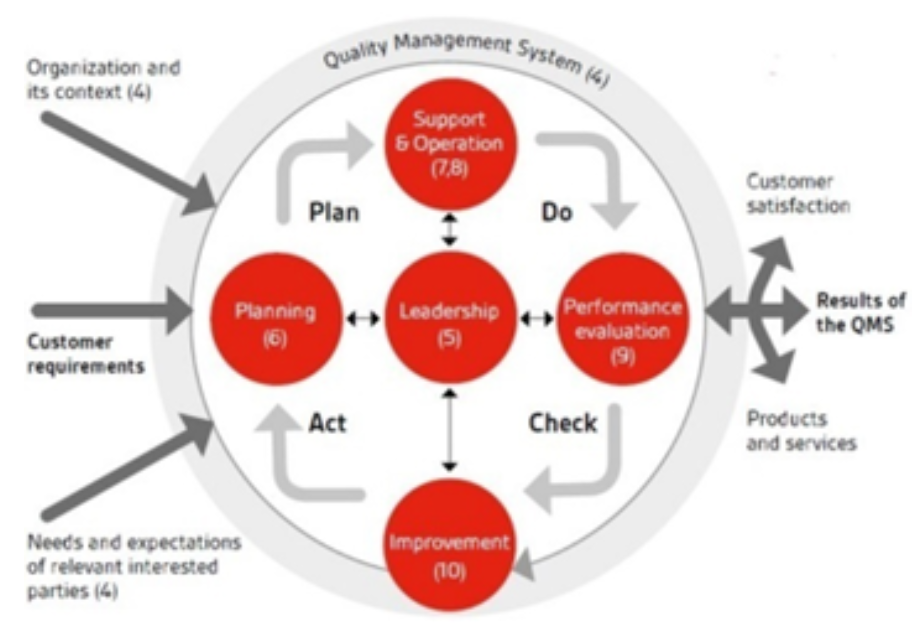
- Encourage agencies and large organisations to adopt safety management systems based on ISO 39001 Road Traffic Safety Management Systems (leadership, planning, operation, performance evaluation, continual improvement) and, where appropriate, certification.
4.2 Leadership, accountability and governance #
Accountability and governance ensure that safety is led from the top and responsibility is shared through collaborative decision-making and transparent reporting. Strong leadership, coordinated stakeholders and visible lines of responsibility enable adaptive management in a complex socio-technical road transport system.
4.2.1 Some questions to ask #
- Is a single, senior political or executive leader explicitly accountable for road safety outcomes (FSIs and key SPIs), with clear authority to direct cross-agency action, and are progress and performance routinely reported publicly?
- Are safety responsibilities and accountabilities clearly allocated across political or organisational leadership, their supporting agencies and stakeholders and other system designers, with no critical gaps or overlaps?
- Do we have a formal governance framework (for example a cross-functional or multisectoral committee, and empowered lead agency or work group) that actively leads road safety strategy, funding and performance?
- Do our laws, regulations, contracts and internal policies place primary responsibility on system designers (such as government, business, vehicle manufacturers and employers), rather than on individual road users?
4.2.2 Some actions to consider #
- Establish or strengthen a multi-agency road safety governance body with authority to align strategies, budgets and performance expectations with the jurisdiction’s long-term safety vision and targets.
- Designate a lead agency and a dedicated work group within a jurisdiction (or a lead work group within an organisation), with a clear mandate, resources and convening power to coordinate decision making and delivery with external partners.
- Embed explicit safety responsibilities and performance measures for senior leaders in your own organisation’s performance agreements, funding instruments and corporate plans, and encourage or require a similar response from your stakeholders.
- Review and, where necessary, strengthen safety regulation and standards for infrastructure providers, vehicle importers/manufacturers, fleet operators and workplaces, shifting the emphasis from individual blame towards system design and control of risk.
4.3 Engagement, collaboration and organisational culture #
Engagement, collaboration and organisational culture make road safety a shared, visible endeavour. A credible lead agency convenes diverse partners around common outcomes, uses systematic, inclusive communication and engagement rather than ad-hoc consultation, and builds a culture where Vision Zero and Safe System thinking shape everyday decisions and behaviours across the road transport system.
4.3.1 Some questions to ask #
- Is the lead agency or organisational safety lead convening the key stakeholders (such as health, police, justice, insurance, planning, local government, industry, suppliers, distributors, unions, community) around shared outcomes, with engagement scaled to their role and influence?
- Are engagement and communication activities, both across stakeholders and the community, guided by a deliberate strategy and repeatable process (regularly scheduled, open discussion on risk management, “what we heard/changed” feedback), rather than isolated events?
- Do our leadership behaviours, systems and norms signal that road safety and Vision Zero are “how we work”, and is this supported by training and development and transparent reporting?
4.3.2 Some actions to consider #
- Develop a multi-year engagement and communications strategy aligned with road safety strategies and plans, linking every engagement activity to specific outcomes, SPIs and road safety programs or projects.
- Apply a repeatable engagement pathway, such as found in IAP2 (Inform → Consult → Involve → Collaborate → Empower); select suitable activities and timelines; and remove participation barriers (transport, language, literacy, accessibility).
- Assess organisational culture and readiness using cultural/maturity diagnostics; target development efforts where there may be resistance or low ownership of the ultimate safety goal of eliminating FSIs.
- Build capability through structured training pathways and a dedicated communications-and-engagement course, alongside communities of practice to share lessons and celebrate progress.
4.4 Strengthening legislative frameworks #
Strengthening legislative frameworks means using law, regulation and standards to embed modern safety expectations into everyday decisions across the road transport system. Effective statutory mandates, compliance regimes and transparent oversight lock accountability onto system designers and create a durable platform for evidence-based road safety action and continuous improvement.
4.4.1 Some questions to ask #
- Do our principal transport, road safety and related statutes clearly express safety objectives consistent with modern safety principles, and assign explicit duties to key system designers (such as road authorities, regulators, fleet operators)?
- Do we have a strategic legislation and policy reform program that systematically lifts standards across all aspects of road safety management and delivery, with periodic reviews tied to evidence and expected FSI reductions?
- Do we have the organisational policies and procedures in place to effectively govern the safety of our operations, meet our safety obligations, and deliver on the results we want to achieve?
4.4.2 Some actions to consider #
- Establish a rolling 10-year legislation and policy reform program that progressively aligns road safety management practices and intervention programs such as speed limits, and infrastructure safety requirements with Safe System and Vision Zero principles.
- Legislate stronger governance and accountability mechanisms, and even for independent public scrutiny such as a commissioner with formal inquiry powers and reporting duties to the responsible minister and parliament.
- Keep infrastructure, vehicle and driver standards current with technology and best practice and ensure data-access provisions support safety monitoring and research.
- Ensure curricula for future road safety practitioners (such as engineers, public health practitioners, regulators) follows latest best practices and knowledge and is updated regularly.
4.5 Principle, evidence and data-driven action #
Principle, evidence and data-driven action means grounding decisions in modern safety principles, then using the best available data to plan, prioritise, deliver and continuously improve safety results. Ambitious and achievable targets, clear Safe System End States* (SSES), well-selected SPIs, robust risk-assessment and program development/implementation methods are needed for the best FSI-reduction results.
* A Safe System End State (see Austroads, 2025) is the desired future intervention design state to achieve zero or near-zero FSIs. It specifies a designed combination of vehicle, road infrastructure and travel speeds to ensure any crash forces generated will not exceed human biomechanical tolerances for FSIs, while supporting the desired level of mobility.
4.5.1 Some questions to ask #
- Are our safety systems all aligned with modern road safety principles, are we making best use of available research and evidence, and continuously strengthening our data systems?
- Have we defined SSES based on human tolerance limits and used them to backcast the sequence of speed, infrastructure, vehicle, user and post-crash reforms needed to close today’s safety gaps?
- Do we have a comprehensive data plan with, for example, clear governance, update cycles, linkage across stakeholder data (such as police–health–insurance data), and agreed privacy/ethics protocols?
- Have we selected a compact set of SPIs and embedded a visible plan–do–check–act cycle where every major initiative is linked to expected SPI shifts and forecast reductions in FSIs?
4.5.2 Some actions to consider #
- Specify SSES then backcast to set out a sequence of speed management, infrastructure upgrades, vehicle technology, user-focused measures and post-crash improvements over time.
- Develop a comprehensive data plan for the organisational or jurisdictional setting including, for example, crash and injury data; exposure by mode of travel; infrastructure and asset condition; fleet safety; enforcement; post-crash care.
- Prioritise linkage of police, health, civil registries and insurance datasets to reveal the true serious-injury burden, enable case-by-case trauma analysis and improve profiling of systemic risk.
- Select a compact set of SPIs that will best improve results in the specific context predicts outcome change (for example, speed compliance, fleet safety uptake, and emergency response), keeping methods stable over time for comparability.
4.6 Risk assessment and mitigation #
Risk assessment and mitigation apply risk assessment techniques (for example network safety planning by a road authority) so finite resources target the biggest causes of fatal and serious injury. Using multiple reactive, proactive and systemic analyses, risks are identified, prioritised and treated through effective road safety interventions that maximise cost-effectiveness.
4.6.1 Some questions to ask #
- Do we have a risk management framework (identify–analyse–evaluate–treat–monitor–review) that is explicitly focused on FSI risk and used across policies, programs and projects?
- Are we using essential risk assessment tools such as safety star rating systems for infrastructure and vehicles to inform road safety problem identification and prioritisation?
- Do our risk assessments translate into a prioritised, investment-ready program (for example, a network safety plan for a road authority) that maps out treatments for the greatest feasible reduction in FSIs per unit of investment?
4.6.2 Some actions to consider #
- Adopt a formal risk management process for road safety (identify, analyse, evaluate, treat, monitor and review), with clear roles and processes for developing business cases and delivering projects.
- Use multiple sources to analyse risk, combining, for example: police crash records; hospital/insurance data; exposure data like traffic volumes; diagnostics methods like road safety audits, International Road Assessment Programme (iRAP) and New Car Assessment Programme (NCAP) safety star ratings; asset and road inventory; and regulatory/enforcement datasets.
- Use benefit–cost appraisals alongside risk ratings to rank treatments, focusing on those that offer the greatest reduction in deaths and serious injuries per dollar invested.
- Group similar risks (for example, high-speed bends or journey management) and design system-wide programs rather than isolated projects to address them efficiently.
4.7 Sustained funding and resource allocation #
Sustained funding and resource allocation helps ensure that all aspects of the road safety management system are properly resourced, and not just high-profile initiatives. Predictable, multi-year investment directed by safety focused allocation rules makes it easier to pilot and scale high-impact programs, maintain necessary treatments, and make system level adjustments as risks and opportunities change.
4.7.1 Some questions to ask #
- Do we have long-term, predictable funding arrangements for road safety, with a documented investment model that supports core management functions and systemic, mass-action programs?
- Are programs and projects prioritised through transparent criteria that link to SPIs, FSI reductions, economic returns and, where relevant, wider co-benefits?
- Do we routinely review the allocation of funding based on delivery performance and safety impact, expanding effective programs and redesigning or stopping low-impact activity?
4.7.2 Some actions to consider #
- Document an investment model that ring-fences funding for core management functions (such as data, analysis, governance, engagement, evaluation) and multi-year investment in scaling proven, systemic interventions.
- Require business cases for major programs that are linked to SPIs and FSI reductions, include appropriate economic indicators and appraisal methods and explicitly assess co-benefits such as tailpipe emissions and noise reduction, accessibility and productivity.
- Fund full lifecycle costs – design, delivery, maintenance, operations and performance monitoring – so treatments retain their safety effect over time, and avoid creating unfunded maintenance backlogs that erode safety gains.
- Build flexibility into budgets through contingencies and rapid-response funds that can address emerging risks, implement quick-win countermeasures or accelerate high-yield packages when new evidence becomes available.
4.8 Monitoring, evaluation and reporting #
Monitoring, evaluation and reporting make road safety trackable, testable and improvable. Harmonised indicators, robust evaluation designs and transparent reporting show how actions shift SPIs and FSIs, support management-by-objectives, and allow jurisdictions and organisations to learn, compare performance and maintain public and political trust.
4.8.1 Some questions to ask #
- Have we built monitoring and evaluation into the design of strategies and programs – with clear questions, baselines, data sources, methods and injury definitions (such as MAIS32+)?
- Do we have a regular cycle of reporting final safety outcomes and SPIs with published definitions and methods, covering behaviour, system quality, exposure and post-crash care?
- Are evaluation findings and dashboards routinely used by leaders to refresh programs and targets, reallocate resources, and communicate clearly with the public and stakeholders?
4.8.2 Some actions to consider #
- Specify monitoring and evaluation requirements at the outset of each program: define evaluation questions, baselines, data sources and methods so results are statistically defensible and comparable across time and regions.
- Develop an evaluation program which includes both process evaluations (focusing for example on delivery, cost and implementation lessons) and outcome evaluations (focusing on measuring changes SPI and FSI results).
- Institutionalise management-by-objectives: publish dashboards that show spend → outputs → SPI shift → outcomes; hold regular public results briefings; and use findings to refine programs and adjust targets.
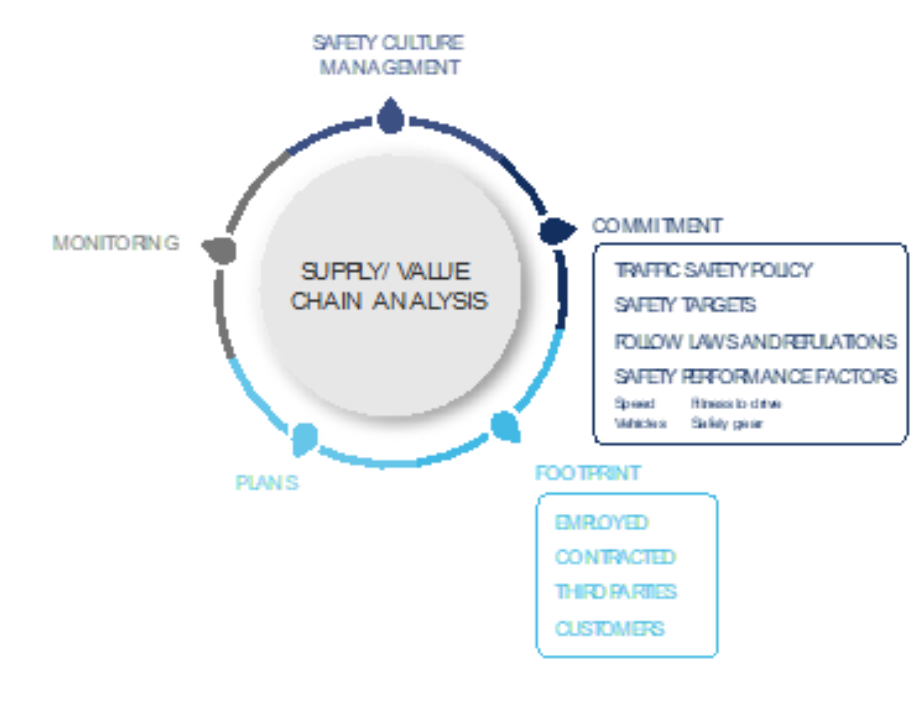
- For organisations, complement traditional safety evaluation with establishing a “safety footprint” which defines the total safety impact of your own organisation and that of all related contractors, customers and third parties).
4.9 Understanding interdependencies and interactions #
Understanding interdependencies and interactions means seeing road safety as an emergent property of a socio-technical control system—users, vehicles, roads, speeds, institutions and post-crash care—held safe by constraints, hierarchy and feedback. The task is to design and operate multi-level controls so actions across sectors reinforce, rather than undermine, road safety results and outcomes.
4.9.1 Some questions to ask #
- Have we explicitly mapped the multi-level control structure for road safety (from government and regulators through road authorities, operators and front-line staff) and the safety constraints each level is meant to uphold?
- Do our policies and programs recognise and actively manage interdependencies across domains – such as transport, health, environment, land use, policing, insurance – so measures support, rather than conflict with, other goals?
- Have we defined clear “boundaries of safe operation” and feedback channels so that local decision-makers understand trade-offs, know when safety limits are being approached or breached, and can escalate issues for timely system-level responses?
4.9.2 Some actions to consider #
- Map the different levels of decision making for your jurisdiction or organisation (political, strategic, program, operational, front-line), consider the different goals, constraints, information and decisions made, and use this as a strategy, governance and training reference.
- Integrate road safety into other imperatives by explicitly identifying co-benefits and trade-offs (for example, speed management and emissions), and designing initiatives which reinforce each other instead of pushing in opposite directions.
- Establish monitoring and assurance loops and analytical methods that carry information from front-line operations (for example, audits and complaints) up through management and back again in the form of improved systems and revised guidance and training.
- Define and communicate “boundaries of safe operation” for key activities (for example, maximum acceptable speeds for given road types), and escalation pathways when pressures begin to create unsafe conditions.
4.10 Safe System implementation and integration #
Safe System implementation and integration means turning Safe System principles into an integrated, long-horizon delivery program. Clearly specified principles, Safe System End States, backcasting and pathways to zero FSIs are used to close safety gaps through sequenced reforms.
4.10.1 Some questions to ask #
- Have we embedded modern safety thinking into our organisation’s core governance and management practices (such as policies/standards, planning and investment processes, project/program assurance, and performance reporting) so that safety is systematically prioritised and applied?
- Have we specified and validated the desired Safe System End States and used them to map current safety gaps and design pathways to zero FSIs given budget and delivery constraints?
- Are we integrating implementation on all three fronts – that is, technical (design speeds, fleet safety, etc.), institutional (funding, training, etc.) and strategic (safety management systems, multi-year investment plans, etc.)?
- Do we operate a clear causal chain (SSES → risk/safety-gap analysis → intervention design → funded delivery → SPI/outcome reporting) with regular reviews to keep reforms on course to achieve targets?
4.10.2 Some actions to consider #
- Specify Safe System End States for key parts of the network or the organisational context and use them to map where there is any misalignment between different sets of interventions.
- Use backcasting, supported by in-depth trauma modelling and case-by-case fatality/serious-injury reviews, to identify the design and policy conditions required.
- Develop and implement sequenced, budget-realistic but transformational bundles of interventions across speed management, forgiving infrastructure, vehicle technology, road-user measures and post-crash care, with explicit links to SSES, SPIs and FSI targets.
- Strengthen institutional functions and systems like governance, sustainable funding, stakeholder engagement and capacity-building as interventions are delivered, and promote “learning-by-doing” to build momentum and embed new ways of working.
5. Case studies in road safety management #
Case studies illustrate these elements as they apply in a variety of international, national and local settings across the different organisational contexts associated with public agencies, private corporations and not for profit entities.
5.1 Case Study #1: How Ireland established a lead road safety agency #
In the early 2000s, Ireland’s road safety arrangements were fragmented, with no single organisation accountable for results. In line with the World Report on Road Traffic Injury Prevention’s call to “identify a lead agency in government,” Ireland chose to create a statutory authority with a clear mandate to coordinate the national effort (Peden et al., 2004).
The Road Safety Authority (RSA) was established under the Road Safety Authority Act 2006. Its mission is to save lives and prevent injuries by reducing the number and severity of collisions. The RSA leads the development and implementation of Ireland’s Road Safety Strategy (most recently 2021–2030), coordinates partners across government, and reports to the Minister for Transport and Parliament. Its legislated functions include road safety promotion and research, governance of the national strategies, driver testing and licensing, oversight of vehicle inspection services, regulation of the driving-instruction industry, development of vehicle standards, and policy advice to government (Austroads, 2025).
Since the first national strategy in 1998, road deaths have fallen by almost 70%, with fatalities halving after the RSA was created and reaching a low of 2.8 deaths per 100,000 population in 2020. Ireland is now refining RSA’s role and resourcing, but its experience shows how a well-mandated lead agency can anchor safety reforms and sustain long-term progress (Austroads, 2025).
5.2 Case Study #2: How EU developed their core road safety KPIs framework #
European evidence shows SPI/KPI-based composite measures are strongly associated with fatality performance and help explain cross-country differences (Weijermars et al., 2025); and evaluation work within EU programmes supports the view that improvements in management/system factors translate to improved outcomes primarily through changes in operational SPIs.
In 2019, the European Commission, working with Member State experts, defined a first set of eight Key Performance Indicators to track the operational conditions behind crashes: speed, seatbelts, protective equipment, alcohol, distraction, vehicle safety, infrastructure safety and post-crash care (European Road Safety Observatory 2023). These were embedded in the EU Road Safety Policy Framework 2021–2030 as core tools for “Vision Zero”.
To turn this concept into practice, the Commission funded the “Baseline” project (2020–2022), bringing together 18 Member States (Van den Berghe et al., 2023). Baseline translated each KPI into detailed, replicable methodologies (sampling, observation tools, weighting, confidence intervals) and ran the first harmonised EU-wide measurements. The work highlighted major cross-country variation, the need for clear definitions (for example, “free-flow speed”, “correct seatbelt use”) and the balance between methodological rigour and feasibility. It also showed Baseline’s value for capacity-building in countries with little previous KPI experience.
Building on this foundation, the “Trendline” project (from 2022) expanded participation to 25 Member States and established KPI Expert Groups to refine guidelines, support countries, and add experimental indicators (for example, enforcement, 30 km/h urban roads, self-reported risky behaviour) (European Commission, 2023). Trendline keeps the original eight KPIs at its core while piloting new measures, ensuring that the EU framework remains both comparable and adaptable as data systems and policy needs evolve.
5.3 Case Study #3: Origin Energy driving safety results and bottom-line benefits #
Origin Energy operates a diverse 800-vehicle fleet across Australia, with 2,000 drivers covering a total of 24 million kilometres annually in varied conditions from urban dangerous goods transport to remote regional operations (National Road Safety Partnership Program, 2024).
Origin takes a comprehensive approach. An in-vehicle monitoring system (IVMS) generates data, prevents incidents and helps address specific behaviours like harsh braking and speeding while encouraging drivers to adapt to prevailing conditions. As well, one part of the business reduced kilometres travelled per year through more efficient scheduling and other work practices. Efficiency dividends were realised through fewer vehicles on the road less often, a reduced fuel bill and carbon footprint, and decreasing the probability of being involved in a crash or incident.
Origin combines organisation-wide measures with tailored initiatives for specific risks. Regular data analysis identifies trends such as high-risk locations and seasonal patterns and enables proactive interventions. Daily reports inform site managers, and weekly reports provide visual performance indicators to business leaders and health and safety staff. Information flows to and from drivers through multiple channels including toolbox talks and internal communications.
This integrated approach has delivered significant safety improvements: sustained reductions in incidents and crashes (final outcomes), and harsh driving events. Safety benefits extend to bottom-line efficiencies through reduced insurance costs, vehicle downtime, and infringement notices. The comprehensive suite of measures – combining incident investigation with trend analysis – allows IVMS to function as both lag and lead indicator of safety performance.
5.4 Case Study #4: Safety on Nepal’s mountain highways #
Western Nepal’s mountainous roads pose extreme road safety risks, with thousands of fatalities occurring annually, many from vehicles plunging off cliffside roads. With implementation support from the World Bank, a structured intervention was developed by Nepal’s Department of Roads to address this. The project deployed 73,000 metres of roadside safety barriers across high-risk cliffside locations in Western Nepal. Site selection was systematically prioritised using crash history data, cliffside exposure, and road curvature, covering 76 percent of identified high-risk locations. Footpaths were also constructed to protect pedestrians from motor vehicle traffic (Austroads, 2025).
A novel evaluation framework was established to overcome the absence of comprehensive national crash data. Two key data sources were used: local records of fatalities per over-cliff crash, and physical inspection of barrier impact damage to count averted crashes. This methodology enabled credible outcome measurement in a data-limited environment. Within less than a year of installation, an estimated 270 passengers (mainly on buses) were saved from over-cliff crashes. Over the barriers’ projected 20-year lifespan, 3,456 lives are expected to be saved. The Nepal Department of Roads used these results to adopt a national policy mandating crash barriers on relevant new road projects (Austroads, 2025).
6. Road safety management models #
There are an increasing number of models which can assist diagnosis and delivery of safety programs, from a management perspective. As already illustrated, there are many different elements and aspects of road safety management which professionals need to understand in order to perform at their best. This does not lend itself to one “management” model. Multiple perspectives into the issue are needed and road safety professionals need to mix and match safety responses and strategies accordingly. Five valuable management models are set out here, and can be further explored.
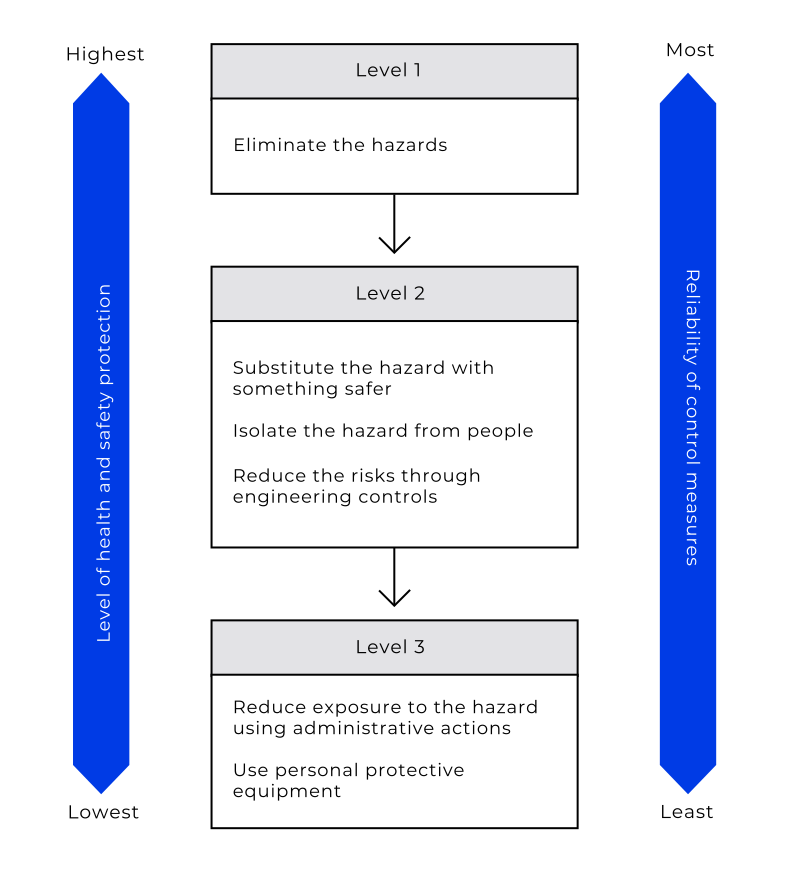
The hierarchy of control model developed within the work health and safety environment is a classic and simple means of understanding the value of various interventions. The most fundamental intervention is to eliminate the hazard to safe road transport, which is the motor vehicle. This places limitation or reduction in motor vehicle travel on roads as the starting point for road safety. If this or subsequent controls are not possible in the context, then the next level of control is applied. The least effective of these is the use of personal protective equipment, such as a cycle or motorcycle helmet. The hierarchy highlights the importance of working “upstream” in road safety.
Systems-Theoretic Accident Model and Processes, the STAMP model (Leveson, 2002), was born from low-incident lethal-risk industrial environments. It draws from Rasmussen’s conceptualisation of the hierarchy of responsibilities within a safety management system, and also highlights the importance of upstream decision making and design of the road transport system. Critically, it identifies the user as an agent with responsibilities, but places this in the context of all the aspects of the safety system which influence and shape user/operator decisions and actions. One of its potential strengths for road safety is to clarify power, authority and responsibility for safety within the road transport system.
The World Bank’s Road Safety Management Framework (Bliss & Breen, 2013) brought many different aspects of classical management theory into road safety. In doing so, it codified the road safety management discipline and articulated the centrality of institutional safety management functions in directing what needs to be done in order to achieve and continuously improve road safety results. It was developed for use within a governmental setting, and to support stronger safety systems for the Bank’s low and middle-income country clients, but its conceptual strength makes it relevant in all public, private or community contexts.
The International Standards Organisation (ISO) (IOS, 2012) integrated this road safety management understanding into its own approach to quality management systems and produced ISO 39001 Road Traffic Safety Management Systems. ISO 39001 was designed specifically for an organisation which wishes to assume responsibility for the safety of its staff, its stakeholders and the community at large in road traffic. Organisations seeking third party certification of their safety management system need to be able to demonstrate this in a variety of ways, including the commitment of top management to the elimination of FSIs.
The Fédération Internationale de l’Automobile (FIA) Road Safety Index (FIA, 2024) takes this organisational focus further. By working through a series of management processes and controls, the index encourages private sector organisations to publicly report their road safety performance, including key metrics, initiatives undertaken, and progress achieved. Supported by an estimation of the “safety footprint” – the impact on road traffic injury risk associated with providing or purchasing road transport – this transparency creates accountability, enables benchmarking against industry peers, and facilitates learning and improvement.
7. Conclusion #
Road safety management is the organising discipline that links institutional functions, interventions and results. It helps ensure that proven safety measures are implemented at the right scale, quality and speed so that we can close the gap between current levels of road trauma and our ambitious, time-bound safety targets.
This chapter has outlined ten interrelated elements, showing how they can be applied across governmental, corporate and not-for-profit contexts. These elements, together with the management models and case studies presented, provide a practical framework for designing and implementing more effective road safety management systems.
Whatever their specific role or level of responsibility, road safety professionals or organisations and jurisdictions can use this chapter to strengthen their own management practice and contribute to the long-term goal of eliminating deaths and serious injuries.
8. Reference List #
Australasian College of Road Safety. (2024). ACRS Policy Position Statement: A New Systems Thinking Approach to Road Safety. https://acrs.org.au/wp-content/uploads/ACRS-Policy-Position-Statement_New-Systems-Thinking.pdf
Austroads. (2024-a). Guide to road safety part 7: Road safety strategy and management (AGRS07-24). https://austroads.gov.au/publications/road-safety/agrs07
Austroads. (2024-b). Guide to road safety part 2: Safe roads (AGRS02-24).
https://austroads.gov.au/publications/road-safety/agrs02
Austroads. (2025). Best practice guidance in road safety management and leadership: Proven initiatives and case study examples (Technical report AP-T386-25).
Bliss, T., & Breen, J. (2013). Road safety management capacity reviews and Safe System projects: Guidelines (Updated ed.). Global Road Safety Facility, World Bank. https://www.globalroadsafetyfacility.org/publications/road-safety-management-capacity-reviews-and-safe-system-projects-guidelines
Björnberg, K. E., Belin, M. Å., Hansson, S. O., & Tingvall, C. (2019). The vision zero handbook. Springer International Publishing.
European Commission. (2023). The Trendline Project – Key Performance Indicators. https://trendlineproject.eu/about/key-performance-indicators
European Road Safety Observatory. (2023). Thematic Report: Road Safety Performance Indicators. European Commission, Directorate-General for Mobility and Transport.
https://road-safety.transport.ec.europa.eu/document/download/2b27e9e4-74fa-4dde-a732-b077a284da4c_en?filename=Road_Safety_Thematic_Report-Road_Safety_Performance_Indicators.pdf
European Transport Safety Council. (2024). New EU road safety mandate 2024–2029 [Briefing]. ETSC.
Fédération Internationale de l’Automobile. (2024). FIA Road Safety Index: A New Tool to Improve Road Safety.
https://api.fia.com/fia-road-safety-index
International Organisation of Standardisation. (2012). ISO 39001 Road Traffic Safety Management Systems.
https://www.iso.org/standard/44958.html
International Organization for Standardisation. (2015). ISO-9001:2015 international standard for quality management system. https://www.iso.org/standard/62085.html
International Road Assessment Programme. (2021). Star ratings.
https://irap.org/rap-tools/infrastructure-ratings/star-ratings/
International Transport Forum. (2016). Zero Road Deaths and Serious Injuries Leading a Paradigm Shift to a Safe System: Leading a Paradigm Shift to a Safe System. OECD Publishing.
https://www.oecd.org/en/publications/zero-road-deaths-and-serious-injuries_9789282108055-en.html
International Transport Forum. (2022). The Safe System Approach in action. ITF/OECD.
https://www.itf-oecd.org/sites/default/files/docs/safe-system-in-action.pdf
Job, S., Turner, B., Campbell, C., Small, M., & Alavi, H. (2025). Best practice guidance in road safety management and leadership: Proven initiatives and case study examples (Report No. AP-T386-25). Austroads.
Leveson, N. G. (2002). System Safety Engineering: Back to the Future. Aeronautics and Astronautics, Massachusetts Institute of Technology. http://sunnyday.mit.edu/book2.pdf
National Road Safety Partnership Program. (2024). Origin Energy: Proactive Prevention: Using data to predict and prevent crashes drives safety results and bottom line benefits. https://www.nrspp.org.au/resources/origin-energy-proactive-prevention-using-data-to-predict-and-prevent-crashes-drives-safety-results-and-bottom-line-benefits/
Peden, M., Scurfield, R., Sleet, D., Mohan, D., Hyder, A. A., Jarawan, E. and Mathers, C. (2004). World Report on Road Traffic Injury Prevention. World Health Organisation. https://www.paho.org/sites/default/files/World%20Report%20on%20Road%20Traffic%20Injury%20Prevention.pdf
Rasmussen, J. (1997). Risk management in a dynamic society: A modelling problem. Safety Science, 27(2-3), 183-213. http://sunnyday.mit.edu/16.863/rasmussen-safetyscience.pdf
Safe Work Australia. (2011). Model Code of Practice: How to manage work health and safety risks. https://www.safeworkaustralia.gov.au/doc/model-code-practice-how-manage-work-health-and-safety-risks
Small, M., & Breen, J. (2017). ISO 39001 road traffic safety management systems: A practical guide for implementation. International Organisation for Standardisation.
Small, M., Jordan, P., Anyala M., Shelton D. & Stapleton, R. (2023). Assessing the Maturity of National Road Safety Management Systems (Sustainable Development Working Paper Series No. 85). Asian Development Bank. https://www.adb.org/publications/assessing-national-road-safety-management-systems
Turner, B., Durdin, P., Jacobs, C., Reed, P., McLean, E., & Campbell, C. (2025). Charting a path to eliminating road death and serious injury: Stream 2: Developing Pathways to Zero and comprehensive support materials (Report No. AP-R743-25). Austroads. https://austroads.gov.au/publications/road-safety/ap-r743-25
Van den Berghe, W., Silverans, P., Vanhove, S., Boets, S., Aarts, L., Bijleveld, F., Folla, K., & Yannis, G. (2023). Baseline – Conclusions and Recommendations. European Commission, Directorate-General for Mobility and Transport.
https://road-safety.transport.ec.europa.eu/document/download/b4b82a6b-9e1f-4934-97bf-c0754ef19278_en?filename=Baseline_conclusions_and_recommendations.pdf
Weijermars, W., Rodrigues, E., Mesimäki, J., Sternlund, S., Georgieva, M., van Petegem, J. H., & Van den Berghe, W. (2025). Towards a European key performance indicator for safe urban roads: lessons from the Trendline project. Traffic Safety Research, 9, e000099-e000099.
World Road Association (PIARC). (2025). 12. Monitoring, analysis and evaluation of road safety interventions. Road safety manual. World Road Association. https://roadsafety.piarc.org/en/planning-design-operation/12-monitoring-evaluation
