Authors #
Adjunct Associate Professor Mark King, Queensland University of Technology (QUT): MAIC-QUT Road Safety Research Collaboration
Chris Harrison, Amber Community
Kathy Doukouris, Safe System Solutions Pty Ltd
Reviewers #
Dr Stephen Kome Fondzenyuy, World Bank Group
Dr Aine Kusumawati, Bandung Institute of Technology
David Cliff, Global Road Safety Partnership
Abstract #
Road safety is a complex, multidisciplinary profession that relies on the integration of research, practice, leadership, and collaboration to reduce death and serious injury on roads. This chapter explores the diverse nature of the road safety profession, recognising that professionals come from varying disciplines including engineering, health, policing, education, research, government, community advocacy, and industry. While these professions differ in expertise and responsibilities, they are united by a shared commitment to applying ethical, evidence-based approaches to improving road safety outcomes.
The chapter examines how knowledge is created, accessed, evaluated, and translated into practice through research, policy, professional networks, operational guidance, and lived experience. It highlights the reciprocal relationship between researchers and practitioners, demonstrating how practice generates new knowledge while research informs more effective interventions. The importance of bridging the gap between evidence and implementation is emphasised, together with the need to critically assess established practices and continuously improve road safety systems.
The chapter also outlines the institutional landscape of road safety, describing the contributions of government agencies, academia, emergency services, non-government organisations, industry, professional associations, and community groups. It demonstrates that effective road safety depends upon coordinated action across sectors rather than isolated efforts by individual organisations.
Finally, the chapter explores the critical role of leadership in fostering evidence-based decision making, driving cultural change, embedding road safety within organisational priorities, and supporting continuous learning. It concludes that collaboration, professional networks, and communities of practice are fundamental to strengthening the professionalisation of road safety and achieving sustained reductions in road trauma through a Safe System Approach.
1. Introduction #
The pursuit of evidence-based road safety is a dynamic, complex, and fundamentally multidisciplinary endeavour. The Road Safety Profession is a field that intersects deeply with engineering, education, health, road policing, data science, and urban planning. Professionals across this vast spectrum—from post-crash care specialists to transport planners—are united by a shared commitment to reducing harm and trauma on our roads. This chapter establishes a definitive framework for the road safety profession by exploring its two interdependent pillars: Knowledge and Practice.
A core challenge remains bringing the pillars together through bridging the gap between popular road safety interventions and those supported by robust evidence. Some strategies like harsher penalties and shock tactics often fail to demonstrate cost-effectiveness (Box, 2023); effective practice demands a shift from belief to proven outcomes. In this chapter, we highlight the diverse, real-world practice landscape, showcasing through practitioner profiles and project snapshots how professionals navigate complex challenges and collaborate across sectoral boundaries to create positive community outcomes. Making this systemic change requires more than good data; it requires visionary leadership and change-management capabilities at every level. Next, we examine the foundational skills required for all road safety professionals, regardless of discipline, to access, interpret, and apply reliable and current research, outlining how robust evidence is actively translated into practical tools such as legislation, guidelines, and promotional strategies.
This chapter explores how organisations embed road safety into their core missions by integrating evidence, fostering leadership, and cultivating cultures that value learning and continuous improvement. It highlights how effective practice emerges through collaboration within organisations, across sectors, and through professional networks that enable shared learning and consistent approaches. By outlining the knowledge systems that guide daily decision making and showing how practice continuously generates new insights, the chapter demonstrates how collective expertise is built and how the professionalisation of road safety is strengthened. Together, these foundations set the stage for understanding how collaboration and continuous improvement drive progress toward long-term goals for trauma reduction.
2. What is a Road Safety Professional? #
The road safety sector is, by its very nature, multidisciplinary and becoming transdisciplinary (see the Introduction chapter of the Road Safety BoK). A road safety professional may come from a wide range of career paths, sectors, or industries, including but not limited to engineering (civil, mechanical and interdisciplinary engineering plus some of their sub disciplines such as transport engineering); health (community and public health, emergency services, neuroscience, psychology, paediatrics); government and policy; law and road policing; and community development, training and education. While road safety professionals may be diverse in their specialisations and interests, these individuals share a common goal: seeking ethical, evidence-based solutions to the road trauma crisis.
It is important to note that “professional” is used throughout this chapter in an inclusive way, reflecting professionalism in approach rather than a formal professional qualification or a job designated as a road safety role. For example, road safety advocates may not have formal training in engineering, or behaviour change, or policing; often they do not receive any compensation for their efforts; however, if they are taking a good practice approach involving evidence-based advocacy for proven ways of addressing road trauma, they can rightly be regarded as professionals. Similarly, a qualified researcher who contributes to road safety knowledge and best practice is unlikely to have an academic qualification in road safety, rather they are applying their professional research skills to address road safety. For these reasons, this chapter uses the terms “road safety professional,” “road safety practitioner,” “researcher,” and “advocate” as coming under the one broad category of road safety professionals.
The road trauma crisis is a global phenomenon, so the need for road safety professionals is widespread. The greatest impacts on road safety are experienced in low- and middle-income countries (LMICs) where 92-93% of global road deaths occur (WHO, 2023). In all countries, road trauma is characterised by high rates of injury and death, disproportionate impacts on vulnerable road users, and systemic inequities; LMICs face more challenges than high income countries (HICs), due to mixed traffic environments, weaker institutional structures and a lack of road safety management capacity. They correspondingly have fewer road safety professionals, given their road safety problems, than high income countries, making the building of road safety knowledge and expertise capturing the LMIC context vital (Global Road Safety Facility, 2026).
The successful reduction of road trauma requires coordinated and multifaceted responses. Road safety professionals, drawing on their diverse expertise, work together to understand the underlying causes of crashes, design effective interventions, and implement strategies that reduce harm (Figure 1). This collaborative, cross-sectoral approach ensures that responses are not only evidence-informed and ethically grounded but also capable of addressing both immediate risks and long-term systemic challenges.
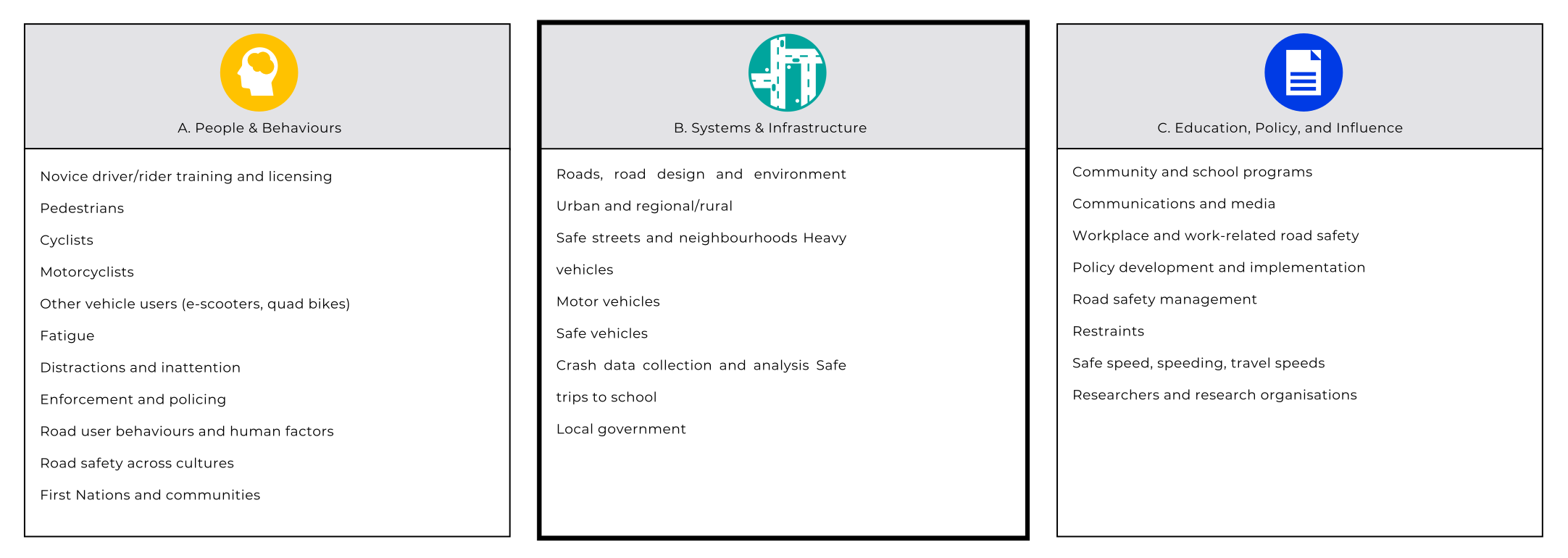
Whether you are a scientist researching the effect of fatigue on night shift workers, an urban planner designing a new development, or a trauma support worker advocating for a client, road safety is your business. You are a road safety professional, with different roles carrying different levels of specialisation, responsibility and accountability in road safety outcomes.
Having underlined the diversity of roles and sectors that intersect with the road safety industry, below is a sample of major international road safety initiatives and organisations.
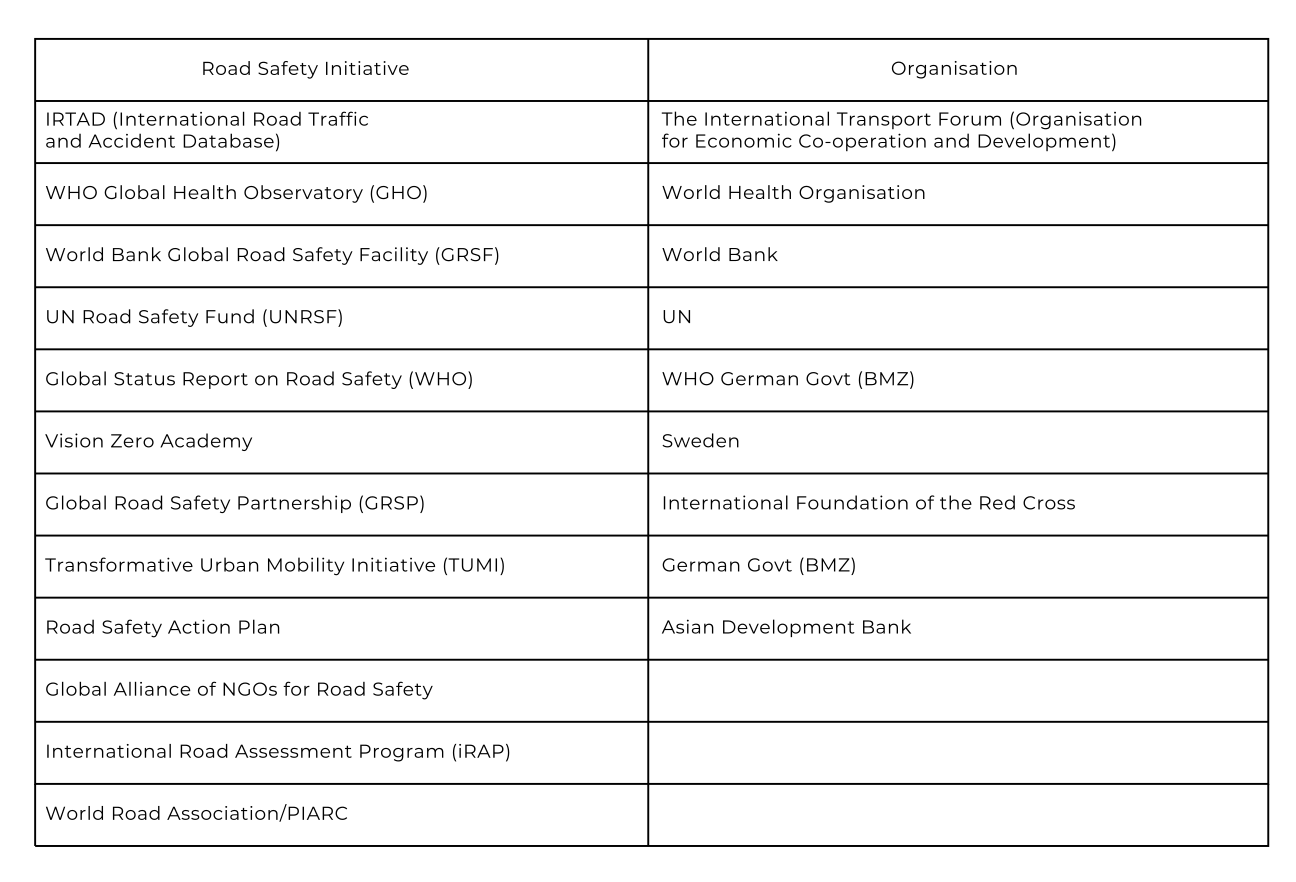
On a domestic level, different sectors typically have some ownership over various elements of road safety, and this will differ by country. The example below is drawn from Australia, and the institutional context will vary for other countries.
3. Government context of road safety: the Australian case #
Government agencies, across national, state/regional and local levels, play a central role in managing and improving road safety across Australia. The Australian government, like most national governments, is mandated with setting the overall road safety policy for the country, as well as developing national strategies and programmes, and allocating national funding for road upgrades, education, and road policing. In Australia the subnational state and territory governments have always had a strong influence on the national road safety agenda outside of the Australian Design Rules and Australian Standards.
Subnational agencies (e.g. State, provincial, regional agencies) often oversee road and traffic authorities and road policing. This role tends to incorporate activities such as implementing safety treatments, setting speed limits and managing vehicle registration and licensing systems. Subnational authorities may also be responsible for the planning, designing, building, and maintaining of the regional/state road network. In Australia, the historical process whereby states (six) and territories (two) were established prior to Federation means that they can take different legislative, policy and operational approaches to road safety. In the past this created complications for road safety in Australia, for example there were different give way rules in the State of Victoria in certain circumstances. However, there has been continued progress through national coordinating mechanisms to increase consistency across the country and adoption of similar policies and legislation across Australia.
Local governments and councils operate at the municipal level, their responsibilities usually cover managing local roads, identifying safety issues within their communities, and delivering smaller projects such as safer crossings, speed management initiatives, and local education campaigns. There are many local government areas that have a low population density and rely on Federal and State funding to support infrastructure, including safe roads.
In addition to tiers of government, some national contexts may operate subnational level road safety agencies. These government bodies are responsible for leading and coordinating road safety efforts within their jurisdiction. Responsibilities may include policy and strategy development, community education and campaigns, road safety grants and funding of community programmes, research and evaluation and stakeholder consultation. In Australia it is the States with higher populations who tended to have dedicated road safety agencies, however they are often at risk of being absorbed into larger departments.
4. Academia #
Universities and research centres play an important role in improving road safety, primarily through research into the causes of crashes, the behaviour of drivers and the effect of road and vehicle design on road safety outcomes. Their work helps shape policy and practice by providing reliable evidence and practical recommendations. Researchers may also partner with governments and industry to test new ideas and support the next generation of road safety professionals. Examples of research centres or university-based initiatives are listed below. The list is not comprehensive, and is more inclusive of Australian centres due to the authors’ experience in Australia. The list also has few LMIC institutions mentioned, which is partly a reflection of the greater distribution of these institutions in high income countries, and partly because LMIC institutions are less likely to have profiles online or in academic journals. With these caveats, the following list presents examples of universities and research centres, in alphabetical order of region or country:
- African Road Safety Observatory (AFRO/WHO regional collaboration)
- Monash University Accident Research Centre (MUARC) (Australia)
- MAIC-QUT/UniSC/Griffith University Road Safety Research Collaborations (Australia)
- Centre for Automotive Safety Research (CASR) (Australia)
- Western Australia Centre for Road Safety Research (Australia)
- Accident Research Institute, Bangladesh University of Engineering and Technology (Bangladesh)
- VIAS Institute (Belgium)
- IMOB, Hasselt University (Belgium)
- National Advanced School of Public Works (Cameroon)
- TIRF, Traffic Injury Research Foundation (Canada)
- Dept of Emergency Medicine, University of British Columbia (Canada)
- IFSTTAR, Université Gustave Eiffel (France)
- BASt, Federal Highway Research Institute (Germany)
- Indian Institutes of Technology, various cities (India)
- University of Nairobi (Kenya)
- MIROS, Malaysian Institute of Road Safety (Malaysia)
- Centro de Investigación en Movilidad y Transporte (Mexico)
- Traffic and Transport Safety Lab, Delft University of Technology (Netherlands)
- SWOV – Institute for Road Safety Research (Netherlands)
- TOI (Norway)
- NCTS, National Center for Transportation Studies (Philippines)
- University of Cape Town (South Africa) — Centre for Transport Studies
- VTI (Sweden)
- TARC, Thailand Accident Research Center, Asian Institute of Technology (Thailand)
- Road Safety Research Group, Nottingham Trent University (UK)
- TRL, Transportation Research Laboratory (UK)
- Loughborough University (UK)
- IIHS, Insurance Institute for Highway Safety (USA)
- Center for Injury Research and Policy, Bloomberg School of Public Health, Johns Hopkins University (USA)
- Highway Safety Research Center, University of North Carolina (USA)
- UMTRI, University of Michigan Transportation Research Institute (USA)
- NHTSA, National Highway Traffic Safety Administration (USA)
- NCHRP, National Cooperative Highway Research Program (USA)
- VTTI, Virginia Tech Transportation Institute (USA)
5. Non-Government Organisations #
Road safety advocacy groups raise awareness about the impacts of crashes and promote safer behaviours on the road. They often work with governments, schools, and community groups to deliver education programmes, awareness campaigns, and remembrance events. They play an important role in keeping road safety front of mind and giving a voice to those affected by road trauma. The Global Alliance of NGOs for Road Safety represents more than 400 member NGOs working in road safety from more than 100 countries around the world. Another example is the Global Youth Coalition for Road Safety. It is the largest youth-led safe mobility movement with 3000 young activists from around 140 countries, who work to ensure that youth have a voice in shaping road safety policies and initiatives by promoting meaningful youth participation and youth-driven action globally.
Support and advocacy organisations provide practical and emotional support to people and families affected by road crashes, while also advocating for stronger safety measures, safer roads, and evidence-informed interventions. By combining care for those impacted with proactive prevention efforts, they help ensure that lived experience informs policy, practice, and community education. Examples include Amber Community (formerly Road Trauma Support Services Victoria) (Australia) and Brake (UK and New Zealand).
Local community safety groups focus on tackling issues close to home—like speeding near schools or dangerous intersections—by working with councils and residents to find practical solutions. Together, these organisations bring a community voice to road safety and help create a culture that values safe and responsible travel.
6. Health and Emergency Services #
Emergency services refer to ambulance, fire rescue and police service. In many cases, ambulance services provide first response to crashes, medical care and transportation of victims to hospitals. Fire rescue services tend to also provide first response support and extract people from vehicles. They assist with clearing crash sites and manage hazards such as fires, fuels spills and other hazardous materials. The role of the police is discussed separately under Road Policing.
Hospitals and trauma centres are often the first point of care for people injured in road crashes, providing emergency treatment, surgery, and critical care that can mean the difference between life and death. These facilities also collect valuable injury data that helps inform road safety research, policy, and prevention efforts. Health professionals are also involved in the assessment and management of patients with health conditions that may affect their ability to drive safely.
Rehabilitation services support crash survivors through the recovery process, helping them regain mobility, independence, and quality of life. This can include physiotherapy, occupational therapy, and long-term medical care aimed at managing physical and cognitive injuries caused by crashes.
Mental health and counselling services provide essential psychological support to crash survivors, their families, and even first responders who may experience trauma because of their involvement in road incidents. These services address the emotional and mental health impacts of road crashes, such as anxiety, grief, or post-traumatic stress.
7. Road Policing #
Road policing plays a critical role in road safety through a range of activities, such as monitoring speeding, drink and drug driving, seatbelt use, and mobile phone offences and acting when offences are detected. They are also responsible for managing and investigating crash scenes, collecting and reporting crash data, and contributing to road safety education and awareness campaigns. For multi-car crashes involving significant fatalities and serious injuries, police may have specific specialised units such as the major collision investigation unit, which attend major collisions, survey the scene, investigate and reconstruct the crash to make assessments on contributing factors to the collision. Police should collaborate closely with road agencies to develop and implement effective road policing strategies that support safer road use. In particular, the aim of road policing programmes is primarily to deter unsafe road use from occurring, which in some cases means changing the focus from detection and apprehension of offenders to high visibility operations. Road policing campaigns are more effective when linked with education campaigns (Turner et al., 2021).
8. Education and Driver Training Bodies #
Schools play a key role in developing awareness and understanding of road safety. Schools introduce road safety education from a young age—teaching children how to cross roads safely, wear helmets, and respect traffic rules. To give an example, in Victoria, a state in Australia, primary and secondary schools have access to resources such as the TAC Road to Zero complex, and resources provided across all age groups from Road Safety Education Victoria. It is important to note, that whilst targeted, age-appropriate skills training provides benefit when reinforced over time, research shows that school-based road safety education alone does not produce measurable reductions in road trauma, as increases in knowledge do not always translate into safer behaviour without broader, evidence-based system interventions (Turner et al., 2021).

Driver education and licensing organisations ensure that new drivers develop the skills, awareness, and responsibility needed to drive safely. They deliver learner and probationary driver training, conduct driving tests, and often partner with government agencies to promote safe driving messages. These organisations also adapt their programs to reflect advances in vehicle technology and changes in road rules, helping drivers stay current and confident behind the wheel.
Community education programmes complement formal education and licensing by promoting safe road use across all age groups and travel modes. They might focus on topics such as speeding, impaired driving, or pedestrian and cyclist safety, and are often delivered through local councils, police, advocacy groups, or non-profit organisations.
9. Engineering and Infrastructure Organisations #
Road and traffic engineering firms design, audit and assess road infrastructure. As part of this process, they may assess crash risks and apply safe design principles to road layouts, intersections, and roadside environments to reduce the likelihood and severity of crashes.
Urban and transport planning organisations ensure that land use, transport networks, and travel behaviour are planned in ways that prioritise safety for all users, including people walking, cycling, riding motorcycles, and driving.
Vehicle and infrastructure design groups work on the design and testing of vehicles, road hardware, and safety technologies such as intelligent transport systems. Examples of these organisations include Global New Car Assessment Programme (GlobalNCAP), Crashlab (NSW, Australia), KATRI Vehicle Safety Research (Korea).
Automotive and vehicle manufacturing industries contribute through the continuous improvement of vehicle design and safety technology.
10. Insurance Companies and Personal Injury Law Practitioners #
Insurance companies manage crash-related claims and analyse data to identify risk patterns and emerging safety issues. They often use these insights to inform prevention programs, reward safe driving through premium incentives, and support community education or research into safer vehicles and roads.
Law firms, particularly those specialising in personal injury and transport law, help crash victims access compensation and rehabilitation while advocating for fair treatment and stronger safety laws.
11. Industry and Fleet Logistics Companies #
Commercial transport and logistics companies are responsible for large numbers of heavy vehicles on the road and therefore have a significant influence on safety outcomes.
Fleet operators —including companies managing government, corporate, or service vehicle fleets—promote safety by using vehicles with high safety ratings, maintaining vehicles to a high standard, monitoring driver behaviour, and setting policies that prioritise safe travel over productivity.
International Standard Organisations typically cover a multitude of fields. In Australia, Standards Australia contributes to road safety through the development, updating and amendment of a wide range of standards that increase road safety. The work is done by committees that include road safety experts and industry representatives. High profile achievements include bus rollover protection standards, seat belt standards, bicycle helmet standards and baby capsule standards. In some cases, products cannot be sold in Australia unless they meet specific Australian standards. There is an International Standards Organization (ISO) and there has been a shift towards adopting international standards where feasible rather than developing local standards, a process termed harmonisation. For traffic engineering, the Manual of Uniform Traffic Control Devices (MUTCD) is used in Australia (Standards Australia, 2026), and a manual with the same name is used in the USA (Federal Highway Administration, 2026). The MUTCD in Australia is an Australian Standard established to harmonise traffic engineering across Australia, but States can vary their own versions.
Regulatory and accreditation authorities at higher levels are the road safety lead agencies, although there are separate arrangements in particular areas, for example the National Heavy Vehicle Regulator (noting that its remit is broader than road safety). The police play a key role in regulation and enforcement, supported to some extent by on-road vehicle inspectors. Some areas of professional practice are subject to accreditation, for example Road Safety Auditors are accredited by some State governments, and a similar approach is taken to roadwork safety management.
Professional associations relevant to road safety include those with broader interests, such as the Institute of Engineers, while the Australasian College of Road Safety has developed from a small group of primarily driver trainers into a body that represents and includes a wide range of road safety professionals. Some specific organisations are mentioned below under Other Sources of Knowledge and their Practical Application.
12. Integrating Knowledge and Practice in Road Safety #
Road safety is a complex, multidisciplinary field where progress depends on both strong evidence and effective practice. Researchers generate knowledge that informs policies, guidelines, and interventions. Practitioners apply this knowledge in real-world contexts to reduce harm, death, and trauma on our roads and, in so doing, generate practical and grounded knowledge that is picked up by researchers. There is an evident synergistic and reciprocal relationship between road safety knowledge and road safety practice, with each scaffolding, informing and challenging the other. However, traditional silos between road safety researchers and road safety practitioners can serve to negatively impact efforts towards the shared goal of reducing fatalities and serious injuries on roads. The gaps in understanding created by the siloing of these two crucial elements of road safety are best overcome through collaboration, shared learning and cross-sector engagement. Through these approaches, road safety professionals – whether identifying as practitioners, researchers, advocates or, as is often the case, a combination of all three – can translate evidence drawn from the on-the-ground realities of road safety work into effective interventions.
13. Doing Road Safety: Knowledge and Practice #
Road safety practice is guided by multiple, interconnected knowledge systems that professionals draw on daily. Effective road safety interventions depend not only on access to evidence but also on the ability to interpret, adapt, and apply it in context. This section explores the foundations of road safety knowledge and how it informs practical action across sectors.
14. The Importance of Evidence-Based Practice #
Evidence-based practice ensures that road safety decisions are informed by reliable data and proven strategies, rather than assumptions, beliefs or tradition. Core sources of evidence include:
- Crash and incident data: Understanding patterns, risks, and emerging trends.
- Behavioural research: Insights into road user decision making, human factors, and cultural considerations.
- Programme and intervention evaluations: What works, what does not, and why.
- International best practice: Lessons from global initiatives and recognised frameworks such as Safe System principles.
Professionals should consider cross-sector knowledge needs, drawing on expertise in systems thinking, policy design, urban planning, vehicle engineering, education, road policing, and health. This ensures that solutions are holistic, inclusive, and practical.
15. Applying Knowledge in Practice #
Accessing knowledge is just the first step. Road safety professionals interpret and trial evidence in local contexts, bridging the gap between theory and action. Examples of this include:
- Translating research on fatigue management into workplace policies for drivers.
- Adapting pedestrian safety initiatives to reflect community specific traffic patterns.
- Using crash data to prioritise road engineering treatments that reduce high-risk intersections.
Beyond research, practitioners rely on a range of additional sources:
- Guidance and standards: Manuals, operational guidelines, and policy documents from subnational and national authorities.
- Professional networks: Associations, conferences, and communities of practice that facilitate knowledge exchange, such as the Australasian College of Road Safety
- Collaboration and co-design: multi-agency projects, pilot programmes, and stakeholder engagement that ensure interventions are feasible and effective.
16. Integrating Knowledge and Practice #
The relationship between knowledge and practice is dynamic and reciprocal. Practitioners not only apply research but also generate new insights through their work, which can feed back into the evidence base. This iterative cycle strengthens both organisational learning and the broader professionalisation of road safety.
Ultimately, effectively implementing road safety requires more than technical knowledge; it demands critical thinking, leadership, and collaboration. Professionals need to consider and evaluate whether existing approaches deliver real-world safety benefits, adapt interventions to local contexts, and collaborate across disciplines and networks to drive systematic change and achieve improved safety outcomes.
17. Road Safety Research #
17.1 What disciplines are represented in road safety research? #
Because road safety deals with vehicles, roads and road users, many disciplines are involved in road safety research. Vehicle research draws on mechanical engineering, intelligent transport systems, information technology, and electrical engineering, while underlying all these fields are contributions from physics, applied mathematics and modelling. Research on the road environment and traffic involves civil engineering, urban and rural planning, transport planning, and transport economics. Research on road users has a wide range of discipline involvement, including psychology, human factors, criminology, police studies, legal studies, forensic science, political science, occupational safety, vision science, human movement studies, media studies, sociology, and anthropology, with underlying contributions from trauma research, drug research, modelling and forecasting.
17.2 What does road safety research look like? #
Road safety research that is published in peer-reviewed journals follows a standard scientific format that includes providing background information on the research topic, stating an aim based on a gap in knowledge, describing the method used to address the gap, outlining the results and then discussing them and stating a conclusion. Usually, they are adding to a stock of knowledge about road safety and often make suggestions for improving safety. A minority of this published research comprises evaluations of road safety interventions or initiatives, which are often very relevant to policy and practice. With the huge increase in publishing that has taken place across all fields, there has been a rise in systematic reviews and meta-analyses, which involve a rigorous assessment of the research published on a particular road safety topic. Such publications are very useful for providing an overview of the state of knowledge in a particular area of road safety, especially as they usually apply a quality criterion that excludes studies that are methodologically weak (PRISMA Executive, 2020).
Government departments and various non-government entities also publish research reports that are not part of the academic literature and are sometimes referred to as ‘grey literature’. Often these reports are commissioned and carried out by consultants or research centres. Many are not automatically made publicly available. The reports are typically much longer than an academic paper, more likely to include description, and may be less technically written. These are different to the standard statistical reports routinely published by various agencies; the data in statistical reports can be used for research, but the publications themselves are typically descriptive.
Many researchers and practitioners present research reports at conferences, sometimes based on papers in journals that they have published or are in process of publishing. Because of the many disciplines involved in road safety, there are many types of conference, and they may not actually be road safety focused. For example, the International Congress on Applied Psychology (ICAP) includes presentations on a wide range of topics, with road safety presentations typically being found in themes titled Traffic and Transportation Psychology, Work and Organizational Psychology, Applied Cognitive Psychology, or Environmental Psychology. There are also road safety specific conferences, such as the Australasian Road Safety Conference, which strives to ensure that practitioners are as strongly represented as presenters. In some cases, conferences produce proceedings of the conference; for example, ACRS has publicly available published proceedings from each of the Australasian Road Safety Conferences (Senserrick & Johnson, 2025).
17.3 How policy frameworks are informed by research #
The translation of research into policy is not automatic and can at times be very difficult to achieve. This is partly because government level policy is inherently political, and politics involves balancing a variety of interests and objectives. As road safety professionals, we think of road safety as being paramount, so the policy process can sometimes seem illogical and frustrating. At the highest level, road safety policy involves legislation to introduce new laws or to amend existing laws. In Australia, this happens most commonly at the subnational level, and proposals for change need to first be debated in Cabinet (that is, by only the senior members of the party or coalition in power) and, if successful, introduced into parliament as a bill. The development of the proposal is usually undertaken by the relevant department at the direction of its Minister, and at this point, road safety research may be used to inform the argument for the proposal, or the nature of the proposed measure for amendment. The research is considered alongside other implications, and it is usually officers in the department who seek out road safety research to inform the proposal.
Another way for road safety research to influence policy which can be quite effective is via parliamentary inquiries or road safety committees, where submissions are solicited, and experts may be invited to speak to their submission and respond to questions from parliamentarians. Often, these processes are reactive, for example, an inquiry into e-scooters/e-bikes in response to public concern about crashes, rather than being proactive.
One of the main avenues for a proactive use of road safety research to influence policy frameworks arises through the development of road safety strategies and action plans, typically managed at the department level and involving wide consultation. Researchers are often invited to participate and have an opportunity to advocate for research-based interventions. Another avenue is through proactive advocacy, such as that which is undertaken by non-government organisations such as the ACRS.
18. Other Sources of Knowledge and their Practical Application #
Beyond road safety research published in journals and grey literature, there are several significant sources of data that road safety professionals may draw from in their work. For instance, road safety professionals may draw from knowledge outlined in engineering guidelines and manuals, fact sheets distributed by government bodies or research institutes, or reports by international and national organisations.
18.1 Professional Associations & Memberships #
Some countries have associations of people with an interest in road safety, such as the Canadian Association of Road Safety Professionals. Within countries there are often other, more focused professional associations for engineering, transport, traffic management, driver training, urban planning and other specialisations within the field of road safety (see Figure 1). There are also international organisations that encourage membership, such as the World Road Association (WRA, also known by its French initials PIARC) and the International Council on Alcohol, Drugs and Traffic Safety (ICADTS). Many organisations provide information and advocacy on road safety knowledge and practice, with links to supporting material.
18.2 Conferences, Forums & Symposia #
The role of conferences in sharing research information was mentioned above; in addition, there are professional benefits in attending and presenting at road safety conferences, seminars, and workshops to share knowledge and build collaborative relationships. They include the International Conference on Traffic and Transport Psychology (ICTTP), the International Conference on Traffic Concepts and Theories (ICTCT), Road Safety on Five Continents (RS5C), the annual conference of the US Transportation Research Board (TRB) which draws practitioners from all over the world, the ICADTS conference (designated by ‘T’ and the year, e.g. T2025), the International Congress of Applied Psychology (ICAP), and the World Conference on Injury Prevention and Safety Promotion (SAFETY). At a local level, there are often seminars, symposia and workshops that are run through universities, agencies and organisations with a road safety interest.
18.3 Cross-Sector Working Groups #
Participating in multi-agency taskforces or committees that bring together police, engineers, health professionals, researchers, and community advocates to address local or national road safety issues, for example, in Australia, the Victorian Police systems mapping project for drug driving.
18.4 Communities of Practice (CoP) #
Engaging in structured CoPs focused on themes like road trauma prevention, safe systems, post-crash care, or vulnerable road users, often facilitated by ACRS, LGAs or Community Groups/ NGOs.
18.5 Knowledge Exchange Platforms #
Using shared databases, evidence repositories, and online forums (e.g., WHO’s road safety resources, PIARC Global Road Safety Knowledge Exchange, Asia Pacific Road Safety Observatory Knowledge Hub) for collective learning.
18.6 Collaborative Projects & Co-Design #
Building partnerships between researchers and practitioners in joint studies, pilot programs, or intervention design to ensure evidence is translated into practice.
18.7 Mentoring & Peer Support #
Developing mentoring programs where experienced professionals guide emerging practitioners across disciplines, fostering both knowledge transfer and professional growth.
18.8 Local and Regional Networking #
Leveraging regional coordinators, road safety partnerships, and local government networks to share on-the-ground experiences and build stronger practitioner–researcher connections.
19. Bridging Knowledge and Practice: How to Access, Assess and Apply Road Safety Knowledge #
In the academic literature (journals and books) there is a huge amount of research published every year that is either directly or indirectly relevant to road safety. However, much of this research, especially that published in academic journals, is not freely accessible unless your organisation has a subscription; the ACRS’s Journal of Road Safety is a notable exception, being open access. Many universities have subscriptions for the major journals of interest, such as Accident Analysis and Prevention, Safety Science, Traffic Injury Prevention, Transportation Research Part F, IATSS Research and the Journal of Safety Research, but non-university organisations may not, and some universities may not have the resources for subscriptions.
However, beyond subscriptions to relevant journals, there are many effective ways to access reliable and up-to-date information about road safety. Subscribing to updates, newsletters, and publications from reputable organisations helps professionals stay informed about the latest research, policy changes, and best practice approaches. Following key organisations, researchers, and practitioners on LinkedIn and other social media platforms provides ongoing insights into current projects, innovations, and discussions shaping the field. Webinars, e-learning programs, workshops, and conferences offer valuable opportunities for professional development, allowing participants to learn from experts, share experiences, and build networks across different sectors. In addition, podcasts, videos, and online forums make learning more accessible and engaging, offering practical examples and diverse perspectives that help translate research and theory into real-world road safety improvements.
The field of road safety is constantly evolving, and while guidance documents, standards, and peer-reviewed research from credible sources provide a valuable foundation, they should be seen as a starting point rather than the final word. Practitioners have a responsibility to question whether the application of these standards truly delivers safe outcomes for all road users. When gaps or limitations are identified, professionals must use their education, experience, and judgment to seek safer, more inclusive solutions—even if these go beyond established practice.
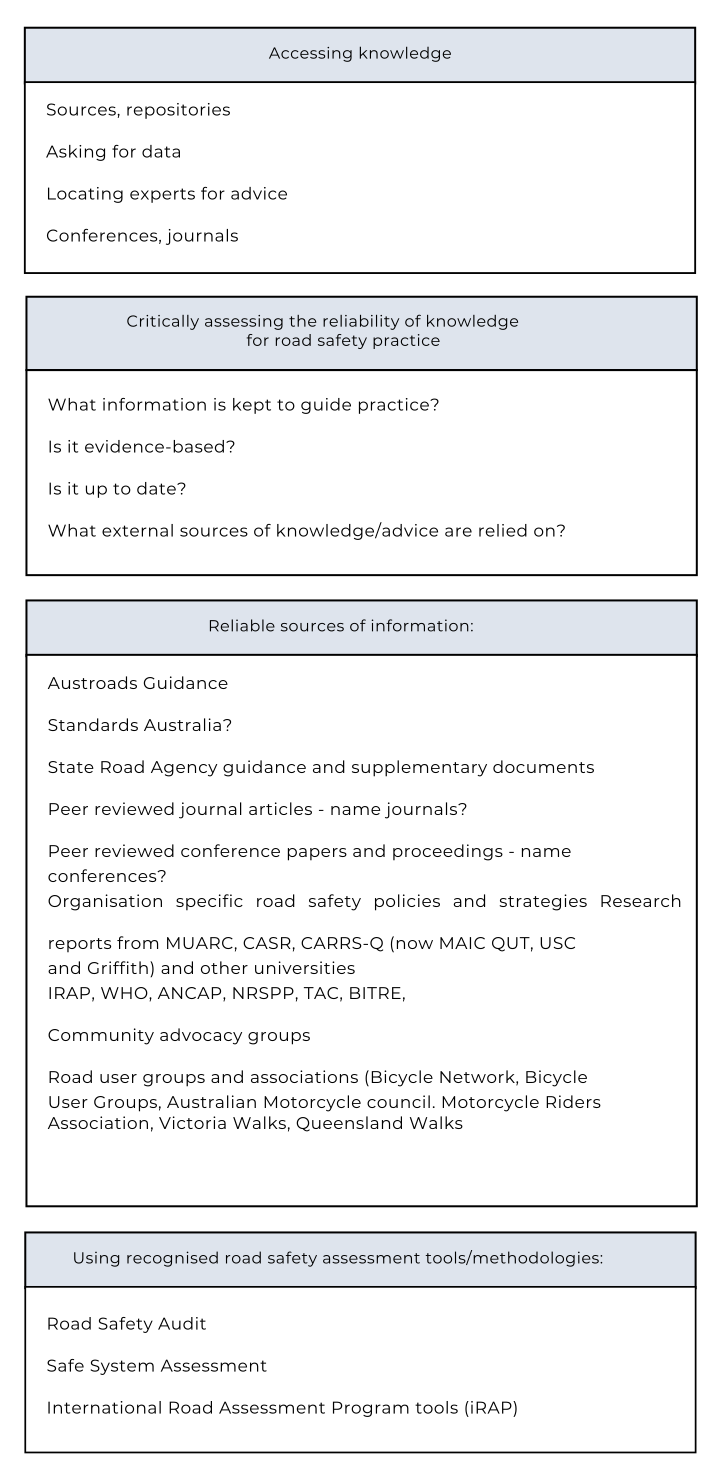
By combining multiple knowledge sources with practical experience, road safety practitioners can implement solutions that lead to safer roads and better outcomes for everyone.
The systematic approach to road safety that is embodied in the Safe System Approach (see History of Road Safety and A Systems Thinking Approach to Road Safety chapters) incorporates a reliance on evidence, where available, or accepted good practice.
It is therefore vital to understand that knowledge does not just move in one direction. It is multi-directional; practitioners from all fields have an active role in building the knowledge and understanding based on grounded-evidence and experience, as well as a key role in translating research into practice whether through legislation, following operational guidelines and policies, the promotion of road safety and education of communities, or the implementation of road safety treatments and road policing to name just a few. This collaboration represents an opportunity within the road safety profession. However, this collaboration requires leadership.
20. The Role of Leadership in Fostering Evidence-Based Decision Making, Driving Cultural Change, and Embedding Road Safety into Organisational Priorities #
Effective road safety leadership is essential to driving meaningful and sustained reductions in road trauma. Strong leadership provides the clear vision required to guide collective action – most powerfully demonstrated through frameworks such as Vision Zero, which assert that no level of death or serious injury on the road network is acceptable. However, leadership must do more than state an ambition: it must translate that vision into a practical, iterative process that systematically advances road safety across every dimension, from road design and vehicle standards to road policing, post‑crash care, and institutional capacity.
Such leadership depends on the ability to explain the problem with clarity and conviction, drawing on robust evidence to demonstrate the scale, causes, and consequences of road trauma. At the same time, it requires a precise articulation of the solutions that work, backed by sound science and real‑world results. Equally vital is a deep understanding of what does not work – and why. Avoiding ineffective or outdated approaches prevents wasted resources and ensures that effort is focused where it can achieve the greatest impact.
Above all, road safety leadership must motivate. It must inspire commitment across sectors, enable collaboration between agencies, and foster a shared sense of purpose that brings together policymakers, practitioners, engineers, police, health professionals, and communities. When leadership combines vision with evidence, clarity with persuasion, and ambition with practical action, it creates the conditions for genuine, sustained progress.
21. Fostering Evidence-Based Decision Making #
At the heart of effective leadership in road safety is the commitment to make decisions grounded in robust evidence. Leaders have the authority and responsibility to set the tone for how information is gathered, assessed, and applied.
• Championing data-driven practice: Strong leaders insist on basing strategies on credible data sources, such as crash statistics, incident reports, near-miss data, and risk assessments. This ensures that interventions are targeted to real risks rather than assumptions.
• Bridging research and practice: Leaders create pathways for research findings to inform practice. This may involve building partnerships with research institutions, universities, and road safety organisations, and translating technical knowledge into practical applications that staff can use.
• Encouraging learning systems: Evidence-based leadership means setting up systems where outcomes are monitored and evaluated. This allows organisations to learn from both successes and failures, creating a cycle of continuous improvement.
By embedding evidence-based decision-making, leaders protect against reactive, short-term solutions and ensure that road safety strategies are grounded in proven approaches.
22. Driving Cultural Change #
Leadership is also the primary driver of cultural change. Without a supportive culture, even the best-designed road safety initiatives can fail at the start. Leaders play a critical role in shifting the collective mindset from seeing road safety as an external compliance issue to embracing it as an internal, shared value.
• Modelling behaviour: Leaders who visibly prioritise road safety by following policies themselves, addressing unsafe practices, and acknowledging safe behaviours signal to employees that safety is non-negotiable.
• Creating psychological safety: Cultural change requires open conversations about risks and mistakes. Leaders can foster psychological safety by encouraging staff to report incidents, hazards, and near misses without fear of blame.
• Communicating a clear vision: Leaders articulate why road safety matters not only to the organisation but also to the wider community. Connecting safety initiatives to broader values such as protecting families, preventing harm, and contributing to social responsibility builds emotional engagement.
• Recognising and rewarding commitment: A strong culture is reinforced when safe behaviours are recognised and celebrated. Leaders who make space to acknowledge individuals or teams for their contributions to safety create positive reinforcement loops.
Driving cultural change requires persistence, as shifting long-held norms and behaviours takes time. Leadership ensures that the organisation stays the course and does not revert to old patterns when under pressure.
23. Embedding Road Safety into Organisational Priorities #
The long-term sustainability of road safety depends on it being embedded within the organisation’s strategic priorities. Leadership ensures road safety is not treated as an add-on or compliance burden, but as a fundamental component of how the organisation operates.
• Strategic integration: Leaders weave road safety into organisational strategies, policies, and planning processes. This includes setting clear road safety goals, aligning them with business objectives, and ensuring accountability through regular reporting.
• Resource allocation: Commitment to road safety needs to be matched with resources, whether in training, infrastructure, or staffing. Leaders are responsible for ensuring adequate investment is made so that safety initiatives are implementable, effective and sustainable.
• Cross organisational collaboration: Road safety is rarely the responsibility of one department alone. Leaders foster collaboration between operational, human resources, legal, and well-being teams to ensure safety is considered from all angles.
• External engagement: Embedding road safety also involves leadership at the external level, building partnerships with regulators, industry bodies, and community organisations to align organisational practices with wider societal road safety goals.
• When safety is embedded into strategic priorities, it becomes a natural lens through which all decisions are filtered, whether hiring, procurement, or fleet management.
24. The Leadership Mindset #
Ultimately, the role of leadership in road safety is not limited to formal decisions or policies. It is about cultivating a mindset of accountability, care, and foresight. Effective leaders understand that their influence extends beyond compliance to shaping culture, setting expectations, and inspiring action.
They also recognise that leadership is not confined to the executive team. Middle managers, supervisors, and frontline leaders play equally important roles in translating values into day-to-day practice. Building leadership capacity at all levels creates resilience and sustainability in road safety outcomes.
25. Continuous Improvement #
Historically, the safety and comfort of people moving outside vehicles—such as pedestrians, cyclists, motorcyclists, and users of micromobility devices—have often been overlooked in design and policy decisions. This has led to higher rates of serious injury and death among these groups, particularly in urban areas where vehicle-dominated environments persist (Roads and streets).
These inequities are further compounded by demographic and socio-economic factors. Women, for example, are more likely to walk, use public transport, or travel with children, exposing them to greater risk in poorly designed environments. People from lower socio-economic backgrounds often live in areas with higher traffic volumes, limited pedestrian infrastructure, and fewer safety improvements, increasing their vulnerability. First Nations communities often face disproportionately high rates of road trauma due to remote road conditions, limited safe transport options, and lower seatbelt use or vehicle safety standards. Isolation can delay emergency response times, while limited access to driver education, licensing, and culturally appropriate programs further increases risk.
Significant learning still lies ahead. Creating a transport system that is truly safe and inclusive requires moving beyond traditional approaches, addressing systemic inequities, and rethinking what “safe” really means for everyone—not just for people inside vehicles. Doing what we’ve always done and expecting a different result will not lead to lasting change.
Success relies on leadership at all levels to champion evidence-based decision-making, overcome fragmentation, and embed road safety into core missions and performance frameworks. By fostering professional networks and communities of practice, the field can build collective expertise, drive consistency, and advance the professionalisation of road safety.
26. Conclusion: Collaboration is Key #
Collaboration strengthens every aspect of road safety practice, linking evidence to action, supporting continuous improvement, and building the shared professional expertise needed to deliver safer outcomes. Strategies for building professional networks and engaging with communities of practice help practitioners exchange knowledge, enhance organisational learning, and ensure consistent, evidence informed approaches across sectors and jurisdictions.
Engagement with professional associations and industry groups provides practical pathways for this collaboration. These networks enable practitioners to share emerging research, learn from real-world implementation, and strengthen the professionalisation of road safety practice as a whole.
By fostering professional networks and communities of practice, the field can build collective expertise, drive consistency, and advance the professionalisation of road safety. This collaborative approach supports both systematic changes and safe system outcomes, ensuring that knowledge and practice together drive meaningful improvements on our roads.
27. References #
Box, E. (2023). Empowering Young Drivers with Road Safety Education: Practical guidance emerging from the Pre-driver Theatre and Workshop Education Research (PdTWER). RAC Foundation. https://www.racfoundation.org/wp-content/uploads/Road-Safety-Education-report-Box-November-2023-1.pdf
Federal Highway Administration. (2026). Manual on Uniform Traffic Control Devices (MUTCD). US Department of Transportation. https://mutcd.fhwa.dot.gov
Global Road Safety Facility. (2026). Pillar 3: Knowledge and Expertise. World Bank. https://www.globalroadsafetyfacility.org/knowledge-and-expertise
PRISMA Executive. (2020). Welcome to the PRISMA website. https://www.prisma-statement.org
Senserrick, T, & Johnson, M. (2025). Australasian Road Safety Conference 2026: Conference Proceedings. Australasian College of Road Safety. https://australasianroadsafetyconference.com.au/conference-proceedings/
Standards Australia. (2026). AS 1742 Manual of uniform traffic control devices. https://www.standards.org.au/search-results?query=AS%201742
Turner, B., Job, S., & Mitra, S. (2021). Guide for road safety interventions: Evidence of what works and what does not work. World Bank. https://documents1.worldbank.org/curated/en/206691614060311799/pdf/Guide-for-Road-Safety-Interventions-Evidence-of-What-Works-and-What-Does-Not-Work.pdf
