
Authors #
Duncan McRae, Transport for New South Wales
The author of this case study, Duncan McRae, has been active in motorcycle rider education since the mid-1980s. During the early 2000s, Duncan was the Manager Driver Policy and Programs for the NSW Roads and Traffic Authority (RTA), during this time he was involved in the implementation of many of the rider training initiatives outlined in this case study.
Reviewers #
Dr Matthew Baldock, Centre for Automotive Safety Research at the University of Adelaide
Muhamad Syukri Abdul Khalid, Malaysian Institute of Road Safety Research
Dr Yao Yu, Deakin University
1. Development of motorcycle rider licensing and training in NSW between 1980 and 2025 #
The 1960s and 70s saw the formation of a perfect storm. Motorcycles were becoming more reliable, relatively easier to ride, and more affordable, just as the first wave of baby boomers were reaching licensing age. For many young Australians, motorcycling was a cheap, easy form of independence that felt unique to their generation.
By the 1980s, a significant rise in motorcycle rider trauma was evident. The problem was not isolated to Australia, with the same scenario being played out across the world; including in America, Europe and Asia (Hurt, Ouellet, & Thorn, 1981). What was special was how it was addressed in New South Wales (NSW), Australia; the start of mandatory rider training provides an insight into the early days of evidence-based policy and the role of road safety policy makers to reduce road trauma.
This case study examines the evolution of the NSW motorcycle rider licensing scheme over the past 40 years. It looks at the balance between evidence-based policy and management of the change process, giving contextual meaning to the saying ‘big wheels turn slowly’.
2. Evidence based policy #
In response to the alarming trend in rider trauma, the Parliament of NSW – Joint Standing Committee on Road Safety (Staysafe) conducted an inquiry into motorcycle rider trauma and published the final report, Staysafe 3: Inquiry into motorcycling safety, on 18 October 1984 (Parliament of NSW, 1984). It found motorcycling to be considerably more dangerous than driving a car, with a significantly higher death and injury rate (Parliament of NSW, 1984).
The Staysafe Committee examined licensing, registration, population, fatal and non-fatal trauma data from the early 1960s through to 1983, comparing trauma and crash risk for drivers and riders from learners to fully licensed. The snapshot below of some of the 1982 data from the Staysafe 3 report shows the significant difference in risk (Parliament of NSW, 1984).
- 130,000 registered motorcycles
- 2,660,000 registered motor vehicles
- 203 motorcycle fatalities
- Fatality rate of 15.6 deaths per 10,000 registered motorcycles
- Fatality rate of 2.9 deaths per 10,000 registered motor vehicles
- In 20.1% of fatalities the rider had a Blood Alcohol Concentration (BAC) at or over 0.15 percent, three times the legal limit of 0.05 percent BAC (i.e., 0.05 g/100ml)
- Learner riders 12.4% of motorcycle fatalities
- Learner drivers 0.6% of driver fatalities.
The Committee observed that, in 1964, it was 3.2 times more dangerous to be on a motorcycle than in a motor vehicle (Parliament of NSW, 1984). However, by 1983 it was 5.4 times more dangerous to be on a motorcycle than in a motor vehicle. This change was predominantly due to improvements in driver licensing and motor vehicle design, with mandatory wearing of seat belts in NSW since 1971 (Parliament of NSW, 1984). Basically, driving had become safer and motorcycling had not changed.
As part of the inquiry, the Staysafe Committee also examined a range of rider licensing, training, and assessment schemes in Australia and internationally (Parliament of NSW, 1984). Based on their in-depth analysis of the issue, the Staysafe Committee made a series of recommendations relating to rider licensing, vehicle standards, and road design. There were 34 recommendations in all including:
- Mandatory rider training with a minimum of three months on a learner licence
- Training outsourced to accredited providers
- Off-street practical assessment prior to issue of a learner rider licence
- On-road riding test
- Novice rider restrictions on maximum speed, motorcycle power, and the carrying of pillion passengers
- Rider licence minimum age, tenure, sanctions, and protective clothing requirements
- Road user education campaign ‘Sharing the Road’
- Road design, construction, and maintenance suited to the legal operation of motorcycles
- New Australian Design Rules (ADRs) pertaining to motorcycle side stands.
The recommendations actually covered all the crash prevention aspects of what the road safety community now refers to as the Safe System Approach (road safety management, safer people, safer vehicles, and safer roads) (for a more in-depth explanation of the Safe System Approach, see History of Road Safety chapter of the Road Safety BoK).
3. Introduction of mandatory rider training #
The NSW Government accepted all of the recommendations of the Staysafe 3 report, and the task for the driver licensing regulator was to take the evidence-based recommendations of the report and develop the legislation, policies, and procedures to make them operational.
Following the release of the Staysafe 3 report (Parliament of NSW, 1984) recommendations, rider groups raised concerns that mandatory training might be expensive and result in an increase in unlicensed riding. To address these issues a rider training subsidy was established. Additionally, at the time there was no rider training industry per se, and there was only a small number of licensed motorcycle instructors, so to allow time for the industry to become established, a progressive implementation of the mandatory training was planned.
The mandatory training comprised three key elements: a 7-hour Pre-learner course, focusing on basic control skills, a 6-hour Pre-provisional course that included an on-road training element and a Motorcycle in Traffic Test (MITT), similar to an on-road driving test but with the licensing examiner following the applicant on another motorcycle. To ensure training was not a barrier to licensing, the Pre-learner course was positioned prior to any other licensing assessments, such as the road rules exam. The courses were delivered in small groups. For the Pre-learner course, a motorcycle, helmet and gloves were provided to create a ‘try before you buy’ approach.
The NSW Motorcycle Licence Training and Testing Scheme (MLTTS) remains mandatory to this day and continues to be subsidised by the NSW Government. At commencement of the scheme, the customer fee for the Pre-learner course was set at $40 and the Pre-provisional course at $60. Training fees were collected by the Government and providers were paid their tendered price for delivery. This meant that the fee to the customer was the same across NSW, regardless of the variations in service delivery costs between locations. The fees for training are linked to the Consumer Price Index (CPI) and are still based off the original amounts.
The scheme commenced as a trial in 1990, with centres opening at a handful of locations, in the Greater Sydney area, and regional NSW. Following an external review of the tender process, the scheme was progressively implemented across NSW between 1991 to 1994, with a total of 21 rider training centres servicing over 90% of licence applicants (Hamilton & Andersen, 2000, p. 33). The small proportion not undergoing training resided in remote areas in NSW where there were insufficient motorcycle licence applications for training centres to be viable. Training was made mandatory for anyone residing within 100km of a rider training centre, whereas customers outside the serviced area could still choose to travel to training but had the option of doing a riding test only, from a local customer service centre.
To assist with the substantial set-up costs, major motorcycle manufacturers all made contributions to enable the purchase of the rider training fleet. Many of the initial training ranges were established on land owned or leased by the NSW Government. These two strategies allowed rider training providers to become established with minimal capital investment.
Legislation was implemented to support a structure of ‘mandatory training areas’ (Road Transport (Driver Licensing) Regulation 2008 (NSW)). Through a tender process, training providers were given exclusive rights to deliver a service to a specified set of post (ZIP) codes. This model provided a level of certainty to new businesses as they were able to determine training throughput accurately, based on historical motorcycle licensing data for the area.
To mitigate risk and allow new training companies to become established, only a limited number of centres were opened each year. This model also meant that only 20 percent of the state would be retendered each year, providing additional security to the scheme (i.e., to minimise risk that training would not be available in a large area).
Other major changes were made to licensing, including learner licences issued for 6 months, with no licence renewal (unless the person attended the training again), passenger restrictions, and motorcycle capacity restrictions (Parliament of NSW, 1984). A speed limit on learner drivers and riders had been in place since 1973 (40mph). In 1992 the learner speed limit was increased from 70 km/h to 80 km/h. The speed restriction was an early application of the principle of graduated licensing, whereby restrictions are placed on novice riders to reduce risk and a gradually eased as the person develops skills, experience, and maturity.
In 1994, the mature age rider exemption scheme (MARES) for people over 30 years old with a minimum 5-year unrestricted full driver licence was introduced, in recognition of the abilities transferred across from driving a car. Eligible riders were exempt from the 3-month learner tenure requirement and, after successfully completing the Pre-provisional course, were able to progress directly from a learner to unrestricted licence.
Rider training across Australia was still in its infancy (Newland, 2009). To help development of the profession, the Federal Office of Road Safety and the Federal Chamber of Automotive Industries jointly sponsored the 1992 National Motorcycle Rider Trainers Seminar ‘Training for Safety’ at Norwell, Queensland (Department of Infrastructure, Transport, Regional Development and Local Government [DITRDLD], 1992). The Seminar was a landmark event as it was the first time representatives from Government, training organisations and the motorcycle manufacturers were together discussing how to improve rider training in Australia (DITRDLD, 1992).
Introduction of the NSW scheme proved highly successful. As seen in Figure 1, over the first 10 years, there was a drop of 27% in riders killed and injured in crashes (de Rome, L., Stanford, G., & Wood, B., 2007). The greatest benefit was amongst young riders (aged under 26), with a 55% drop in casualties from 1,664 in 1990, to 743 in 2000 (de Rome, L., Stanford, G., & Wood, B., 2007).
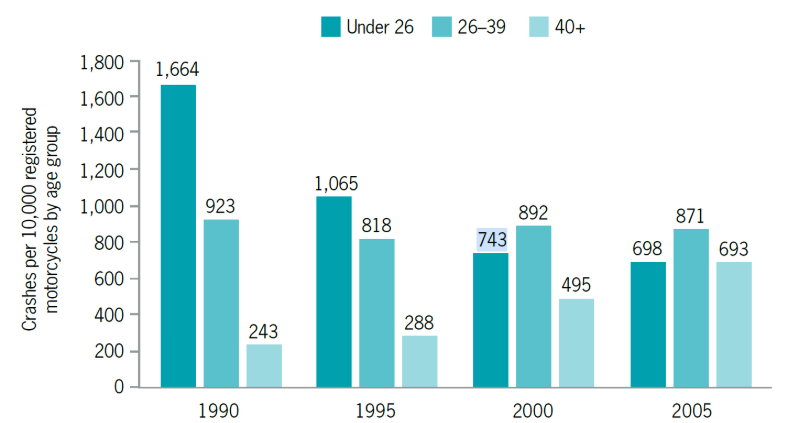
Figure 1: Number of riders in crashes by age group since the introduction
of compulsory learner training, NSW, 1990–2005
Source: de Rome, L., Stanford, G., & Wood, B. (2007, p. 31)
4. Constant evaluation and improvement #
Although mandatory rider training was the most significant reform that followed the 1984 Staysafe 3 report, the next 10 years saw the implementation of a range of other initiatives based on the recommendations.
A 250cc capacity limit for learner and provisional riders had been in place since 1977. However, the combination of the development of high-performance race replica two-stroke 250cc motorcycles and the limited models imported into the Australian market had gradually made the range of motorcycles suitable for novice riders very limited. This was particularly a challenge for people who were not the ‘average’ height and weight.
In 2002, in response to the issue of limited ‘novice friendly’ motorcycles, the NSW Government commenced a trial of the Learner Approved Motorcycle (LAM) scheme (Newland, 2009; Austroads 2023). Under the legislation, learner and provisional riders were restricted to motorcycles with an engine capacity less than 660c and power less than 150kw per tonne (with an allowance of 90kg for rider and fuel).
The policy principle of the scheme was ‘everything is banned unless approved’. This approach allowed new models to be evaluated and prevented low-volume imports (‘grey imports’) with higher power from being mistakenly purchased by riders.
With the wide range of models available, in 2003 an LA (learner approved) code was added to the vehicle registration details to support enforcement at the roadside. The trial was very successful and within a few years LAMs had been adopted by all Australian jurisdictions (although one, the Australian Capital Territory, did not introduce an engine capacity limit). In 2023, Austroads published a review of the LAM scheme (Austroads, 2023) and, in testimony to the original design, the scheme was found to be still fit for purpose (Austroads, 2023).
Prior to 2004, sanctions on learner drivers and riders were manually reviewed. Learners were added to the licence demerit points scheme with a 4-point threshold to bring them in line with provisional (4-point limit P1 provisional, 7-point limit P2 provisional) and full licence holders (13-point threshold). In 2007 a ‘zero tolerance’ for any speeding offence on a learner or P1 provisional licence was introduced. The minimum penalty introduced for speeding was 4 demerit points and a 3-month licence suspension (P2 provisional suspended on second speeding offence).
During the early 2000s, there was an overhaul of education materials to incorporate low risk riding behaviours. The educational focus was moved from vehicle control, and more emphasis was placed on higher-order thinking skills, such as hazard perception, managing risk, and safe riding behaviours. The work brought alignment to rider training curriculum, rider handbooks, and road safety messaging. The changes to the Motorcycle Riders Handbook (Service NSW., n.d.) were so well received that the publication was adopted by every Australian jurisdiction except Victoria.
5. Implementation of the Motorcycle Graduated Licensing Scheme #
Despite a wide range of state-based initiatives to address the problem, motorcycle rider trauma remained high across Australia into the new millennium. In response, the Federal Government held the Motorcycle and Scooter Safety Summit ‘The Road Ahead’ in 2008 (Motorcycle Safety Consultative Committee, 2008). The summit covered all aspects of the issue, including: crash data, rider protection, licensing, education, enforcement, road Infrastructure, and roadside hazards. Like the Staysafe 3 report some 20 years earlier, the summit report clearly articulated the problem through research and made clear evidence-based recommendations on what needed to be done to reduce trauma.
The Summit report called for a national Motorcycle Graduated Licensing Scheme (M-GLS) for riders. Many Australian states had already implemented GLS to obtain a driver licence and NSW was already developing their M-GLS reforms (Motorcycle Safety Consultative Committee, 2008).
In 2009, NSW introduced what is considered by many as Australia’s first M-GLS. It was not just a rebadging of the GLS for car drivers; it was unique, bespoke, and tailored to motorcycling. Although some aspects of car and motorcycle schemes were aligned, such as three licence phases (Learner, Provisional P1 and Provisional P2) prior to a full licence, other aspects such as mandatory minimum hours (learner driver logbooks) were deliberately not introduced because of the risks associated with increasing exposure without the risk mitigation of a supervising driver available to a learner in a car.
The data analysed during the development of the M-GLS highlighted issues with the mature age exemption. Riders who were avoiding time on a learner LAMS motorcycle and going straight to a large capacity machine were significantly over-represented in the trauma data. Accordingly, the exemption scheme was modified to ensure every new rider is restricted to LAM for at least 15 months
The validity of the rider learner licence was extended from 6 months to 12 months to provide more time for practice but was deliberately not extended to the 5-year validity period of a car learner licence. This was primarily because riders needed to be encouraged to attend the Pre-provisional course for further training as they do not have the protective factor of a supervising driver (see section 4.4 Behavioural Interventions chapter).
The 2009 NSW M-GLS changes focused primarily on the licensing scheme, with the training regime left largely unchanged. Novice rider training in Australia did not see any other major changes until 2015, when Victoria implemented a comprehensive training scheme to support their M-GLS reforms.
The Victorian rider training curriculum was guided by adapting the best-practice Finnish Goals for Driver Education (GDE) Matrix to Goals for Rider Education (GRE), which became the benchmark for Australia and was adopted by Queensland in 2016 and Tasmania in 2017 (Senserrick, et al., 2017). NSW was planning a review of their M-GLS and held off making changes. The NSW M-GLS review was published in 2019 (Transport for NSW, 2019).
6. Ongoing review and enhancement #
Throughout the 21st century, governments, driving licensing regulators, academics, and motorcycle rider groups continue to research and evaluate motorcycle safety in an effort to reduce rider trauma. Examples of this ongoing effort in NSW include: the Parliament of NSW (2015) Staysafe – Inquiry into motorcycle safety in NSW, and the Transport for NSW (2019) Evaluation of the NSW Motorcycle Graduated Licensing Scheme. International examples include, the Motorcycle Accidents In Depth Study (MAIDS, 2009) project and the Federation of European Motorcyclists Association (FEMA, 2023) Safer Roads for Motorcyclists report.
Since the introduction of mandatory rider training in NSW in the 1990s, motorcycle rider trauma has been steadily decreasing with some notable reductions that mirror changes to the demerit point scheme in 2004 and M-GLS in 2009 (see Figure 2). Unfortunately, the positive trend in trauma reduction reversed following the COVID-19 pandemic, and since 2022 all road trauma metrics have shown an alarming trend in the wrong direction (Transport for NSW, 2025b; Transport for NSW, 2026).
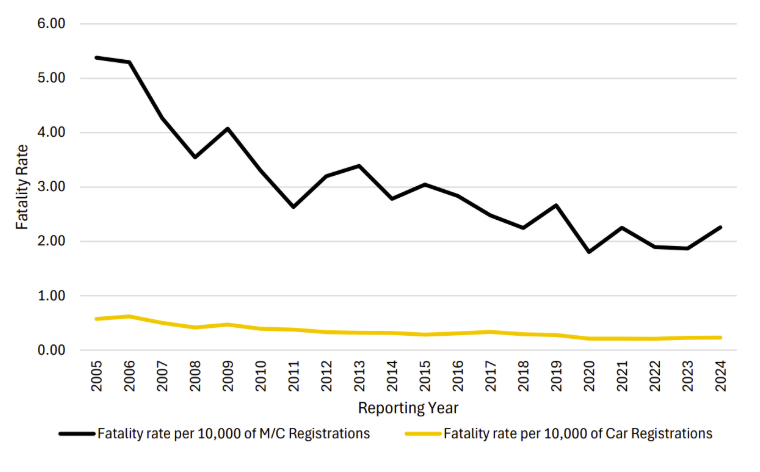
Figure 2: Fatality rates for riders and drivers per 10,000 vehicle registrations 2005 – 2024
Source: Transport for NSW (2025a, p. 6)
In late April 2025, the NSW Government held a Motorcycle Safety Roundtable to address the concerning rise in motorcycle fatalities in NSW (Transport for NSW, 2025a). The event brought together road safety experts from around Australia to provide valuable insights on motorcycle safety. Government agencies, parliamentarians, road safety academics, motorcycle peak bodies, and rider trainers attended the event.
The available data clearly showed young riders, in particular learner licence holders, to be the highest risk group, as shown in Table 1.
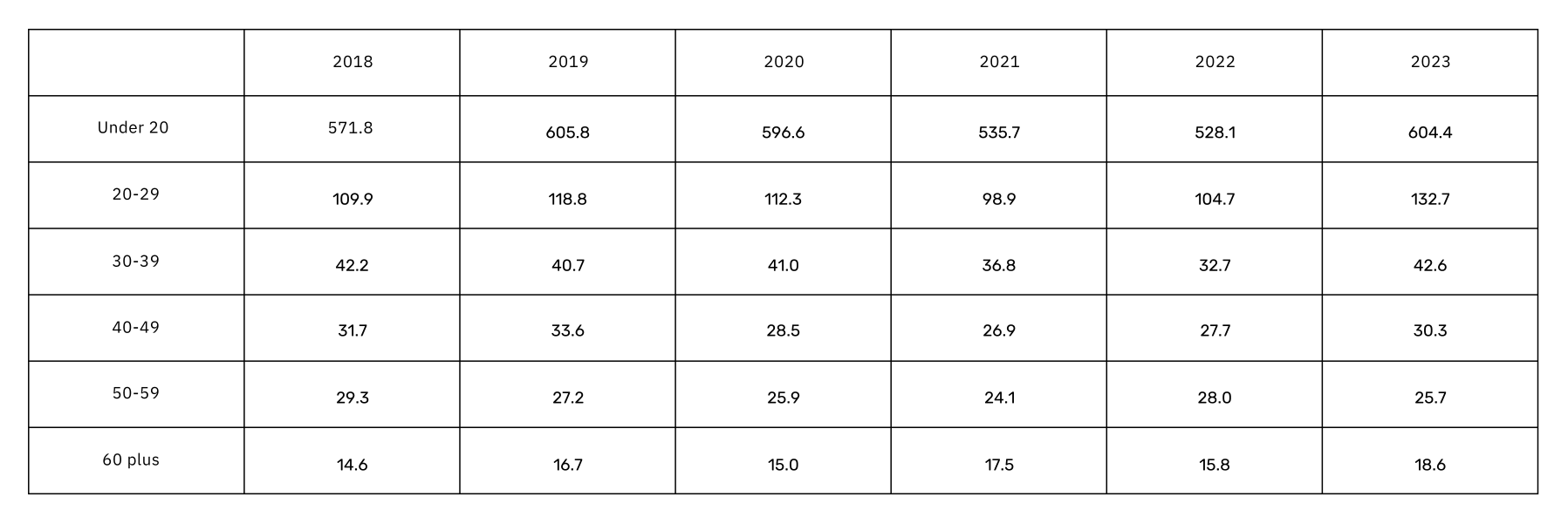
Table 1: Rider serious injury rates per 10,000 licences by age group
Source: Transport for NSW (2025a)
Following the Roundtable, the Transport for NSW Road Safety Policy team together with researchers and the motorcycle rider community developed a set of major reforms to the NSW Motorcycle Graduated Licensing Scheme (M-GLS), these reforms were announced on 20 October 2025 (NSW Government, 2025).
The M-GLS reforms to training include:
- Online education and assessment
- Small group on-road coaching in the learner phase
- Learning journal for novice riders
The primary aim of the 2025 reforms is to provide more training ‘touch points’ during the learner phase, rather than just increasing the duration of the Pre-learner training course. Advice from rider training providers and subject matter experts was that the students are at overload both cognitively and physically at the end of the Pre-learner course and simply just cannot take more in (Transport for NSW, 2025a). By providing online learning of key theory elements before the course and conducting small group on-road coach immediately after the Pre-learner training, it is hoped that higher order skills, like roadcraft tactics and risk management strategies, will be more effectively applied by learner riders.
7. Summary and lessons learnt #
This case study demonstrates that sound policy takes time, it defines a problem through research and works through the evidence to develop solutions that will make a difference in the real world. When it gets it wrong (which it can), it goes back to the evidence to make improvements. Policy is a constant never-ending process, not made in a vacuum.
From a motorcycle perspective, this case study reminds us that motorcycles cannot be treated as small cars or powerful bicycles. Motorcycle road safety does share some similarities with other road user groups but there are more differences than commonalities.
Driving and riding education programs with multiple ‘touch points’ are more effective than single day interventions (Christie, 2001) and training needs to address all levels of the GRE Matrix; that is, operational, tactical, strategic, and general (Senserrick et al., 2017). This process may take many years.
It is also important to acknowledge is that it is particularly difficult to obtain data that accurately reflects motorcycling exposure. Metrics that work in other areas of road safety, such as fatalities per 10,000 licences on issue or fatalities per 100,000 population, misrepresent the situation because of the high number of unused (dormant) rider licences, and the low percentage of rider licences in the population. Ideally, deaths per 100 million vehicle kilometres (MVK) travelled would be the most accurate measure of trauma; however very few jurisdictions collect individual rider travel data. For these reasons, the best measure for evaluating long-term trauma trends in motorcycling continues to be fatal and serious injury per 10,000 registered motorcycles (Australasian College of Road Safety [ACRS], 2024).
Learning to ride a motorcycle is also unique in that it is critical to have novice riders undertake off-street training to learn the basic physical control skills. Learning to drive a car involves significantly lower risk as the novice has a supervising driver who can manage the risk, provide immediate support, and even take control of the vehicle, with the vehicle providing a level of protection not available to riders. Although there have been developments in motorcycle rider helmet communications, research is lacking on whether benefits outweigh increased cognitive demands, and supervisors can do very little to prevent a loss-of-control incident by the novice rider. There is much more to be done, both in implementation and evaluation.
This case study also demonstrates the impact of Australia’s practice to form state parliamentary committees to monitor, investigate, and report on road safety (see History of Road Safety chapter). As separate bodies to transport ministers and road authority bodies, these committees can issue recommendations a step removed from direct conflicts of interest. Also demonstrated is the importance of engaging with the motorcycle rider research community, so that evidence, including local data, is drawn from at key events.
Evidence-based policy, innovation and commonsense are essential for sound policy development. In motorcycling, arguably more so that other disciplines, there are many urban myths, ‘armchair warriors’, and experienced riders, but very few actual subject matter experts. Good data, solid research, and critical thinking is needed to find the best way forward. This underscores the incremental steps taken to build support and increase demands for safety reforms among the motorcycle rider community.
By far the most notable observation with which to conclude is that real progress only happens when politicians, regulators, researchers, and stakeholder groups share a common vision. Over the 40 years of this case study, each time all parties have worked together, significant change has occurred. Outside of these times it has fallen on the shoulders of policy professionals and researchers to keep the wheels turning.
8. Reference List #
Australasian College of Road Safety. (2024). ACRS policy position statement: Motorcycle safety. https://acrs.org.au/wp-content/uploads/ACRS-Policy-Position-Statement_Motorcycle-Safety.pdf
Austroads. (2023). Learner Approved Motorcycle Scheme Update (AP-R69023). https://austroads.gov.au/publications/road-safety/ap-r690-23
Christie, R. (2001). The effectiveness of driver training as a road safety measure: an international review of the literature (01/03). https://www.education.vic.gov.au/Documents/school/teachers/health/effectdriver.pdf
de Rome, L., Stanford, G., & Wood, B. (2007). Positioned for safety 2010: A motorcycle safety strategic plan 2007–2010. Motorcycle Council of NSW. https://roadsafety.mccofnsw.org.au/a/63.html
Department of Infrastructure, Transport, Regional Development and Local Government. (1992, 1992, September 17-18). National ‘Train the Trainers’ Motorcycle Rider Trainers Seminar. Norwell, Queensland. https://www.infrastructure.gov.au/sites/default/files/migrated/roads/safety/publications/1992/pdf/mr_11.pdf
European Association of Motorcycle Manufacturers. (2009). Motorcycle Accidents In Depth Study (MAIDS). https://www.maids-study.eu/index.php?error=hastolog
Hamilton, M. A. & Andersen, S. (2000). Developments in Vehicle Regulation, Driver Testing and Licensing: Summary Report. Roads and Traffic Authority Oral History Program. https://www.transport.nsw.gov.au/system/files/media/documents/2023/vehicle-regulation-driver-testing-and-licensing-summary-report_0.pdf
Hurt, H. H., Ouellet, J., & Thom, D. (1981). Motorcycle accident cause factors and identification of countermeasures, Volume 1: Technical report (DOT-HS-805-862). Traffic Safety Center, University of Southern California.
MH Consulting Group. NSW motorcycle safety roundtable 2025: Insights report. https://www.transport.nsw.gov.au/system/files/media/documents/2025/crs_motorcycle_roundtable_2025_insights_report.pdf
Motorcycle Safety Consultative Committee. (2008). Motorcycle and scooter safety summit: The road ahead. https://www.infrastructure.gov.au/department/media/publications/motorcycle-and-scooter-safety-summit-road-ahead
Newland, R. (2009). Milestones in Motorcycle Safety – Australia 1976-2009. Journal of Road Safety, 20(4), 14-17. https://journalofroadsafety.org/article/32844-milestones-in-motorcycle-safety-australia-1976-2009
Nordqvist, M. Willigers., D. (2023). Safer roads for motorcyclists: Moving towards a systematic approach for motorcycle safety. https://www.femamotorcycling.eu/safer-roads-for-motorcycles/
NSW Government. (2025). Minns Labor Government delivers landmark motorcycle safety reforms, complementing road safety infrastructure [Ministerial Release]. https://www.nsw.gov.au/ministerial-releases/government-delivers-landmark-motorcycle-safety-reforms.
Parliament of NSW. (1984). Staysafe 3: Motorcycling safety. https://www.parliament.nsw.gov.au/committees/inquiries/Pages/inquiry-details.aspx?pk=2794#tab-reportsandgovernmentresponses
Parliament of NSW. (2015). Motorcycle Safety in NSW: Staysafe Inquiry. https://www.parliament.nsw.gov.au/ladocs/submissions/51416/Submission%2016%20-%20Inquiry%20into%20Motorcycle%20Safety%20in%20NSW%20-%20Redacted%20Version.PDF
Road Transport (Driver Licensing) Regulation 2008: Part 9 Motorcycle licence training and testing scheme (NSW). https://legislation.nsw.gov.au/view/whole/html/inforce/2009-07-01/sl-2008-0397
Senserrick, T., McRae, D., Wallace, P., de Rome, L., Rees, P., & Williamson, A. (2017). Enhancing higher-order skills education and assessment in a graduated motorcycle licensing system. Safety, 3(2), 14. https://doi.org/10.3390/safety3020014
Service NSW. (n.d.). Motorcycle Riders Handbook NSW. https://www.service.nsw.gov.au/transaction/motorcycle-riders-handbook
Transport for NSW. (2019). Evaluation of the NSW Motorcycle Graduated Licensing Scheme: Summary Report. https://www.transport.nsw.gov.au/system/files/media/documents/2023/Evaluation%20of%20the%20NSW%20Motorcycle%20Graduated%20Licensing%20Scheme%20-%20Summary%20Report.pdf
Transport for NSW. (2025a). Motorcycle Safety Roundtable.
https://www.transport.nsw.gov.au/roadsafety/what-we-do/nsw-motorcycle-safety-roundtable-2025
Transport for NSW. (2025b). Quarterly bulletin of serious injury crash data – Quarter ending March 2025 (preliminary). https://www.transport.nsw.gov.au/system/files/media/documents/2026/Serious_Injury_Quarterly_Bulletin_Report_2025_Q1.pdf
Transport for NSW. (2026). Monthly bulletin of preliminary traffic crash data January 2026. https://www.transport.nsw.gov.au/system/files/media/documents/2026/Serious_Injury_Quarterly_Bulletin_Report_2025_Q1.pdf