

Authors #
Emeritus Professor Ann Williamson, University of New South Wales
Emeritus Professor Barry Watson, Queensland University of Technology (QUT), MAIC-QUT Road Safety Research Collaboration
Emeritus Professor Michael Regan, University of New South Wales
Professor Joanne Bennett, Australian Catholic University
Reviewers #
Mohd Kairul Alhapiz Ibrahim, Road User Behavioral Change Research Center, Malaysian Institute of Road Safety Research
Dr Soames Job, Global Road Safety Solutions Pty Ltd
Abstract #
This part of the Road Safety Body of Knowledge addresses the role of the road user in the road system. It is divided into two chapters. The first covers road user behaviour and performance in the road system, and the second looks at the contribution of error and risk-taking to road safety. The objective of this first chapter is to describe the role of the human user in the road system and to explain why, through understanding how humans behave and perform in the road system, road user error can be avoided, and risky behaviour can be reduced. Specifically, the chapter will explain how the capacities and limitations of human information processing as well as psychosocial and cultural factors influence road user behaviour to be safe or unsafe. The chapter will also explain how the cognitive demands of different road user tasks like driving, riding a bicycle or crossing the road, or negotiating the footpath, can be designed to be compatible or conflict with human information processing capacities and expected ways of behaving. Through a clearer understanding of road user behaviour and their likely performance on-road, road safety professionals will be in a better position to incorporate the characteristics and expectations of road user behaviour in designing any element of the road system including roads, vehicles, training, policy, the laws, and enforcement. Similarly, it will inform the design of interventions to reduce risky behaviours that contribute to road crashes.
1. Why road safety professionals must understand the human road user #
Road users are a fundamental component of the road system. In fact, road users are the primary reason for needing a road system: to move people and goods around the world. It is essential therefore to understand how and why human users interact with the road system and especially the capacities and limitations of humans in the system.
We know that human road users do make errors when using the system, but they also often avoid them, depending on the circumstances. For example, road worker safety is an acknowledged problem involving multiple fatalities each year (Yeo et al., 2022). A temporary change in a section of road due to road work can lead to confusion and consequently to error for drivers in situations where the associated warning signs are located too late and too close to the work, are obscured by other objects so drivers miss them, or if the driver’s attention is captured by something else in the road system at the time. Similar problems occur for drivers when negotiating an unfamiliar section of the road system. If guidance to drivers through features like road markings and route, speed and direction signage is inadequate or obscured, drivers are likely to become confused and indecisive, so increasing the likelihood that they will make errors or behave in an unexpected or risky manner. Mostly drivers can adapt their behaviour to changed or unfamiliar circumstances without error, but not always as the risk of error and of crashes will be increased in situations like these.
These problems can be avoided by solutions like providing multiple and clearer signage and ensuring that distracting features are removed; but unfortunately, too often these aspects are overlooked and, when crashes occur, they are attributed to the driver rather than other factors in the road system that are out of the driver’s control. While familiarity with particular roads will help to reduce errors in most circumstances, it is not the only protection against error. Road users may still make errors where they cannot accommodate poor design features in a particular section of road, or if their performance is affected by other factors like feeling a bit more tired than usual, or affected by medication, etc.
The role of the User in the road system in this Road Safety Body of Knowledge is covered in two related chapters. The first chapter looks at human information processing capacities and limitations relevant to road safety, as well as the psychological factors that influence road user behaviour, because it is essential to understand how and why Users behave and perform in the road system. The second chapter in the User section builds on the first by exploring error and risk taking in road safety. This chapter will cover the different types of error and risky behaviours and the role of intention.
The objective of this first chapter is to provide the foundations for understanding road user behaviour and how other influences from the wider road system and even beyond can support or disrupt safe performance. As it covers fundamental aspects underlying road user behaviour, the material in this and the next chapter is relevant to all road safety professionals, no matter their disciplinary origins or where they are located in the world. This chapter should be read especially in conjunction with the following chapter on the role of road user error and risk-taking, as well as the chapters on Systems Thinking in Road Safety and on Risk and Risk Management (forthcoming), which cover the relationships between road user behaviour and the broader road system features which can influence it.
1.1. How do road users process information? #
Acknowledging and understanding human capacities and needs in using the road system is key to creating a road system that is compatible with the characteristics of users and consequently a system that can be used effectively and safely by users. This chapter will begin with a description of the requirements of the road user task, then discuss how these fit with the known characteristics of human information processing to reveal how we can expect road users to perform in the road system. It will also describe the range of factors and influences known to affect road user behaviour, which need to be considered in creating a usable and safe road system. This chapter describes the conscious and unconscious actions, decisions or interactions that generate road user behaviour in the road system in order to explain why road users behave the way they do as well as the outcomes of the behaviour for performance in the road system. The chapter will also describe the range of factors that can disrupt human capacity to process information including alcohol and drugs, fatigue and distraction factors as well as how psychological, social and cultural factors can contribute to unsafe road user behaviours. Finally, this chapter will cover the role of road user error in road safety including the circumstances and factors that increase the likelihood of error, the different types of errors that commonly occur in the road system and the distinction between unintentional error and intentional risk taking. Through explaining how road users process information in the road system, and how behaviour can be influenced to be safe and error-free, this chapter provides an essential basis for designing more usable and safer road systems.
1.1.1. What does the road system require a User to do? #
Humans can use the road system in many ways, as drivers of vehicles of different types, as riders of motorised or human-powered vehicles, as passengers of any of these vehicles or as pedestrians. Surprisingly few systematic analyses have been conducted of the demands of the tasks of road users within the road system. Almost all have focussed on driving.
Following a critical review of the existing models of driving, Michon (1985) proposed a model that is still in use today and its neurological foundations have recently been validated using neuroimaging techniques (Navarro et al., 2018). This model categorises the driver’s tasks in three hierarchical levels, from lowest to highest: operational, tactical and strategic. Here, operational refers to moment-by-moment control of the vehicle including steering and braking and involves visuo-motor control areas of the brain. Tactical refers to decisions on manoeuvring like lane-changing and turning and involves visual processing areas of the cortex. Strategic refers to tasks like high-level route planning, risk assessment and trip objectives and activates planning-related regions of the brain. Other research has identified around 45 different tasks in driving, although the primary tasks have been identified consistently as responding to hazards, lane keeping, speed control and keeping a safe distance from other vehicles (Hollnagel, 2006).
By defining the different task elements in driving, these analyses point to the demands of the driving task elements which then provides a basis for assessing whether and how human capabilities are compatible with these demands. For example, lane-keeping should be an easy task for drivers where lanes are clearly marked but may be difficult or even impossible where there is no marking. Understanding the relationship between the way road users function and the context in which they are required to function is important for determining the outcomes of the interaction. Areas of incompatibility in the interaction can compromise safe road user behaviour.
Task analysis has been useful as a first step towards assessing the demands of driving, mostly for light vehicles. A few studies have done similar task analyses for other types of road users including heavy vehicle drivers (Kiger et al., 1996), motorcyclists (Hartmann, 1978), bicycle riders (Wirth, et al., 1981; Ibrahim et al., 2018) and pedestrians (Van der Molen et al., 1981). Although these road users share some of the main tasks of driving, especially around responding to hazards, it would be helpful to have a greater and more updated understanding of the road user tasks and their demands for other road user types, in order to assess how they interact with human capabilities to produce behaviour that is safe in the context.
1.1.2. What are the human information processing capacities and limitations of road users? #
An extensive history of research in psychology gives us good understanding of how humans process information to produce behaviour from which we can predict how humans will perform in a context like the road system. This section will review what we know about human information processing relevant to the demands of tasks in the road system.
Many models have described the architecture of human information processing and the main subsystems that input contextual information (stimuli) and process it to produce performance. Figure 1 shows a general model based on one of the one of the most well-known (Wickens, 1992; Wickens et al., 2004). This model contains the fundamental components of human information processing involved in road user tasks.
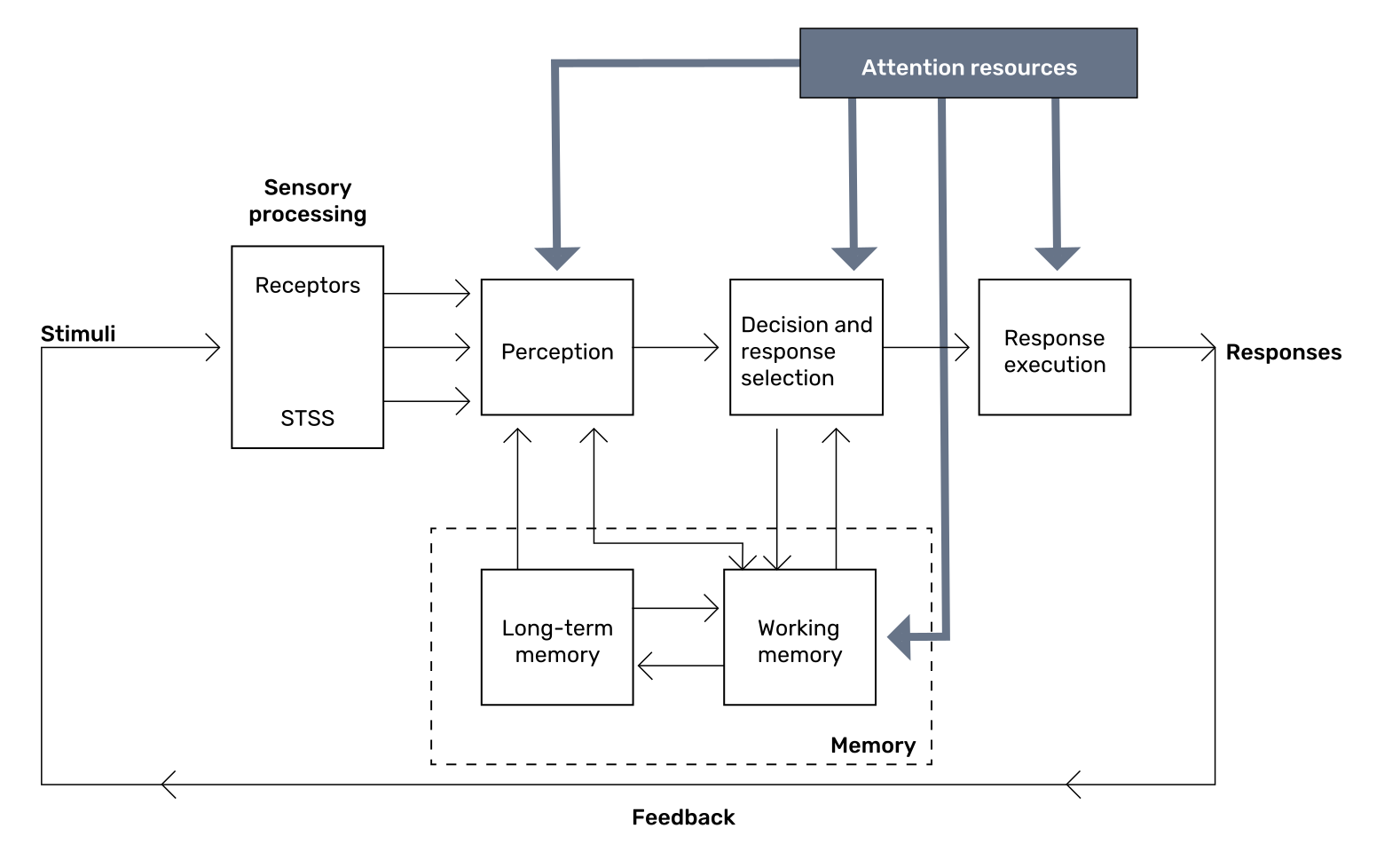
Figure 1: A model of human information processing.
Source: Adapted from Wickens (1992)
1.1.2.1. Stimuli and sensory processing #
In this model information processing is initiated by exposure to stimuli, through our senses. Stimuli are defined as any agent, event, or situation external or internal to the person that could potentially elicit a response (APA, 2018). For road users this means predominantly vision especially at operational and tactical levels since all the primary road user tasks require vision including responding to hazards, lane keeping, speed control and keeping a safe distance from other vehicles.
Other sensory systems can be involved as well, especially:
- Auditory – such as the sound of alarms in a vehicle that warn a driver or pedestrian of other vehicles in the vicinity.
- Vestibular – such as the experience of motion in tight cornering or that induces motion sickness in some people.
- Tactile – such as a driver that is feeling for the location of a control for radio or air conditioner in their vehicle while driving or the vibration of a rumble strip if the vehicle moves too far to the side of the lane.
Input information from our senses is held initially in a Short-Term Sensory Store (STSS) or buffer which is held briefly before potentially being transferred for analysis to the next processing stage of Perception or otherwise decays rapidly (within a few hundred milliseconds to a few seconds at the most. Not all available stimuli are detected and even if detected, may or may not be processed further to produce a response. The transfer of sensory information between processing stages depends on the nature of the stimulus and its meaning for the person. For example, the visual environment when driving can be highly complex, but drivers will selectively respond to the traffic light changing to red and may only be aware of other features if they are brought to their attention or if it was something they might have been looking for.
Sensory information contains multiple attributes or qualities such as for vision, colour, brightness, shape and location which are coded into our neural system. We know that the information from different senses, like vision and audition, is coded separately so we are able to begin to process different types of sensory information at the same time. We also know that initial processing is mainly of the physical nature of the stimulus such as the shape and form of a visual input or intensity and pitch of an auditory input and that the meaning of the input is processed later. This is why we can respond very quickly to emergency signals such as flashing red lights or repetitive auditory alarms, whereas responses to more complex information take longer.
1.1.2.2. Perception #
Perceptual processes extract and enhance features of sensory input important for survival and understanding the situation. Perception involves analysis of the stimulus in terms of its significance for the person, physical characteristics and its meaning. The clearer, more distinct and more familiar the stimulus, the faster and more accurate the analysis. This is why driving on an unfamiliar road, for example, presents perception problems for drivers and especially at night with little lighting. On the other hand, sensory stimuli that are inconspicuous are unlikely to be processed further. Sensory stimuli in the road environment that are unclear, unfamiliar or ambiguous (eg., signage; road alignments) are often processed, as we can’t help but process them. Unfortunately, these can create false or inaccurate perceptions that confuse road users and compromise their safety.
1.1.2.3. Decision and response selection #
Once the stimulus is recognised through this analysis, the processing system transfers it to the Decision and Response Selection process in which the appropriate action is assessed including choice of a response. Driving or any type of road-use involves many small decisions. Generally, the fewer and more familiar choices, the faster the response. This phase of processing involves memory processes and evaluation of the stimulus in terms of past experiences and knowledge held in Long-Term Memory, such as the skills of driving, route navigation, previous experiences of driving including perception of hazards and risks encountered and how they were managed. For example, the self-explaining roads approach developed by Theeuwes (2021) and others encourages safe behaviour by drivers through its design. Decision-making can also use Working Memory to formulate the right response at that point in time. For example, remembering from checking your mirrors that a motorcycle was approaching you in the adjacent lane and deciding not to change lane until they passed and Long Term Memory can also be needed such as to remember which side of the steering wheel has the indicator when driving your partner’s car.
1.1.2.4. Response execution #
Once a response is selected, Response execution occurs through activation of nerves and muscles to make a response. This stimulus to response process is dynamic and related to the context of the external world at the time. In road settings with high levels of traffic and pedestrian movement the road user’s information processing system is required to make multiple, rapid responses whereas driving on a quiet rural road is likely to require far fewer responses. The system also includes a feedback loop where the response becomes a stimulus input which in turn produces a response. Maintenance of lane tracking while driving is a good example of this feedback loop while driving as drivers adjust their steering response to the curvature of the road. So too, information from the speedometer provides drivers with feedback on use of the accelerator and brake.
Putting these processes together in a simple example, we can explain how a driver responds to the change in a traffic light. During visual scanning of the roadway ahead, the change to a red light is perceived as a familiar visual information stimulus requiring an immediate braking response. Here the speed and strength of the response will be influenced by the distance between the vehicle and the intersection. If the traffic light changed to amber, the perception and response selection process is likely to be slower as the driver judges whether they have time to stop or they need to carry on through the intersection. This processing continues moment-by-moment as the driver (or any road user) visually scans the road environment making responses dependent on the changing stimuli they encounter.
1.1.2.5. Attention, skill and automatic responding #
Attention is a vital component of the stimulus-response system and is thought of as a resource or the neural processing capacity needed to process stimuli in any context. All information processing subsystems require some level of attention but, for road users, it is especially important for perception. Attention determines what we see, when we see it and even whether we are aware of it at all. Effective allocation of attention is essential for driving. This will be influenced by external visual stimuli likely to be relevant for driving like sudden movement or the rapid appearance of an object. These types of stimuli tend to capture attention automatically, without needing conscious attention, require only limited involvement of decision and response selection processes and they typically result in rapid responses. Attention is also allocated based on past experience and this tends to involve decision and response selection processes and be slower and require more effort as a result. This distinction is consistent with the intuitive fast and slow thinking (System 1 and System 2) categorisation by the Nobel prize winning psychologist, Daniel Kahneman (Kahneman, 2011).
The level of skill, or experience with, the road user task influences allocation of attention in information processing. With greater skill, the involvement of the decision and response selection subsystem will be streamlined due to the development of internal programmes for well-practiced action; you learn how to respond. This results in faster responses which require less conscious attention and are largely automatic. This means that, for experienced drivers, the operational level of the driving task itself requires minimal conscious attention, although attention is still essential for the primary driving tasks of visual monitoring for hazards, and for tracking vehicle location and progress. Skilled drivers will use information from visual monitoring and their experience to anticipate the likely events in the road ahead rather than responding as the events unfold. This reduces the effort required but can put pressure on drivers when circumstances differ from expectations. Many of the challenges experienced by novice drivers on the road are related to problems in the allocation of attention especially in complex traffic situations.
The amount of attention needed for driving also depends on the context. In many settings while driving, such as long stretches of straight divided highway with little other traffic, responses hardly vary, the driving task is undemanding and requires little effort and low cognitive workload. In contrast, the same road at peak hour, with other traffic merging lanes, often at high speeds, the driving task is demanding, requiring high effort and high workload.
Attention has been classified into different types depending on the how attention is distributed to the context. The main types identified include:
- Focussed attention involves focus on a specific stimulus, task or restricted aspect of a task while ignoring others, such as the message on your phone rather than the roadway.
- Selective attention involves focusing for a time on particular stimuli out of the range of possible stimuli available to road users. Examples for drivers could include monitoring the forward roadway, then side mirrors and rear-view mirror and perhaps a head check before merging or choosing to focus on the pedestrian on the side of the road when approaching an intersection, or the instrument panel to check speed.
- Divided attention involves directing attention towards more than one focus, such as on navigation aids in the central console as well as scanning the roadway in driving and is vulnerable to distractions.
- Sustained attention or vigilance involves maintaining attention on the task for long durations, often at a low level, such as occurs during long hours of driving.
Attention is a key function of human information processing and especially while using the road system. The road system is complex and requires road users to identify the information or stimuli needed to achieve safe performance on the specific task, such as driving, cycling or walking. Road users allocate attention according to the demands of the task and their expectations about how the task will proceed which will be influenced by their level of experience and skill and their current capacity to pay attention.
1.1.3. Integrating the demands of the road user task and the characteristics of human information processing #
So, can human road-users manage the demands of the road system and of driving in particular? Obviously, the answer is yes, but not without significant training and practice. This applies especially to driving where both training and experience are needed. We know this from crash outcomes for novice drivers (eg., Moller et al., 2022). Even after a training and practice period of more than one hundred hours, crashes remain high for six months or more of independent driving and even then, crashes still occur (Ivers, et al., 2009; McCartt et al., 2009). Some training also occurs for other types of road users, but far less than for drivers (ITF, 2012). Young children are trained on and practice the basic rudiments of pedestrian behaviour (look to the left and right when crossing the street) and are often given some training and practice in riding bicycles. Safe road use is clearly not an automatic behaviour; it requires training and experience. As discussed in the previous section, however, the characteristics of human information processing influence human behaviour and may result in performance that is not compatible with the demands and design of some aspects of the road system, and this may not be overcome by even extensive training or practice.
These incompatibilities can be manifest in many ways, but there are some notable areas where incompatibilities are most likely. The demands of the driving task assume that drivers will see all aspects of the road environment when driving. The first, sensory, stage of information processing detects and holds briefly a representation of the road environment from moment-to-moment, but not all information is processed further (Wickens, 1992). Visual information in central vision is processed best, and even peripheral vision detects movement at least so drivers can proceed safely in the direction they are looking and even respond to other road-users approaching from side streets (Hole, 2007). This capacity will be reduced in settings of poor light, changes in light intensity such as glare from LED headlights, poor conspicuity from background, such as motorcyclists wearing dark clothing travelling through an area of shade on a bright day, and situations where visual information is cluttered, no matter how relevant to driving. When travelling at higher speeds it is harder to pick up the spatial information drivers need like the relative speed of their own vehicle with respect to others and the distance between vehicles (Roge et al., 2004; Shinar, 2017). Overall, where visual information in the road system is difficult or impossible to perceive, it is less likely to be processed further, or further processing may not be compatible with safety where the information is misunderstood.
The nature and design of the road can be incompatible with information processing. We know that task characteristics can influence the speed and accuracy of road user behaviour and their performance on-road (Hole, 2007; Hole 2019). For example, in circumstances where the speed of responding is emphasised, such as on high-speed roads, drivers need to respond quickly; but this also means errors will be more likely. In contrast, in situations where the consequences of an inaccuracy or error are critical such as the road system, drivers tend to be slower in responding as they take longer to assess the situation. For road-users this means a trade-off where emphasis on fast responding can be at the expense of accurate responding. Poor or confusing road geometry can make it difficult for road users to navigate the road system and will increase the likelihood or errors. Greater complexity of choice in responding is known to reduce the speed of response. In the road system this problem can be seen when drivers have difficulties negotiating road features like interchanges and tunnels with many lane changes and multiple exits. The problem is made worse when accompanying signage is absent or poor badly placed. Further, a high degree of visual clutter around a roadway will distract driver attention and can also confuse or mislead road users so increasing the likelihood they will make errors.
Vehicle design can also be incompatible with information processing (Williamson, 2021). For example, many recent vehicles have in-vehicle visual display systems that convey driving-related information; but to operate them, require drivers to take their eyes off the road environment and divert attention for significant periods. Since a vehicle doing 100km/hr can travel 56 metres in just 2 seconds, this will compromise safe performance and increase the likelihood of crashes. Convex side-mirrors in many vehicles have benefits of showing blind-spots but these mirrors also give false information about the distance of vehicles in the adjacent lane as they appear smaller than they actually are. Drivers will tend to overestimate the time they have to move safely into the adjacent lane and so increase the risk of crashes (Hahnel &Hecht, 2012. Some of the driver assistive technologies, such as cruise control and partial automation, also lack compatibility with the way we process information. This occurs especially when drivers are required to take back control and are expected as quickly as possible to understand and respond appropriately to the roadway circumstances at that point. Research shows that this can take up to around 40 seconds to achieve, again compromising safe performance (Merat et al., 2014).
Circumstances in the road system that change, or are unexpected, are not compatible with information processing (Shinar, 2017). For example, traffic situations that don’t conform with the normal expectations of the road system will present problems for drivers, such as exit ramps from freeways that are positioned on an unexpected side of the road; the use of four-way stop signs or unusually configured roundabouts. We know that people perceive and respond quickly and efficiently to things they expect but respond more slowly when faced with the unexpected. This is because it takes additional time to process the unexpected situation and to produce (hopefully, but not always) the appropriate response.
A good example of this comes from the evaluation trials of automated vehicles conducted in California, USA. Automated vehicles are designed to slow and even stop when the technology reaches the edge of its operating envelope. These trials showed significantly increased rear-end and sideswipe crashes when following drivers were unexpectedly required to react quickly to the automated vehicle. In such situations we know that a driver’s first response is to brake, increasing the likelihood of rear-end crashes or to swerve around the slow/stopped vehicle, sometimes hitting the vehicle in the process. Analysis of the patterns of these types of crashes found 10 times higher crash rates for autonomous vehicles compared to ordinary vehicles (Dixit, Chand and Nair, 2016; Favaro, Eurich and Nader, 2018). Unfortunately, the safety evaluations of the automated vehicles have reported only on the few crashes where the automated vehicle directly caused crashes, not acknowledging this potential consequence.
In summary, this section has described some examples of incompatibility between the demands of aspects of the road system, especially for drivers, and how road users process information that can compromise safe performance. Many more examples exist. More details can be found in sources including Hole’s book on the Psychology of Driving (Hole, 2019), Shinar’s text Traffic Psychology and Human Behaviour (Shinar, 2017) and in Williamson (2021). These examples show opportunities to address these incompatibilities by designing road systems that facilitate good efficient and safe behaviour. We know from other areas that we can influence behaviour through design. Norman’s popular book the Psychology of Everyday Things (1988) (since revised into The Design of Everyday Things) that made this point very clearly. He showed how design of even everyday objects like doors can be modified to make them easier and more error-free for users. The same principles should apply for the road system.
Overall, we have very good evidence that by designing systems that are compatible with human strengths and limitations, we design more effective and safer systems. On the other hand, where human perceptual, cognitive, and behavioural limitations are well established, failure to account for them in system design, operation, or regulation constitutes a foreseeable and preventable risk. Of course, the people who design our road system, the policymakers, the regulators, and the business owners are human too and have capacities and limitations. Decision-makers are subject to cognitive biases, organisational pressures, political incentives, and risk normalisation processes that shape safety outcomes. Recognising these influences is essential to preventing blame-shifting and ensuring that responsibility for safety is appropriately assigned.
So far, this Chapter covered current understanding of the fundamentals of how humans process information that can help us design better road transport systems that are compatible with human behaviour and will facilitate good efficient safe performance. While this shows how information is processed to produce behaviour and subsequent performance, there is a range of factors like alcohol, distraction or fatigue that can disrupt this processing and impair performance. The next section will discuss these.
1.2. Factors that disrupt human information processing and impair road user behaviour and subsequent performance #
This section describes the main factors that can compromise or impair road user capacity to understand and interpret road system demands and, as a result, compromise safe performance and may increase risky behaviour.
1.2.1. Factors influencing current state and effects on road user behaviour #
Road user behaviour and performance in the road system can be influenced by a range of factors relating to the current state of the person while they are using the road system. In general, the effects of these factors are temporary, such as the effects of alcohol, other drugs, or fatigue and may be quite brief, such as the effects of distraction. However, they can all affect human information processing to the detriment of safe road use.
1.2.1.1. Alcohol effects #
The effects of alcohol are the most well understood. Multiple studies show that crash risk increases exponentially with increasing alcohol intake (see Figure 2) due to its effects on behaviour generally (eg., Compton et al., 2002) with alcohol being cited as cause in around 20 percent of fatalities in most countries (Worlf Health Organisation [WHO], 2023). Behavioural studies show effects on critical functions like divided attention and distractibility, psychomotor performance, like lane-keeping and vigilance, or sustained attention, which can be affected at levels as low as 0.02-0.03% BAC (Moskowitz & Fiorentino, 2000; Garrison et al, 2021; Dong et al., 2024).
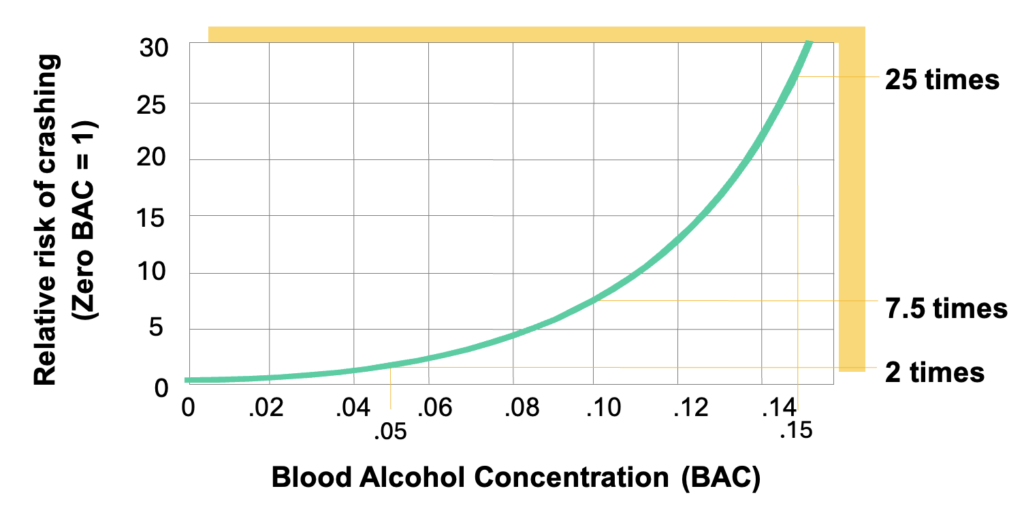
Figure 2: Relationship between Blood alcohol Concentration and the relative risk of crashes compared to zero alcohol
Source: Evans (1991)
There is good evidence that alcohol consumption from around 0.05% BAC and beyond compromises driving performance sufficiently enough to significantly increase crash risk. The specific effects of alcohol are on vehicle control as well as the driver’s capacity to maintain attention and resist distraction while driving and with increasing doses, these effects make crashes more likely (Shinar, 2017). Furthermore, multiple studies show that alcohol can impair judgement of risk while driving and contribute to risky driving behaviours (Dong et al., 2024). In fact, drink driving offenders are more likely to have engaged in other risky driving offences like speeding and failing to wear seat belts (Watson et al., 2013).
1.2.1.2. Drug effects #
A very wide range of drugs can influence driving performance including illicit drugs (such as cannabis or cocaine, usually taken recreationally) and medicinal drugs (like barbiturates, benzodiazepines, hypnotics, antidepressants, opioids and nonsteroidal analgesics, anticonvulsants, antipsychotics and other drugs that have psychotropic or central nervous system side-effects) (Hetland & Carr, 2014). Most studies of the association between drug use while driving and crash risk have found small to moderate increases in crash risk (Elvik, 2013). These effects occur due to a single dose, and effects increase with higher doses. Some drugs can produce more permanent effects, and the habitual use of some drugs can lead to long-term negative effects on driving. There is also evidence of the development of tolerance to a drug, resulting in restored driving performance after a period of use of the drug, such as with some tranquillizers (Hole, 2007). Various medical conditions (such as anxiety, depression, insomnia, or ADHD) also impair driving as do drugs designed to treat these conditions. This creates a difficult balancing act for sufferers between the impairment of the condition and the impairment of the treating drug other than not driving, which can be an unsatisfactory solution (Job, 1982).
Drugs can impair driving performance directly through effects on cognitive or motor performance, but they can also have indirect effects on the driver’s mood state which, in turn, may make drivers more likely to act aggressively or impulsively while driving Ogden & Moskowitz, 2004). Combinations of drugs can increase their effects on driving. For example, the combination of alcohol and cocaine or cannabis can have even greater effects on driving performance and further increase crash risk (Simmons et al., 2022). It is also quite common for drivers to be taking more than one prescribed drug, but we have little information on the combined effects of many common drugs on driving performance.
1.2.1.3. Fatigue effects #
Driving while fatigued has adverse effects on driving, with estimates that it contributes to between 5 and 30 percent of crashes (Garbarino et al., 2014), although this is almost certainly an underestimate of the contribution of fatigue and sleepiness to crashing as there is no standard method for detecting fatigue while driving. Fatigue affects safe driving because it reduces the driver’s capacity to remain alert, reduces attention and increases the likelihood of falling asleep at the wheel.
Fatigue and sleepiness effects are seen to be a process that starts with the person feeling tired, with the typical signs of yawning, increasingly feeling drowsy and sleepy and these can occur for some time before the person slips into actual sleep. Driver (and road user) behaviour can be affected even early in this process with feelings of tiredness associated with reductions in alertness that increase the likelihood of the driver missing information needed for safe driving as well as slower reaction times compared to those who are fresh and alert (Williamson & Feyer, 2000; van Dongen et al., 2003). The later stage of falling asleep has profound effects on driving when the driver is no longer aware of, or able to attend to, the driving task. Unfortunately for safe driving, humans cannot accurately predict when they will transition into sleep. Driver State Monitoring Systems which are becoming a common feature in many vehicles, especially heavy vehicles, aim to detect drowsiness and this transition to sleep. In fact, these systems are now mandatory in all new vehicles registered in Europe (European Union, 2024).
There is good evidence, however, that drivers are aware of increasing fatigue early in the process, so can take action to avoid the transition to sleep before it occurs (Cai et al., 2021; Williamson et al., 2014). The primary causes of fatigue in road users relate to sleep deprivation when drivers have had too little sleep before they commence driving or if they drive after long periods without sleep (CDC, 2024). Fatigue is also highly likely with long periods of driving without adequate breaks regardless of their sleep status (Zeller et al., 2020). Driving in the midnight to dawn period, or the lowest point in the circadian body rhythm, is also highly vulnerable to the effects of fatigue especially if drivers are sleep deprived or do not have regular, frequent breaks.
1.2.1.4. Distraction effects #
As discussed earlier, consistent monitoring and attention by the driver – involving eyes on the forward roadway, attention to and visual monitoring of the situation around the vehicle, and hands on the steering wheel – are prerequisites for safe and efficient driving. Many factors will distract or divert attention away from the primary elements of the driving task to a competing or secondary activity and these can compromise driving performance and increase crash risk (Regan et al., 2011). In general, the longer a driver’s attention, especially visual attention, is diverted away from the primary driving task, the greater the risk of a collision.
Common distractors that require the driver to physically look elsewhere and take at least one hand off the steering wheel include: hand-held mobile phone use, especially dialling or texting; poorly designed in-vehicle buttons and dials that cannot be distinguished by touch; and in-vehicle technology, like touchscreen systems, that require the user to move through multiple menu displays which means the driver takes eyes off the road.
Distractors that do not interfere with the manual control or visual monitoring of the vehicle but that divert cognitive attention away from the driving task can also disrupt driving performance. This can include hands-free phone use or talking to passengers, and complicated or inconsistent signs (directional, regulatory or other types) that require a driver to assess options or otherwise take time to think about how to respond.
We know from large studies of normal or naturalistic driving that drivers engage in distractions on more than half their drives and that this doubles their risk of crashing compared to driving when not distracted (Dingus et al., 2016). The many studies of distraction when driving also consistently show negative effects on performance, including slowed reaction time and missing relevant driving information (e.g., Caird et al., 2018; Sharjari et al., 2023), however, some activities disrupt driving performance and increase crash risk more than others. Activities that interfere with physical control of the vehicle, especially hands-off the wheel (such as reaching for an object) and that require eyes-off the road, have the greatest adverse effect. This is the reason for bans on hand-held devices while driving in many countries. Purely cognitive activities like talking on hands-free devices or talking to passengers have comparatively less evidence of adverse effect on driving performance or crash risk and are less likely to compromise performance (Goodsell et al., 2019).
Distraction effects are not simple, however, and depend on when they occur in the driving task, how long they interfere with the driving task and whether the driver can control the degree to which their attention is captured (Regan & Oviedo-Trespalacios, 2021). For example, driving behaviour and performance will be less compromised where:
- the distraction occurs during a period when the driving task requires low levels of attention, such as on a long straight section of road,
- the distraction is very short duration or
- the driver can choose to be involved in the source of the distraction.
In contrast, distractions that occur when the driver is dealing with complex traffic requiring attention for a significant period or where the distraction requires an immediate response, driving behaviour and performance is more likely to be compromised. There is also evidence that drivers who consciously engage in a distraction will modify their driving behaviour through increased headway to the vehicle in front and/or slowing their speed to compensate for the higher risk of engaging in secondary behaviours while driving (Oviedo-Trespalacios et al. 2017). These adaptations in behaviour mean crashes may be avoided even when drivers are engaging in distractions. Mostly, such self-regulation in behaviour is shown by more experienced drivers rather than inexperienced drivers, who are not as skilled in time-sharing between driving and a distracting activity.
Summary #
These factors influence road user performance but in different ways. Alcohol affects almost all aspects of driving, whereas fatigue affects alertness and visual monitoring aspects. Many of these factors interact, often with significant effects on safe performance, such as the high-risk combination of fatigue and alcohol.
1.3. Influence of psychosocial and cultural factors on road user behaviour #
Road user behaviour can be influenced by a range of psychosocial and cultural factors which can lead to unsafe actions that increase the risk of crashing. This section describes these main factors and how they can influence road user behaviour and subsequent performance.
1.3.1. Developmental stages (Novices and Older Road Users) #
Throughout our lifespan, humans go through different phases of growth which encompass physical and cognitive changes. These developmental stages impact how we engage with the roadway.
1.3.2. Physical #
We undergo rapid and continuous physical development throughout childhood and adolescence, plateauing in early adulthood. Road crashes are a leading cause of death and injury for children in Australia (Australian Institute of Health and Welfare [AIHW], 2022) and worldwide (WHO, 2023). This is particularly the case in LMIC where children are more likely to die from road crashes than in higher income countries (WHO, 2023). Children are at higher risk due to their smaller size, making them more difficult to see for drivers, their lack of judgment due to underdeveloped cognitive skills, and their resulting reliance on adults for safety.
As we enter older adulthood, we see a decline in mental and physical function and an increase in frailty. These declines in capacity have demonstrated impact on decision making and capacity across all road user types (Anstey et al., 2016), and are argued, in part, to account for why older adults are at an increased risk of serious injury and fatality following a crash. In Australia, the rate of fatalities for older adults aged 65-74 years is 5.6 per 100,000, with this increasing to 7.6 per 100,000 for those aged over 75 years (Bureau of Infrastructure and Transport Research Economics [BITRE], 2025). Older adults are also more likely to spend longer in hospital as they experience more severe injuries (Soltani, Afshari & Amirir, 2025). The crashes that they are involved in are not necessarily more severe, but rather due to their increased frailty they are more likely to experience more severe outcomes.
1.3.3. Cognitive #
Cognitive function refers to the performance of various mental processes, including attention, visuospatial skills, memory and executive function (defined as the set of mental skills which enable goal directed behaviour). These cognitive skills support the stages of human information processing outlined by Wickens (1992). Research into the development of these cognitive skills across the lifespan has found that they begin developing in childhood where they undergo periods of rapid development and are still developing into a person’s mid-20s. This developmental trajectory occurs at differing rates for the various cognitive domains involved in safe driving, with the frontal cortex being the last part of the brain to fully develop in the mid-to-late 20’s (Casey et al., 2008). The frontal cortex is responsible for executive function and includes subdomains such as inhibition which has been argued to influence risk taking behaviours such as urge to speed (Johnson & Jones, 2011). Development across all cognitive domains reaches a plateau at about age 30 (Heiskanen et al., 2024; Salthouse, 2009). This plateau is fairly stable until age 65, where typical age-related cognitive decline accelerates and continues decreasing throughout older adulthood (Cornelis et al., 2019; Salthouse, 2009).
This increase, plateau, then decline in cognitive function forms an inverted U-shaped lifetime trajectory (Li et al., 2024). Research has compared this inverted U-curve to the upright U-curve which occurs for road fatalities where younger people are involved in a high rate of crashes; these crash rates decline and plateau through middle adulthood and then begin rising again into older adulthood (Ledger et al., 2019-a).
Mapping these two U-curves together (See Figure 3) shows that the high crash rates of young drivers under 25 aligns with their underdeveloped cognitive skills, but as they age and cognitive function develops and plateaus, crash rates also steadily decrease and plateau. In turn, rising crash rates with increasing age over 65 years aligns with declining cognitive function in this cohort.
Research has supported the role of cognitive function in predicting road user behaviour across the lifespan. Cognitive function has been found to be a significant predictor of pedestrian safety from children to older adults (Barton & Morrongiello, 2011; Valos & Bennett, 2023), and drivers across the lifespan (Anstey et al., 2005; Ledger et al., 2019-a; Ledger et al., 2019-b).
For older adults who experience cognitive impairment due to neurological conditions, such as dementia or Parkinson’s disease, and due to their declining cognitive skills, their risk increases of being involved in a crash. It is important to note that simply having a diagnosis of one of these conditions does not automatically make someone unsafe but rather necessitates the need to monitor their cognitive decline.
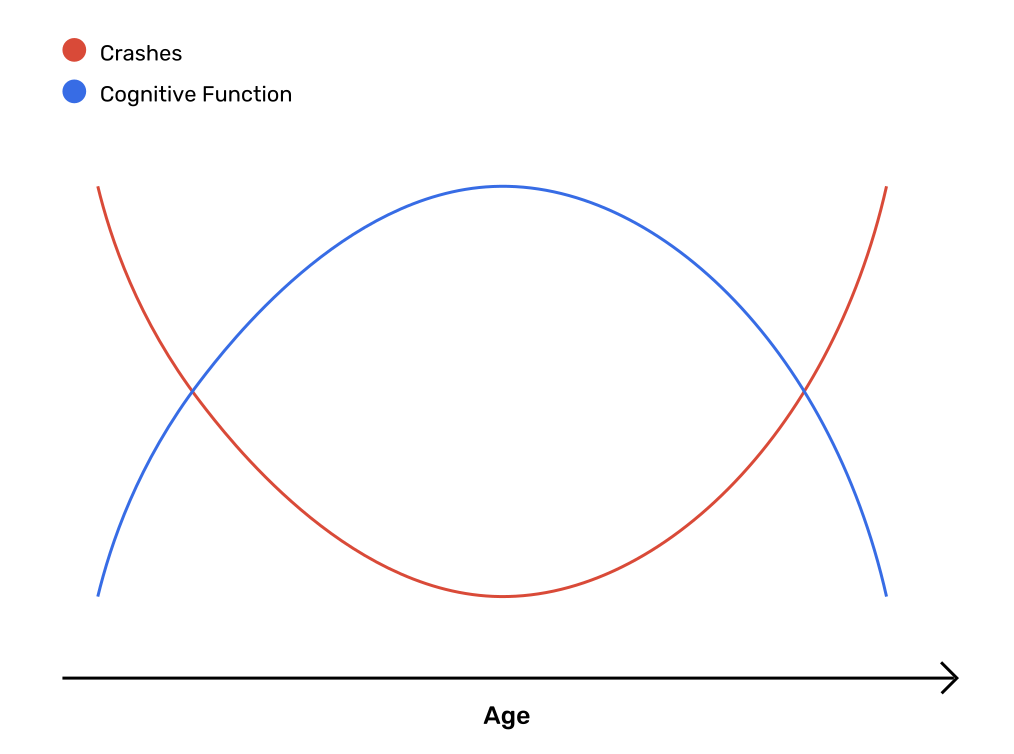
Figure 3: Mapping of changes in cognitive function with age and the changes in likelihood of crashes with age
Note: This figure is for illustrative purposes only, and does not present specific data
1.3.4. Emotional states #
Emotions are strong feelings, either positive or negative, that occur due to an individual’s circumstances, mood or relationships with others. Emotions can affect both a person’s mental and physical state, with an impact on their cognitive processes, thoughts, feelings, and behaviours. There is no agreed upon definition of emotion. Prominent theories suggest that there are universal emotions that are experienced by all people irrespective of culture or language (Ekman & Friesen 2003; Plutchik, 1980). The number of emotion types vary between the theories (Ekman proposes seven whilst Plutchik proposes eight), they both include emotions such as happiness, anger, fear, disgust, sadness and surprise. Emotions can often be mapped according to their valence and arousal (Tsiorti et al., 2019). Valence refers to whether the emotion is positive or negative (e.g., from happy/joyful, to sad/angry) whereas arousal refers to the level of psychological and physical stimulation experienced (e.g., from calm to excited).
Research has consistently found that high-arousal negative emotions such as anger and anxiety correlate with engagement in risky driving behaviours such as aggressive driving, speeding, and rapid lane deviations (Shangguan et al., 2025). Conversely, low-arousal or positive emotional states, such as happiness and being relaxed, have been found to reduce engagement in risky driving behaviours (Taubman-Ben-Ari, 2012).
Emotions have been argued to influence road user behaviour both directly, and indirectly. Emotions have also been found to have a direct effect on driver behaviour (not just through attention), with this particularly noted for anger leading to aggressive driving behaviours (Steinhauser et al., 2018). It has also been argued that emotions have an indirect effect on driving performance through their influence on attention. High arousal negative emotions such as anger or anxiety have been argued to reduce attentional control, meaning that an individual finds it more difficult to select and attend to the relevant roadway stimuli and ignore distractions. On the other end of the spectrum, low arousal positive emotions such as calm or happiness have been found to increase attentional control enabling the road user to better allocate their attentional resources to the most relevant roadway factors (Steinhauser et al., 2018). Taken together, this means that when a road user is experiencing a negative mood, they are more likely to lose concentration which has been found to result in poorer reaction times, more driving errors, risk taking, near-misses and crashes (StreetSmart, 2025).
Most of the research into the impact of emotion has focused on drivers with little research on other road users. Nonetheless, the research to date supports the contention that negative emotions have a deleterious effect on all road user behaviour. Research into cyclists has demonstrated that anger can increase chances of risky riding behaviours (Zheng, Ma & Cheng, 2020) and near-misses, particularly with pedestrians (Marín Puchades et al., 2017). For pedestrians, both sadness and happiness were found to reduce risk perception of risky situations (Herrero-Fernandez et al., 2020). The emotional state of motorcyclists has been found to fluctuate continuously during a ride which impacts on their performance (Samuel et al., 2019). It is worth noting that there is a lack of experimental studies which limits confidence in our conclusions.
Understanding the impact of emotional state on safety can influence how interventions to improve safety outcomes are designed. Suggestions have been made that the use of negative emotions such as fear in road safety campaigns might attract attention but appear to be less effective than other factors such as perceptions of vulnerability (Lewis et al., 2007). Some research has even found that they might have the opposite effect than intended and increase risk taking behaviours (Eherenfreund-Hager et al., 2017). The use of positive affect in road safety campaigns may act to reduce risk taking (Eherenfreund-Hager et al., 2017). The use of emotion regulation strategies, which help individuals to better control their emotional state, has been found to be a protective factor against engaging in risky behaviours, with suggestions that education on emotion regulation strategies to control negative emotions could improve safety outcomes (Pizzo et al., 2024). Finally, research has previously suggested that roadway environments have a predictable influence on the emotions experienced by a road user (Samuel et al., 2019). However, recent research suggests that the use of colourful murals on tunnel walls may improve driver behaviour and comfort (Zhao et al., 2022). Further research is needed to determine how infrastructure can be designed to elicit lower arousal positive emotions and improve road user behaviour.
1.3.5. Personality #
Personality is an enduring set of characteristics including thoughts, feelings and behaviours that make up an individual’s unique approach to life. Whilst personality can evolve over time, it generally remains a stable trait across someone’s life Bleidorn, et al. 2022). There are a variety of personality traits. The most well-known are the Big Five: Openness (willingness to try new things); Conscientiousness (goal directed and organised); Extraversion (outgoing and sociable); Agreeableness (cooperative and compassionate) and Neuroticism (tendency to experience negative emotions, such as sadness) (McCrae & Costa, 1987).
Most research has focused on the drivers, with less research examining vulnerable road users. Across the research the most consistent finding is that people higher in agreeableness engage in less risky driving behaviours (Akbari et al., 2019), less risky pedestrian crossings (Herrero-Fernandez et al., 2016), less aberrant cycling behaviours (O’Hern et al., 2020) and make less errors as a motorcyclist (Antoniazzi & Klein, 2019). Findings related to neuroticism are mixed, with higher levels of neuroticism being shown to be related to higher levels of risky driving (Akbari et al., 2019), more unsafe pedestrian crossings (Zheng et al., 2017) and higher levels of risky motorcycling behaviours (Antoniazzi & Klein, 2019). However, high neuroticism levels have not been found to relate to cycling behaviours. There are similarly mixed findings for conscientiousness, with higher levels of conscientiousness being found to be associated with safer pedestrian (Herrero-Fernandez et al., 2016), cycling behaviours (O’Hern et al., 2020) and motorcycling behaviours (Antoniazzi & Klein, 2019), but not for drivers. No consistent pattern of findings has been observed for either extraversion or openness. Important to note, is that the findings presented on personality and vulnerable road users are based on single studies, and these findings are likely to evolve as more research is conducted.
Two of the most studied personality traits outside of the Big Five are Sensation Seeking and Anger/Hostility. A review into Sensation Seeking has been found to have a significant, but weak relationship with a variety of aberrant driving behaviours such as risky driving, aggressive driving and driving errors and violations, with people with higher levels of Sensation Seeking being more likely to engage in unsafe driving behaviours (Zhang et al., 2019). This is a consistent finding across time, with a review by Jonah (1997) also finding a relationship between Sensation Seeking and driving offences. This finding that higher levels of sensation seeking are associated with riskier behaviour has been echoed in pedestrians (Wang et al., 2022), cyclists (Useche et al., 2024), and motorcyclists (Antoniazzi & Klein, 2019).
Trait anger/hostility has been found to have a significant moderate relationship with risky driving with people higher in trait anger (who have a greater tendency to experience anger more frequently/intensely) more likely to engage in aggressive driving (Bogdan et al., 2016) and be at an increased risk of being involved in a crash (Zhang & Chan, 2016). Again, this is a consistent finding across road user groups with individuals with higher levels of trait anger being more likely to engage in risky behaviours as motorcyclists (Antoniazzi & Klein, 2019).
Relationships between personality and risky road behaviours have been found to vary by other factors. For example, the relationship between sensation seeking and risky behaviours is stronger in males than it is for females and is also stronger for younger people than it is for older people. This suggests that other factors such as cognitive development might moderate the influence that personality has on safety.
While personality traits like those captured by the Big Five may be relatively stable over one’s lifetime, road user behaviour can change over time due to other factors such as the maturation of the brain and cognitive function, increasing exposure and experience to roadway situations, and many other influences.
Finally, personality, risk perception, and other factors that predict various risky behaviours are different for different behaviours: speeding versus not wearing a seatbelt versus drink-driving versus fatigue driving (Fernandes et al., 2007, 2010; Hatfield et al., 2013). For example, time urgency has been found to significantly predict driving while fatigued, but not speeding whereas Sensation Seeking significantly predicts intention to speed, but not fatigued driving. These findings suggest that a one size fits all approach to risky behaviour is not appropriate and it is worthwhile designing different road safety campaigns to target the different risky driving behaviours.
1.3.6. Sociocultural context #
Individuals learn from the people and the environment around them. This premise forms the foundation of sociocultural theory which was developed by Lev Vygotsky (1978). Vygotsky proposed that an individual’s development is influenced by their parents, caregivers, peers, broader society and cultural context.
When an individual is learning a task, Vygotsky (1978) posits that they fall into one of three zones of proximal development; a learner cannot accomplish without assistance; a learner can accomplish with assistance; and a learner can accomplish without assistance. Often to progress through these zones of development, a learner will depend on a ‘more knowledgeable other’, someone who has a higher level of knowledge who is able to provide an individual with instruction in their learning process. In the context of learning how to navigate the roadway system, we rely on the knowledgeable other, often parents and caregivers, to teach safe practices to their children from a young age. Parents/caregivers therefore have a large influence on the road user behaviour of their children. Parents are the primary educators of children on how to navigate the roadway as pedestrians with research demonstrating that children model the street-crossing behaviours of their parents (Morrongiello & Barton, 2009). Similarly, when learning to drive in Australia and many other countries, novice drivers are primarily instructed by their parents/caregivers. Research has demonstrated that novice drivers model the driving behaviours of their parents (Scott-Parker et al., 2012); and if parents fail to reprimand risky behaviours whilst they are teaching their children, the novice driver is more likely to engage in those behaviours once they are driving independently (Foss, 2007).
Peers have been demonstrated to influence road user behaviours, particularly during adolescence. Most of the research on the influence of peers has been conducted in young novice drivers. Young drivers are particularly susceptible to engaging in risky behaviours as risk taking can be actively encouraged by peers (Taubman–Ben-Ari et al., 2015). As such, young drivers report engaging in more risky behaviours to fit in with and please their peers (Allen & Brown, 2008). Peers, however, could also be used to positively influence young drivers with an intervention using peers to promote safer road user behaviour found to improve attitudes towards safety (Weston & Hellier, 2018).
The role of police as an influence of road safety receives mixed reviews, with some accepting and respecting their role, whereas others see police as punitive (Scott-Parker et al., 2012). One study has found that police enforcement of road rules is not as effective at curbing traffic offences among young people (Bates et al., 2016). However, other studies have found that the presence of law enforcement does directly reduce risky road behaviours (Stanojevic et al., 2018).
The broader social context, and social norms, have been demonstrated to impact on road user behaviours (Paichadze et al., 2025). A social norm is a commonly accepted standard of behaviour. At times, there is a disconnect between what the road rules specify and what is socially accepted which can impact on behaviour (Dent, 2012). An example of this is that whilst the law stipulates that it is illegal to hold and use your phone while stationary at traffic lights, studies have shown that up to 37% of drivers use their phones whilst stopped at a traffic light (Jin et al., 2019). This mobile phone use is despite people understanding the risks involved in using a phone whilst driving (Cordellieri et al., 2022; Oviedo-Trespalacios et al., 2017). When a behaviour is deemed more acceptable because ‘everyone else is doing it’, it leads to more people engaging in that behaviour despite the risks (Dent, 2014).
Vygotsky (1978) posited that development can differ between different cultural contexts. To date most of the research into road user behaviours has occurred in developed countries, with limited cross-cultural studies. The importance of the impact of cultural context is being recognised with it no longer being assumed that what we learn from research in one country can be applied to others. Cross-cultural differences have been found to influence driver behaviour. A cluster analysis of eight countries based on their cultural values revealed that road traffic culture of a country is a direct predictor of driver behaviour, with individuals in countries which have safer overall attitudes showing less engagement in risky behaviours (Nordfjærn,Şimşekoğlu & Rundmo, 2014). Similar differences in behaviours have been found for vulnerable road users between different countries (Yannis et al., 2020). There has been increasing research into road user behaviours in developing countries which will help us to further understand how the culture of these countries might impact on road user behaviour and help us to develop tailored and effective interventions.
2. Conclusion #
As this chapter shows, we know quite a lot about how human behaviour is produced and the factors and situations that will affect behaviour. This understanding allows us to predict to a considerable degree how road users are likely to behave in different settings in the road system and certainly sufficiently to help us design road systems that will facilitate good, efficient and safe performance, or not. This means that we can influence behaviour in the road system by the way we design it. Understanding the fundamentals of how humans process information can help us design better road transport systems that are compatible with human behaviour, and so will facilitate good efficient safe performance, and minimise error. This chapter also covered some of the factors that can disrupt this processing and impair performance, like alcohol, drugs, distraction or fatigue. In addition, it covered psychosocial and cultural factors that can influence whether or not road user performance is safe in particular situations including the individual’s developmental stage, their sociocultural context, emotional state or personality. These factors can also contribute to a range of risky road user behaviours, which are further explored in the following chapter. When we take these factors into account and design the system around these elements, we decrease the likelihood that errors will occur, and we improve road safety. Designing a system that allows sufficient time for very young or elderly road users to cross the road, for example, ensures that the system design is compatible with the range of human responses we can expect from road users.
We know that road users are able to cope with poorly designed aspects of the system under many circumstances as they can learn how the system works and new ways of coping with poor design, but safety risk is elevated in the process of learning when road users need extra time to work out how to behave and when they trial other behaviours which may or may not be safe. This coping effect starts to diminish when multiple factors occur at the same time, such as a new section of a high-speed road in combination with in-vehicle navigation systems that require drivers to take their eyes off the road to operate. Road users should not be required to cope with poor design of the road system. In general, designing the road system to account for the range of road user capacities will have benefits for all road users and make the system safer. Providing clear, unambiguous, easily interpreted and timely guidance to road users about appropriate behaviour in the road system will reduce the risk of unsafe behaviour and error in the road system. We also need to allow for the slower information processing by novices, and older or impaired road users.
To achieve safe and error-reducing road systems, we need to understand how users interact with it in practice. In designing any aspect of the road system, including roads, vehicles, licensing, laws and enforcement systems, and training systems, it is essential to understand and take into account how they influence road user performance. This includes the characteristics of human users and human capacities to process information in the system, as well as the factors that limit their capacity to perform since these will influence whether the system design leads to safe and successful use in practice. Every time an aspect of the road system is poorly designed with respect to usability, the likelihood of error increases because users are confused, misled or distracted. Conversely, where we improve the usability of the road system we will improve behaviour, performance outcomes and safety. As our knowledge of human limitations and behavioural adaptation is increasingly well established, failure to integrate this knowledge into system design and governance should no longer be viewed as an oversight, but as a failure of duty of care.
3. Reference List #
Akbari, M., Kamran, B. L., Heydari, S. T., Motevalian, S. A., Tabrizi, R., Asadi-Shekari, Z. & Sullman, M. (2019). Meta-analysis of the correlation between personality characteristics and risky driving behaviors. Journal of Injury and Violence Research, 11(2), 107.
Allen, J. P., & Brown, B. B. (2008). Adolescents, peers, and motor vehicles: the perfect storm?. American Journal of Preventive Medicine, 35(3), S289-S293. https://doi.org/10.1016/j.amepre.2008.06.017
American Psychological Association. (2018). Stimulus. In APA Dictionary of Psychology. APA.
Anstey, K. J., Eramudugolla, R., Ross, L. A., Lautenschlager, N. T. & Wood, J. (2016). Road safety in an aging population: risk factors, assessment, interventions, and future directions. International Psychogeriatrics, 28(3), 349-356. https://doi.org/10.1017/S1041610216000053
Anstey, K. J., Wood, J., Lord, S. & Walker, J. G. (2005). Cognitive, sensory and physical factors enabling driving safety in older adults. Clinical Psychology Review, 25(1), 45-65. https://doi.org/10.1016/j.cpr.2004.07.008
Antoniazzi, D. & Klein, R. (2019). Risky riders: A comparison of personality theories on motorcyclist riding behaviour. Transportation Research Part F: Traffic Psychology and Behaviour, 62, 33-44. https://doi.org/10.1016/j.trf.2018.12.008
Australian Institute of Welfare and Health. (2012). Australia’s children. https://www.aihw.gov.au/reports/children-youth/australias-children/contents/health/injuries
Barton, B. K. & Morrongiello, B. A. (2011). Examining the impact of traffic environment and executive functioning on children’s pedestrian behaviors. Developmental Psychology, 47(1), 182-191. https://doi.org/10.1037/a0021308
Bates, L. J., Scott-Parker, B., Allen, S., & Watson, B. (2016). Young driver perceptions of police traffic enforcement and self-reported driving offences. Policing: An International Journal of Police Strategies & Management, 39(4), 723-739. https://doi.org/10.1108/PIJPSM-10-2015-0121
Bleidorn, W., Schwaba, T., Denissen, J. J. A., Hopwood, C. J., & Roberts, B. W. (2022). Personality stability and change: A meta-analysis of longitudinal studies. Psychological Bulletin, 148(5–6), 363–394. https://doi.org/10.1037/bul0000378
Bogdan, S. R., Măirean, C., & Havârneanu, C. E. (2016). A meta-analysis of the association between anger and aggressive driving. Transportation Research Part F: Traffic Psychology and Behaviour, 42, 350-364. https://doi.org/10.1016/j.trf.2016.05.009
Bureau of Infrastructure and Transport Research Economics. (2025, October 2). Road safety of older people. National Road Safety Data Hub. https://datahub.roadsafety.gov.au/safe-systems/safe-road-use/road-safety-older-people
Cai, A. W. T., Manousakis, J. E., Lo, T. Y. T., Horne, J. A., Howard, M. E. & Anderson, C. (2021). I think I’m sleepy, therefore I am – Awareness of sleepiness while driving: A systematic review. Sleep Medicine Reviews, 60, 101533.
Caird, J. K., Simmons, S. M., Wiley, K., Johnston, K.A & Horrey, W. K. (2018). Does talking on a cell phone, with a passenger, or dialling affect driving performance? An updated systematic review and meta-analysis of experimental studies. Human Factors, 60(1), 101-133.
Casey, B.J., Jones, R. M. & Hare, T.A. (2008) The Adolescent Brain. Annals of the New York Academy of Sciences, 1124, 111–126.
Centres of Disease Control, (2024). Factsheet on Driver fatigue on the Job. https://www.cdc.gov/niosh/motor-vehicle/driver-fatigue/index.html?utm_source=copilot.com#print
Compton, R. P., Blomberg, R. D., Moscowitz, H., Burns, M., Peck, R. C. & Fiorentino, D. D. (2002). Crash risk of alcohol impaired driving. In Proceedings of the International Council on Alcohol, Drugs and Traffic Safety Conference (pp. 39-44).
Cordellieri, P., Lausi, G., Fraschetti, A., Mari, E., Burrai, J., Quaglieri, A., Paoli, E., & Giannini, A. M. (2022). Young drivers ‘on the phone: Personality traits, driving attitudes, beliefs, and risk perception on using mobile phone while driving. Psychological Studies, 67(4), 459–467. https://doi.org/10.1007/s12646-022-00670-x
Cornelis, M. C., Wang, Y., Holland, T., Agarwal, P., Weintraub, S. & Morris, M. C. (2019). Age and cognitive decline in the UK Biobank. PLoS One, 14(3), e0213948. https://doi.org/10.1371/journal.pone.0213948
Dent, C. (2012). Relationships between laws, norms and practices: The case of road behaviour. Griffith Law Review, 21(3), 708-727. https://doi.org/10.1080/10383441.2012.1085475
Dingus, T. A., Guo, F., Lee, S.E., Antin, J., Perez, M., Buchanan-King, M. & Hankey, J. (2016). Driver crash risk factors and prevalence evaluation using naturalistic driving data. Proceedings of the National Academic of Sciences, 113(10), 2636-2641. https://doi.org/10.1073/pnas.1513271113
Dixit, V. V., Chand, S., & Nair, D. J. (2016). Autonomous vehicles: Disengagements, accidents and reaction times. PLoS ONE, 11(12), e0168054. https://doi.org/10.1371/journal.pone.0168054
Dong, M., Lee, Y. Y., Cha, J. S. & Huang, G. (2024). Drinking and driving: A systematic review of the impacts of alcohol consumption on manual and automated driving performance. Journal of Safety Research, 89, 1-12. https://doi.org/10.1016/j.jsr.2024.01.006
Eherenfreund-Hager, A., Taubman–Ben-Ari, O., Toledo, T. & Farah, H. (2017). The effect of positive and negative emotions on young drivers: A simulator study. Transportation Research Part F: Traffic Psychology and Behaviour, 49, 236-243. https://doi.org/10.1016/j.trf.2017.07.002
Ekman, P. & Friesen, W. V. (2003). Unmasking the face: A guide to recognizing emotions from facial clues. Malor Books.
Elvik, R. (2013). Risk of road accident associated with the use of drugs: A systematic review and meta-analysis of evidence from epidemiological studies. Accident Analysis & Prevention, 60, 254– 267. https://doi.org/10.1016/j.aap.2012.06.017
European Union (2024). Factsheet on New Rules on Vehicle Safety and Automated Mobility. (https://single-market-economy.ec.europa.eu/document/download/cd243af9-c877-401e-9f69-d7d4ab6a90c6_en?filename=Fact%20Sheet%20General%20Safety%20regulations_July%202024.pdf
Evans, L. (1991). Traffic safety and the driver. Van Nostrand Reinhold.
Favarò, F., Eurich, S. & Nader, N. (2018). Autonomous vehicles’ disengagements: Trends, triggers, and regulatory limitations. Accident Analysis & Prevention, 110, 136-148.
Fernandes, R, Hatfield, J. & Job, R.F.S. (2010). A systematic investigation of the differential predictors for speeding, drink-driving, driving while fatigued, and not wearing a seat belt, among young drivers. Transportation Research Part F: Traffic Psychology and Behaviour, 13, 179-196.
Fernandes, R., Job, R.F.S. & Hatfield, J. (2007). A challenge to the assumed generalizability of prediction and Countermeasure for risky driving: Different factors predict different risky driving behaviours. Journal of Safety Research 38, 59-70.
Foss, R. D. (2007). Improving graduated driver licensing systems: A conceptual approach and its implications. Journal of Safety Research, 38(2), 185-192. https://doi.org/10.1016/j.jsr.2007.02.006
Garbarino, S., Gelsomino, G. & Magnavita, N. (2014). Sleepiness, safety and transport. Journal of Ergonomics, (S3), N-A. https://dx.doi.org/10.4172/2165-7556.S3-003
Garrisson, H., Scholey, A., Ogden, E. & Benson, S. (2021). The effects of alcohol intoxication on cognitive functions critical for driving: A systematic review. Accident Analysis & Prevention, 106052. https://doi.org/10.1016/j.aap.2021.106052
Goodsell, R. Cunningham, M. Chevalier, A. (2019). Driver Distraction: A review of the scientific literature. Australian Road Research Board Contract Report 03817, https://www.ntc.gov.au/sites/default/files/assets/files/Driver%20distraction%20-20A%20review%20of%20scientific%20literature.pdf?utm_source=copilot.com
Hartman, C. (1978). The Human Factors Portion of the Motorcycle Dynamics and Handling Equation(Technical Paper 780311). SAE International. https://doi-org.wwwproxy1.library.unsw.edu.au/10.4271/780311.
Hatfield, J., Fernandes, R. & Job R. F. S. (2013). Thrill and Adventure Seeking as a modifier of the relationship of perceived risk with risky driving among young drivers. Accident Analysis & Prevention, 62C, 223-229.
Heiskanen, M. A., Nevalainen, J., Pahkala, K., Juonala, M., Hutri, N., Kähönen, M., Jokinen, E., Laitinen, T. P., Tossavainen, P., Taittonen, L., Viikari, J. S. A., Raitakari, O. T. & Rovio, S. P. (2024). Cognitive performance from childhood to old age and intergenerational correlations in the multigenerational Young Finns Study. Journal of Neurology, 271(11), 7294-7308. https://doi.org/10.1007/s00415-024-12693-7
Herrero-Fernández, D., Parada-Fernández, P., Oliva-Macías, M. & Jorge, R. (2020). The influence of emotional state on risk perception in pedestrians: A psychophysiological approach. Safety Science, 130, 104857. https://doi.org/10.1016/j.ssci.2020.104857
Hetland, A. & Carr, DB. (2014). Medications and impaired driving. Annals of Pharmacotherapy, 48(4) 494–506.
Hole, G. (2007). The psychology of driving. Lawrence Erlbaum.
Hole, G. (2019). The Psychology of Driving. Routledge. https://doi.org/10.4324/9781315516530
Hollnagel, E. A. (2006). A function-centred approach to joint driver-vehicle system design, Cognition, Technology & Work, 8, 169-173. https://link.springer.com/article/10.1007/s10111-006-0032-1
Hahnel, U. J. J., & Hecht, H. (2012). The impact of rear-view mirror distance and curvature on judgements relevant to road safety. Ergonomics, 55(1), 23–36. https://doi.org/10.1080/00140139.2011.638402
Ibrahim, M. K. A., Ab Rashid, A. A., Mohd Jawi, Z. & Mohamed Jamil, H. (2018). Riding hazards and crash risks facing Malaysian courier riders in the last-mile delivery. Journal of the Society of Automotive Engineers Malaysia, 2(2), 141–150.
ITF (2012), Pedestrian Safety, Urban Space and Health, ITF Research Reports, OECD Publishing, Paris, https://doi.org/10.1787/9789282103654-en.
Ivers, R., Senserrick, T., Boufous, S., Stevenson, M., Chen, H., Woodward, M., & Norton, R. (2009). Novice drivers’ risky driving behaviour, risk perception, and crash risk: Findings from the DRIVE Study. American Journal of Public Health, 99(9), 1638–1644.
Jin, S., Alagbe, J. A., & Ma, D. (2019). Drivers’ Phone Use Behavior at Red Traffic Signals. IEEE Intelligent Transportation Systems Magazine, 13(1), 169-180.
Job, R. F. S. (1982). Does diazepam affect driving ability?. Medical Journal of Australia, 1, 89-91.
Johnson, S. B. & Jones, V. C. (2011). Adolescent development and risk of injury: using developmental science to improve interventions. Injury Prevention 17(1), 50-54.
Jonah, B. A. (1997). Sensation seeking and risky driving: A review and synthesis of the literature. Accident Analysis & Prevention, 29(5), 651-665. https://doi.org/10.1016/S0001-4575(97)00017-1
Kahneman, D. (2011). Thinking fast and thinking slow. Penguin Australia.
Kiger, S., Rockwell, T., Niswonger, S., Tijerina, L., Myers, L. & Nygren, T. (1996). Heavy driver workload assessment. Task 3: Task analysis data collection (Report No. HS 808 467). US Department of Transportation, National Highway and Traffic Safety Authority.
Ledger, S., Bennett, J. M., Chekaluk, E. & Batchelor, J. (2019-a). Cognitive function and driving: Important for young and old alike. Transportation Research Part F: Traffic Psychology and Behaviour, 60, 262-273.https://doi.org/10.1016/j.trf.2018.10.024
Ledger, S., Bennett, J. M., Chekaluk, E., Batchelor, J. & Di Meco, A. (2019-b). Cognitive function and driving in middle adulthood: Does age matter?. Transportation Research Part F: Traffic Psychology and Behaviour, 66, 471-484. https://doi.org/10.1016/j.trf.2019.10.002
Lewis, I., Watson, B., Tay, R., & White, K. M. (2007). The role of fear appeals in improving driver safety: A review of the effectiveness of fear arousing (threat) appeals in road safety advertising. International Journal of Behavioral & Consultation Therapy, 3(2), 203-222. https://doi.org/10.1037/h0100799
Li, Z., Petersen, I. T., Wang, L., Radua, J., Yang, G. C. & Liu, X. (2024). The lifespan trajectories of brain activities related to cognitive control. bioRxiv, 2023-08. https://doi.org/10.1101/2023.08.20.554018
Marín Puchades, V., Prati, G., Rondinella, G., De Angelis, M., Fassina, F., Fraboni, F. & Pietrantoni, L. (2017). Cyclists’ anger as determinant of near misses involving different road users. Frontiers in Psychology, 8, 2203. https://doi.org/10.3389/fpsyg.2017.02203
McCrae, R. R. & Costa, P. T. (1987). Validation of the five-factor model of personality across instruments and observers. Journal of Personality and Social Psychology, 52(1), 81-90. https://doi.org/10.1037/0022-3514.52.1.81
McCartt, A., Mayhew, D., Braitman, K., Ferguson, S., & Simpson, H. (2009). Effects of age and experience on young driver crashes: Review of recent literature. Traffic Injury Prevention, 10(3), 209–219.
Merat, M. A., Jamson, H., Lai, F. C. H., Daly, M. & Carsten, O. M. J. (2014). Transition to manual: Driver behaviour when resuming control from a highly automated vehicle. Transportation Research Part F: 27, 274–282. http://dx.doi.org/10.1016/j.trf.2014.09.005
Michon, J. A. (1985). A Critical View of Driver Behavior Models: What Do We Know, What Should We Do? In L. Evans & R. C. Schwing (Eds.). Human behavior and traffic safety (pp. 485-520). Plenum Press. https://www.jamichon.nl/jam_writings/1985_criticial_view.pdf
Möller, H., Cullen, P., Senserrick, T., Rogers, K., Boufous, S., & Ivers, R. Q. (2022). Driving offences and risk of subsequent crash in novice drivers: the DRIVE cohort study 12‑year follow‑up. Injury Prevention, 28(5), 396–404.
Morrongiello, B. A. & Barton, B. K. (2009). Child pedestrian safety: Parental supervision, modeling behaviors, and beliefs about child pedestrian competence. Accident Analysis & Prevention, 41(5), 1040-1046. https://doi.org/10.1016/j.aap.2009.06.017
Moskowitz, H. & Fiorentino, D. (2000). A review of the literature on the effects of low doses of alcohol on driving-related skills (Report No. DOT HS 809 028). National Highway Traffic Safety Administration. https://ntlrepository.blob.core.windows.net/lib/16000/16400/16423/PB2000103869.pdf.
Navarro, J. Reynaud, E. & Osiurak, F. (2018). Neuroergonomics of car driving: A critical meta-analysis of neuroimaging data on the human brain behind the wheel, Neuroscience & Biobehavioral Reviews, 95,464-479. https://doi.org/10.1016/j.neubiorev.2018.10.016.
Nordfjærn, T., Şimşekoğlu, Ö. & Rundmo, T. (2014). Culture related to road traffic safety: a comparison of eight countries using two conceptualizations of culture. Accident Analysis & Prevention, 62, 319-328.
Norman, D. (2013). The Design of Everyday Things. Basic Books. https://dl.icdst.org/pdfs/files4/4bb8d08a9b309df7d86e62ec4056ceef.pdf
O’Hern, S., Stephens, A. N., Young, K. L. & Koppel, S. (2020). Personality traits as predictors of cyclist behaviour. Accident Analysis & Prevention, 145, 105704. https://doi.org/10.1016/j.aap.2020.105704
Ogden, E. G. D. & Moskowitz, H. (2004). Effects of alcohol and other drugs on driver performance. Traffic Injury Prevention, 5(3), 185-198. https://doi.org/10.1080/15389580490465201
Oviedo-Trespalacios, O., King, M., Haque, M. M. & Washington, S. (2017). Risk factors of mobile phone use while driving in Queensland: Prevalence, attitudes, crash risk perception, and task-management strategies. PLoS one, 12(9), e0183361.
Paichadze, N., Pandey, V., Bari, I., Tauqeer, A., Monclús, J., & Hyder, A. A. (2025). Socio-cultural context of road safety in youth: A scoping review. International Journal of Injury Control and Safety Promotion, 32, 1-9. https://doi.org/10.1080/17457300.2025.2487640
Pizzo, A., Lausi, G., Burrai, J., Quaglieri, A., Mari, E., D’Alessio, I. Barchielli, B., Cordellieri, P., Giannini, A. M. & Cricenti, C. (2024). Emotion behind the wheel: Unravelling the impact of emotional (dys)regulation on young driving behaviour – A Systematic Review. Sustainability, 16(8), 3384. https://doi.org/10.3390/su16083384
Plutchik, R. (1980). A general psychoevolutionary theory of emotion. In R. Plutchik & H. Kellerman (Eds.) Emotion: Theory, Research and Experience, Volume 1: Theories of Emotion (pp. 3-33). Academic Press.
Regan, M. A., Hallett, C. & Gordon, C.P. (2011). Driver distraction and driver inattention: definition, relationship and taxonomy. Accident Analysis & Prevention, 43(5), 1771–1781.
Regan, M. A & Oviedo Trespalacios, O. (2021). Driver Distraction: Mechanisms, Evidence, Prevention and Mitigation. In Björnberg, K. E., Hansson, S. O, Belin, M-Å & Tingvall, C. (Eds). The Vision Zero Handbook (pp. 995-1056). Springer.
Rogé, J., Pébayle, T., Lambilliotte, E., Spitzenstetter, F., Giselbrecht, D., & Muzet, A. (2004). Influence of age, speed and duration of monotonous driving task in traffic on the driver’s useful visual field. Vision research, 44(23), 2737-2744
Salthouse, T. A. (2009). When does age-related cognitive decline begin?. Neurobiology of aging, 30(4), 507-514. https://doi.org/10.1016/j.neurobiolaging.2008.09.023
Samuel, O., Walker, G., Salmon, P., Filtness, A., Stevens, N., Mulvihill, C., Payne, S. & Stanton, N. (2019). Riding the emotional roller-coaster: Using the circumplex model of affect to model motorcycle riders’ emotional state-changes at intersections. Transportation Research Part F: Traffic Psychology and Behaviour, 66, 139-150. https://doi.org/10.1016/j.trf.2019.08.018
Scott-Parker, B., Watson, B., King, M. J. & Hyde, M. K. (2012). “They’re lunatics on the road”: Exploring the normative influences of parents, friends, and police on young novices’ risky driving decisions. Safety Science, 50(9), 1917-1928. https://doi.org/10.1016/j.ssci.2012.05.014
Shangguan, Z., Han, X., Mrhasli, Y. E., Lyu, N. & Tapus, A. (2025). Factors influencing emotional driving: Examining the impact of arousal on the interplay between age, personality, and driving behaviors. Frontiers in Psychology, 16, 1487493. https://doi.org/10.3389/fpsyg.2025.1487493
Shajari, A., Asadi, H., Glaser, S., Arogbonlo, A., Mohamed, S., Kooikman, L., Alqumsan, A. A. & Nahavandi, S. (2023). Detection of driving distractions and their impacts. Journal of Advanced Transportation,2118553, https://doi.org/10.1155/2023/2118553
Simmons, S. M., Caird, J., Sterzer, F. & Asbridge, M. (2022). The effects of cannabis and alcohol on driving performance and driver behaviour: A systematic review and meta-analysis. Addiction, 117, 1843-1856.
Shinar, D. (2017). Traffic Psychology and Human Behaviour. Emerald Publishing.
Soltani, A., Afshari, S. & Amiri, M. A. (2025). Human cost, machine insight: A data-driven analysis of Australian road crashes. Case Studies on Transport Policy, 20, 101440. https://doi.org/10.1016/j.cstp.2025.101440
Stanojević, P., Sullman, M. J., Jovanović, D. & Stanojević, D. (2018). The impact of police presence on angry and aggressive driving. Accident Analysis & Prevention, 110, 93-100. https://doi.org/10.1016/j.aap.2017.11.003
Steinhauser, K., Leist, F., Maier, K., Michel, V., Pärsch, N., Rigley, P. Wurm, F. & Steinhauser, M. (2018). Effects of emotions on driving behavior. Transportation Research Part F: Traffic Psychology and Behaviour, 59, 150-163. https://doi.org/10.1016/j.trf.2018.08.012
StreetSmart. (2025). Moods affect safe driving. https://streetsmarts.initiatives.qld.gov.au/moods-affecting-safe-driving/get-the-facts/
Taubman–Ben-Ari, O., Kaplan, S., Lotan, T. & Prato, C. G. (2015). Parents’ and peers’ contribution to risky driving of male teen drivers. Accident Analysis & Prevention, 78, 81-86. https://doi.org/10.1016/j.aap.2015.02.020
Theeuwes, J. (2021). Self-explaining roads: What does visual cognition tell us about designing safer roads? Cognitive Research, 6(15). https://link.springer.com/article/10.1186/s41235-021-00281-6
Tsiourti, C., Weiss, A., Wac, K., & Vincze, M. (2019). Multimodal integration of emotional signals from voice, body, and context: Effects of (in) congruence on emotion recognition and attitudes towards robots. International Journal of Social Robotics, 11(4), 555-573. https://doi.org/10.1007/s12369-019-00524-z
Useche, S. A., Alonso, F., Boyko, A., Buyvol, P., Makarova, I., Parsin, G., & Faus, M. (2024). Promoting (Safe) Young-User Cycling in Russian Cities: Relationships among Riders’ Features, Cycling Behaviors and Safety-Related Incidents. Sustainability, 16(8), 3193. https://doi.org/10.3390/su16083193
Valos, N., & Bennett, J. M. (2023). The relationship between cognitive functioning and street-crossing behaviours in adults: A systematic review and meta-analysis. Transportation Research Part F: Traffic Psychology and Behaviour, 99, 356-373. https://doi.org/10.1016/j.trf.2023.10.018
Van der Molen, H.H., Rothengatter, J.A. & Vinjé, M.P. (1981). Blueprint of an analysis of the pedestrian’s task-I. Method of analysis. Accident Analysis & Prevention, 13,175-192.
Van Dongen, H. P., Maislin, G., Mullington J. M. & Dinges, D. (2003). The cumulative cost of additional wakefulness: Dose-response effects on neurobehavioral functions and sleep physiology from chronic sleep restriction and total sleep deprivation. Sleep 26(2), 117–129.
Vygotsky L. S. (1978). Mind in society. Harvard University Press.
Wang, H., Wang, A., Su, F. & Schwebel, D. C. (2022). The effect of age and sensation seeking on pedestrian crossing safety in a virtual reality street. Transportation Research Part F: Traffic Psychology and Behaviour, 88, 99-110. https://doi.org/10.1016/j.trf.2022.05.010
Watson, B. C., Leal, N. L. & Soole, D. W. (2013). The Impact of Drink Driving Laws. In M. Miller (Ed.), Interventions for Addiction: Comprehensive Addictive Behaviors and Disorders, Volume 3 (pp. 697–707). Academic Press.
Weston, L. & Hellier, E. (2018). Designing road safety interventions for young drivers–The power of peer influence. Transportation Research Part F: Traffic Psychology and Behaviour, 55, 262-271.https://doi.org/10.1016/j.trf.2018.03.003
Wickens, C. D. (1992). Engineering psychology and human performance (2nd ed.). Harper Collins.
Wickens, C. D., Lee, J. D., Liu, Y., Becker, G. (2004). An Introduction to Human Factors Engineering. Pearson Education, Inc.
Williamson, A. M. & Feyer, A. M. (2000). Moderate sleep deprivation produces impairments in cognitive and motor performance equivalent to legally prescribed levels of alcohol intoxication. Occupational and Environmental Medicine, 57(10), 649-655.
Williamson, A., Friswell, R., Olivier, J., & Grzebieta, R. (2014). Are drivers aware of sleepiness and increasing crash risk while driving? Accident Analysis and Prevention, 70. https://doi.org/10.1016/j.aap.2014.04.007
Williamson, A. (2021). Why do we make safe behaviour so hard for drivers?. Journal of Road Safety, 32(1), 24-36. https://journalofroadsafety.org/article/32212-why-do-we-make-safe-behaviour-so-hard-for-drivers
Wirth, M., Cone, E. & Moran, K. (1981). Bicycle task analysis: Development and implications. Transportation Research Record 808. Transportation Research Board. (https://onlinepubs.trb.org/Onlinepubs/trr/1981/808/808-012.pdf)
World Health Organisation. (2023). Global status report on road safety 2023. https://www.who.int/teams/social-determinants-of-health/safety-and-mobility/global-status-report-on-road-safety-2023
Yannis, G., Nikolaou, D., Laiou, A., Stürmer, Y. A., Buttler, I. & Jankowska-Karpa, D. (2020). Vulnerable road users: Cross-cultural perspectives on performance and attitudes. IATSS research, 44(3), 220-229.
Yeo, D. Charles, P. & Hooper, S. (2022). National harmonisation of temporary traffic management practice: Benefit-cost analysis (Report No. AP-R678-22). Austroads.
Zeller, R., Williamson, A. & Friswell, R. (2020). The effect of sleep-need and time-on-task on driver fatigue. Transportation Research Part F: Traffic Psychology and Behaviour, 74, 15-29.
Zhang, T. & Chan, A. H. (2016). The association between driving anger and driving outcomes: A meta-analysis of evidence from the past twenty years. Accident Analysis & Prevention, 90, 50-62. https://doi.org/10.1016/j.aap.2016.02.009
Zhang, L., Wang, Q., Xing, H., Li, E., Chen, Y. & Liu, Y. (2019, November). Personality effect on driving behavior. In Proceedings for the EM-GIS2017 workshop report: the 3rd ACM SIGSPATIAL International Workshop on the Use of GIS in Emergency Management (pp. 1-4). Chicago, USA.
Zhao, X., Liu, Q., Li, H., Qi, J., Dong, W., Ju, Y. & (2022). Evaluation of the effect of decorated sidewall in tunnels based on driving behavior characteristics. Tunnelling and Underground Space Technology, 127, 104591. https://doi.org/10.1016/j.tust.2022.104591
Zheng, Y., Ma, Y. & Cheng, J. (2020). Cycling anger in China: The relationship with gender roles, cycling-related experience, risky and aggressive riding. Transportation Research Part F: Traffic Psychology and Behaviour, 68, 52-66. https://doi.org/10.1016/j.trf.2019.12.002
Zheng, T., Qu, W., Ge, Y., Sun, X. & Zhang, K. (2017). The joint effect of personality traits and perceived stress on pedestrian behavior in a Chinese sample. PLoS One, 12(11), e0188153. https://doi.org/10.1371/journal.pone.0188153
